
How Big Does Beautyberry Get: A Comprehensive Guide
If gardening piques your interest, you’re likely familiar with the beautyberry bush, famed for its striking purple berries. One frequently asked question by garden enthusiasts is about the size beautyberry can reach. This aspect is often considered before incorporating it into their garden designs. Throughout this article, we will delve into what you can expect regarding the growth of beautyberry and offer you handy advice on maintaining it.
Beautyberry, also known as Callicarpa americana, is a deciduous shrub that’s native to the southeastern United States. It can grow up to 6 feet tall and wide, but its size may vary depending on the growing conditions. In general, beautyberry prefers moist, well-drained soil and partial shade, but it can also tolerate full sun and drought. If you want to grow beautyberry in your garden, it’s important to choose a spot that provides enough space for it to grow and thrive.
Botanical Profile
Scientific Classification
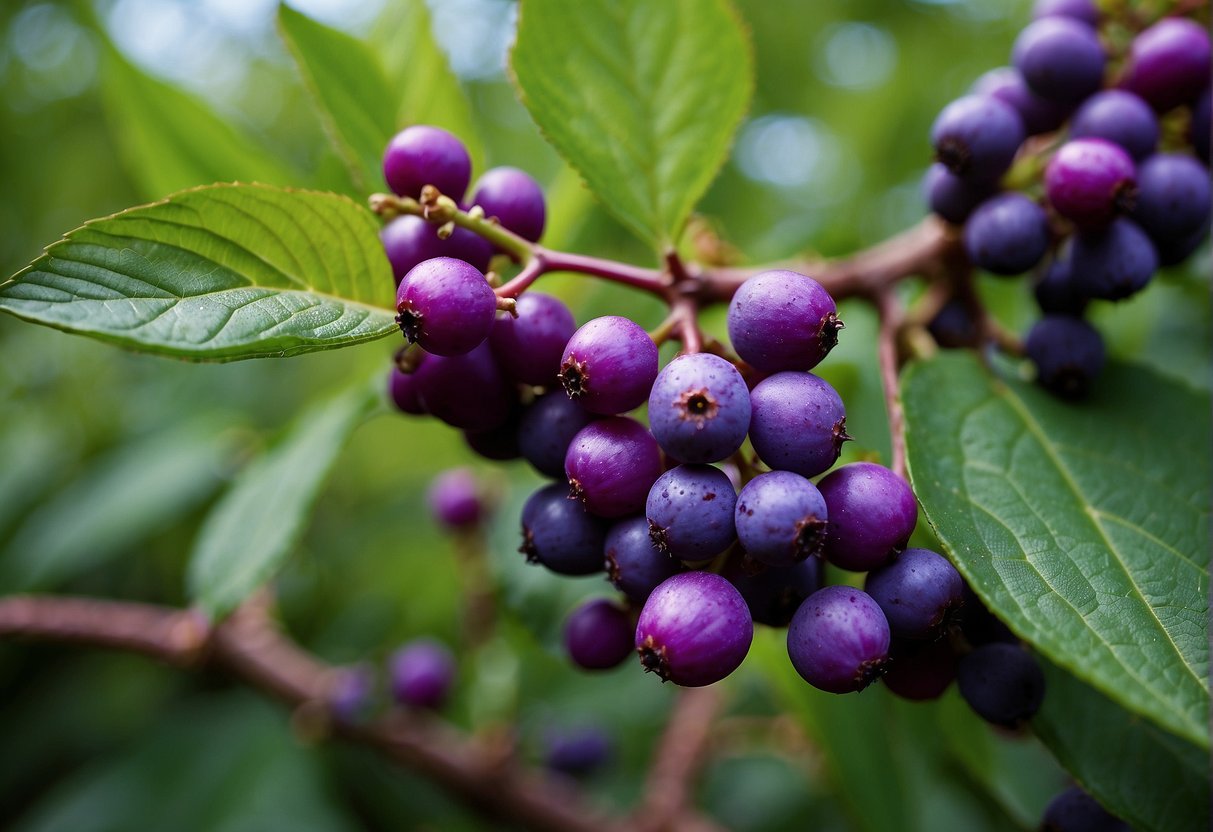
Beautyberry is a deciduous shrub that belongs to the Verbenaceae family. The genus Callicarpa is derived from the Greek words “kallos” meaning beauty and “karpos” meaning fruit, which translates to “beautiful fruit”. There are around 140 species of Callicarpa, with Callicarpa americana and Callicarpa japonica being the most commonly cultivated species.
Physical Characteristics
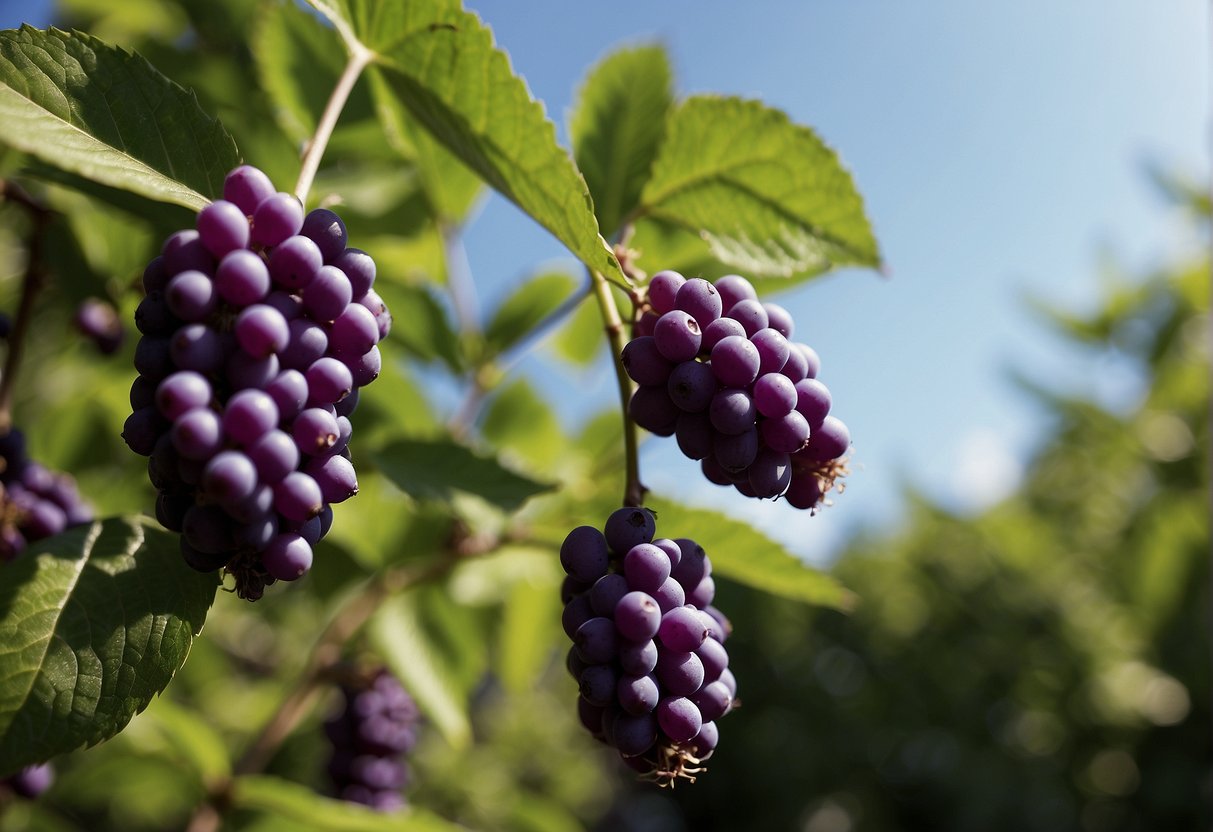
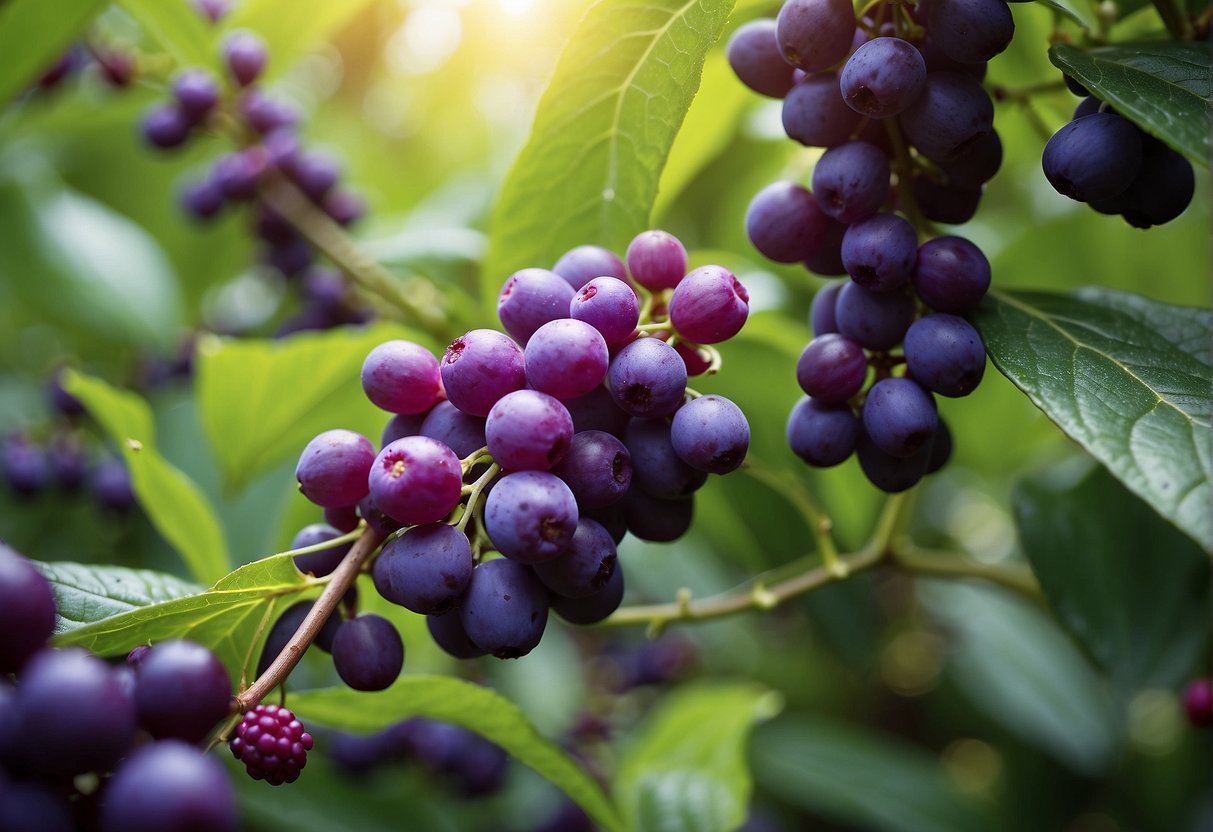
Beautyberry is a medium-sized shrub that can grow up to 6 feet tall and wide. It has a rounded shape and produces clusters of small, pink or purple flowers in the summer. These flowers are followed by bright, glossy, purple berries that are about the size of a pea. The berries are arranged in clusters along the stems and can persist on the plant well into the winter.
The botanical name for American beautyberry is Callicarpa americana, while the botanical name for Japanese beautyberry is Callicarpa japonica. In addition to these two species, there are several other species of beautyberry, including Callicarpa lactea, Callicarpa dichotoma, and Callicarpa japonica ‘Leucocarpa’.
In conclusion, beautyberry is a beautiful and unique shrub that produces vibrant purple berries in the fall. With its striking appearance and easy-to-grow nature, it is a popular choice for gardens and landscapes.
Growth Expectations
If you’re considering adding an American beautyberry (Callicarpa americana) to your landscape, it’s important to know how big it will get. Here’s what you can expect in terms of size and growth rate.
Size and Shape
American beautyberry is a deciduous shrub that typically grows to a height of 4 to 8 feet (1.2 to 2.4 meters) and a width of 4 to 6 feet (1.2 to 1.8 meters). It has a rounded shape and a dense, bushy habit, with multiple stems arising from the base of the plant. The leaves are medium green, oval-shaped, and slightly toothed, and they turn yellow in the fall before dropping off.
Growth Rate
American beautyberry is a relatively slow-growing shrub, especially when compared to some of the more aggressive species out there. It typically gains about 1 to 2 feet (0.3 to 0.6 meters) in height and width per year, although growth can be a bit faster in ideal conditions. Expect it to take several years to reach its full size.
When it comes to care, American beautyberry is a fairly low-maintenance plant. It prefers well-drained soil and partial shade, but it can tolerate a wide range of conditions, including drought and poor soil. Prune it in late winter or early spring to maintain its shape and remove any dead or damaged wood.
Overall, American beautyberry is a great choice for gardeners looking for a beautiful and easy-to-grow shrub. With its attractive foliage, showy fruit, and manageable size, it’s sure to be a standout in any landscape.
Planting Guidelines
When planting beautyberry, it is important to follow certain guidelines to ensure that it thrives in your garden. Here are some tips to keep in mind:
Soil Requirements
Beautyberry prefers a well-drained soil that is rich in organic matter. It can tolerate a range of soil pH levels, but it prefers a slightly acidic soil with a pH between 5.0 and 6.5. If your soil is too alkaline, you can add sulfur to lower the pH.
Sunlight and Temperature
Beautyberry can grow in full sun or partial shade, but it prefers a location with some shade during the hottest part of the day. It is a hardy plant that can tolerate a range of temperatures, but it may suffer in extreme heat or cold.
Water and Humidity
Beautyberry prefers moist soil, but it can tolerate periods of drought once established. It does not like to be in standing water, so make sure the soil is well-drained. It can tolerate a range of humidity levels, but it may suffer in very dry or very humid conditions.
By following these planting guidelines, you can help your beautyberry grow into a beautiful and healthy plant.
Care and Maintenance
To ensure that your beautyberry plant thrives, it is important to provide proper care and maintenance. This includes regular pruning, fertilization, and pest and disease management.
Pruning Practices
Pruning is essential for maintaining the shape and size of your beautyberry plant. It is recommended to prune your beautyberry plant annually, during the late winter or early spring. This will encourage new growth and help maintain a healthy, full appearance.
When pruning, focus on removing any dead or damaged wood, as well as any crossing or rubbing branches. This will help improve air circulation and reduce the risk of disease. It is also important to remove any new wood that has not yet developed a woody texture.
Fertilization and Soil Health
Beautyberry plants prefer well-draining soil that is rich in organic matter. To ensure healthy growth, it is recommended to fertilize your beautyberry plant annually, in the early spring. Use a balanced fertilizer that is rich in nitrogen, phosphorus, and potassium.
In addition to fertilization, it is important to maintain healthy soil. This can be achieved by regularly adding organic matter, such as compost or aged manure, to the soil. This will help improve soil structure, nutrient availability, and water retention.
Pest and Disease Management
Beautyberry plants are generally resistant to pests and diseases, but they can still be susceptible to certain issues. Common pests include aphids, spider mites, and scale insects. To manage these pests, use a mild insecticidal soap or neem oil.
Diseases, such as leaf spot and powdery mildew, can also occur. To prevent these diseases, ensure proper air circulation and avoid overhead watering. If your plant does become infected, use a fungicide to manage the issue.
By following these care and maintenance practices, you can ensure that your beautyberry plant remains healthy and vibrant for years to come.
Propagation Methods
If you want to grow beautyberry, you have two main options for propagating it: from seeds or from cuttings. Both methods have their pros and cons, so it’s up to you to decide which one is best for your situation.
From Seeds
Growing beautyberry from seeds is relatively easy, but it can take a bit of time and patience. You can collect seeds from existing plants or purchase them from a reputable seed supplier.
To germinate beautyberry seeds, you should first soak them in water for 24 hours. After that, you can plant them in a well-draining soil mix and keep them moist. It’s best to keep the soil temperature around 70-75°F (21-24°C) to encourage germination.
Once the seeds have sprouted, you can transplant them to individual pots or directly into the ground. Keep in mind that it can take up to two years for the plants to reach maturity and start producing berries.
From Cuttings
If you want to propagate beautyberry more quickly, you can take softwood cuttings from existing plants. Softwood cuttings are taken from the tips of new growth in the spring or early summer.
To take a cutting, choose a healthy stem that is about 4-6 inches (10-15 cm) long and remove the leaves from the bottom half. Dip the cut end in rooting hormone and plant it in a well-draining soil mix. Keep the soil moist and the cutting in a warm, bright location.
It can take several weeks for the cutting to root and start growing new leaves. Once it has established roots, you can transplant it to a larger pot or directly into the ground. Keep in mind that cuttings may not produce berries for the first year or two.
Overall, both seed propagation and cutting propagation can be successful ways to grow beautyberry. Choose the method that works best for you and enjoy watching your plants grow!
Landscape and Ornamental Use
If you’re looking for a plant that adds beauty to your garden, the beautyberry is a great option. The plant is known for its clusters of purple berries that emerge in the fall, making it a great addition to any garden. Here are some design considerations and companion planting tips to help you make the most of your beautyberry.
Design Considerations
When designing your garden, you should consider the size of the beautyberry plant. The plant can grow up to 6 feet tall and 6 feet wide, so you’ll need to make sure you have enough space for it. The plant prefers partial shade to full sun and well-drained soil. It can also tolerate drought conditions, making it a great option for summer gardens.
The beautyberry plant is also a great option for cut flower arrangements. The plant produces small, lilac-colored flowers in the summer, which can be cut and used in floral arrangements. The purple berries that emerge in the fall also make great additions to floral arrangements.
Companion Planting
When planting your beautyberry, you should consider companion planting. The plant pairs well with other native plants, such as ferns and wildflowers. You can also pair the beautyberry with other ornamental plants that produce white or pink flowers to create a beautiful contrast.
If you’re looking for a plant that produces white fruit, Welch’s Pink is a great option. The plant produces clusters of white fruit that are similar in size to the purple berries of the beautyberry. Pairing the two plants together can create a stunning display in your garden.
Overall, the beautyberry is a great option for any garden. With its clusters of purple berries and small lilac flowers, the plant adds beauty to any landscape. Pairing the plant with other native plants or ornamental plants can create a beautiful contrast and make your garden stand out.
Wildlife and Ecological Benefits
Beautyberry is a great addition to your garden not only for its ornamental value but also for its wildlife and ecological benefits. Here are a few reasons why:
Attracting Birds and Butterflies
The bright purple berries of beautyberry are a favorite food source for birds, especially mockingbirds. The berries are also known to attract butterflies, which are important pollinators for many plants. By planting beautyberry in your garden, you can create a habitat for these beautiful creatures and contribute to the ecosystem.
Environmental Tolerance
Beautyberry is a hardy plant that can tolerate drought and frost, making it an ideal choice for areas with harsh weather conditions. It is also known to help prevent soil erosion, which is important for maintaining a healthy environment. Additionally, beautyberry is a low-maintenance plant that requires little water or fertilizer, making it an eco-friendly choice for your garden.
Overall, beautyberry is a great addition to your garden for its aesthetic value as well as its contribution to the wildlife and ecological balance. By planting beautyberry, you are not only creating a beautiful landscape but also making a positive impact on the environment.
Varieties and Related Species
Beautyberry is a genus of shrubs that includes several species and varieties. In this section, we will discuss some of the most common types of beautyberry, as well as related species.
American Beautyberry
The American beautyberry, also known as French mulberry or Callicarpa americana, is a native shrub that grows in the southeastern United States. It can reach a height of 6-8 feet and a width of 6-8 feet. The leaves are green and glossy, and the flowers are small and pink or white. The berries are bright purple and appear in clusters along the stems in late summer or early fall. The American beautyberry is a popular ornamental shrub due to its attractive berries.
Japanese Beautyberry
The Japanese beautyberry, or Callicarpa japonica, is a shrub that is native to China, Japan, and Korea. It can grow up to 10 feet tall and wide, and it has green leaves and small pink or white flowers. The berries are bright purple and appear in clusters along the stems in late summer or fall. The Japanese beautyberry is also a popular ornamental shrub.
Other Varieties
There are several other varieties of beautyberry, including Welch’s pink (Callicarpa dichotoma ‘Welchii’), which has pink berries, and Callicarpa japonica ‘Leucocarpa’, which has white berries. Some other related species include Callicarpa bodinieri and Callicarpa dichotoma.
In general, beautyberries prefer moist, well-drained soil and partial shade. They are relatively low-maintenance shrubs that can add a pop of color to your garden in the fall.
Seasonal Considerations
When it comes to the beautyberry plant, there are some seasonal considerations you should keep in mind. Understanding the different stages of the plant’s growth cycle can help you better care for it and enjoy its beauty throughout the year.
Flowering and Fruiting Time
The beautyberry plant typically blooms in the summer months, usually between June and August. During this time, the plant produces small, pale pink flowers that are not particularly showy. However, these blooms are important because they eventually give way to the plant’s signature purple berries.
The fruiting time for beautyberry typically occurs in the fall, with the berries reaching their full size and color by October. The berries are small, round, and grow in clusters along the branches of the plant. They are a vibrant shade of purple and can be quite striking against the plant’s green foliage.
Autumn and Winter Interest
One of the most appealing aspects of the beautyberry plant is its autumn and winter interest. As the weather cools and the leaves begin to change color, the plant’s bright purple berries become even more eye-catching. They can add a pop of color to any fall landscape.
In the winter months, the beautyberry plant loses its leaves, but the berries remain on the branches. They can provide a much-needed burst of color in an otherwise dreary winter landscape. Additionally, the berries can be a valuable food source for birds and other wildlife during the colder months.
Overall, the beautyberry plant is a beautiful and unique addition to any garden or landscape. By understanding its seasonal considerations, you can better appreciate its beauty throughout the year.
Practical Tips and Common Issues
Spacing and Landscaping
When it comes to planting beautyberry shrubs, spacing is key. These shrubs can grow up to 6 feet tall and wide, so it’s important to give them enough room to spread out. A good rule of thumb is to space beautyberry plants at least 4 to 6 feet apart. This will allow enough room for the shrubs to reach their full size without crowding each other.
Beautyberry shrubs are also great for landscaping. They have a unique shape and vibrant purple berries that can add a pop of color to any garden. These shrubs can be planted as a hedge or used as a focal point in a garden bed. They thrive in both sun and partial shade, making them a versatile addition to any landscape.
Common Challenges
Like any plant, beautyberry shrubs can face their fair share of challenges. One common issue is pests. Beautyberry shrubs are susceptible to infestations from spider mites, scale insects, and whiteflies. Regular maintenance and monitoring can help prevent these pests from taking over.
Another challenge is the plant’s hardiness. Beautyberry shrubs are hardy in zones 5-8, but can also be grown in zones 7-11. In colder climates, these shrubs may require extra protection during the winter months to prevent damage.
Finally, maintenance is important for keeping beautyberry shrubs healthy and looking their best. Regular pruning can help maintain the shrub’s shape and prevent it from becoming too leggy. It’s also important to water the shrub regularly, especially during hot, dry weather.
In conclusion, beautyberry shrubs are a great addition to any landscape. With proper spacing, landscaping, and maintenance, these shrubs can thrive and provide a beautiful pop of color to your garden.
Cultural Significance
The beautyberry plant has a significant cultural and historical significance in many parts of the world. The plant has been used for various purposes, including medicinal, culinary, and ornamental.
Historical Uses
The Native Americans used the American beautyberry for medicinal purposes, including the treatment of fever, rheumatism, and dysentery. The leaves and roots of the plant were used to make tea, which was believed to have healing properties. The Japanese beautyberry, on the other hand, was used in traditional Japanese medicine to treat colds, flu, and other respiratory illnesses.
Symbolism and Folklore
In addition to its medicinal uses, the beautyberry plant has also been associated with various symbolism and folklore. In some cultures, the plant is believed to ward off evil spirits and protect against harm. It is also considered a symbol of good luck and prosperity.
In some parts of the world, the beautyberry plant is used in traditional celebrations and festivals. For example, in Japan, the plant is used in the annual Obon festival, which is a celebration of ancestors. The plant is believed to guide the spirits of the ancestors back to their homes.
Overall, the beautyberry plant has a rich cultural and historical significance. Its uses and symbolism vary depending on the culture and region. However, the plant remains an important part of many traditions and beliefs.
Frequently Asked Questions
What is the typical growth rate of a beautyberry plant?
Beautyberry plants typically grow at a moderate rate of about 1-2 feet per year. However, the growth rate may vary depending on the growing conditions such as soil quality, water availability, and sunlight exposure.
What are the space requirements for planting a beautyberry?
Beautyberry plants can grow up to 6-8 feet tall and wide, so it is important to provide enough space for them to grow. A spacing of 4-6 feet between plants is recommended to allow for proper air circulation and prevent overcrowding.
In which climate zones does beautyberry thrive?
Beautyberry plants are native to the southeastern United States and are well adapted to warm and humid climates. They can grow in USDA hardiness zones 6-10, which covers a wide range of regions from the southern United States to parts of the Midwest.
What are common issues encountered when growing beautyberry?
Beautyberry plants are generally easy to grow and maintain, but they may be susceptible to certain pests and diseases. Some common issues include leaf spot, powdery mildew, and Japanese beetles. Regular inspection and treatment can help prevent and control these issues.
Can beautyberry be used for medicinal purposes?
Beautyberry has been used in traditional medicine for its anti-inflammatory and antimicrobial properties. However, more research is needed to fully understand its potential health benefits. It is important to consult with a healthcare professional before using beautyberry for medicinal purposes.
How can beautyberry seeds be successfully germinated and grown?
Beautyberry seeds can be collected from mature fruits and planted in well-draining soil. They require consistent moisture and warm temperatures to germinate, which can take 2-3 weeks. Once the seedlings have developed a few leaves, they can be transplanted into larger containers or directly into the ground.

