
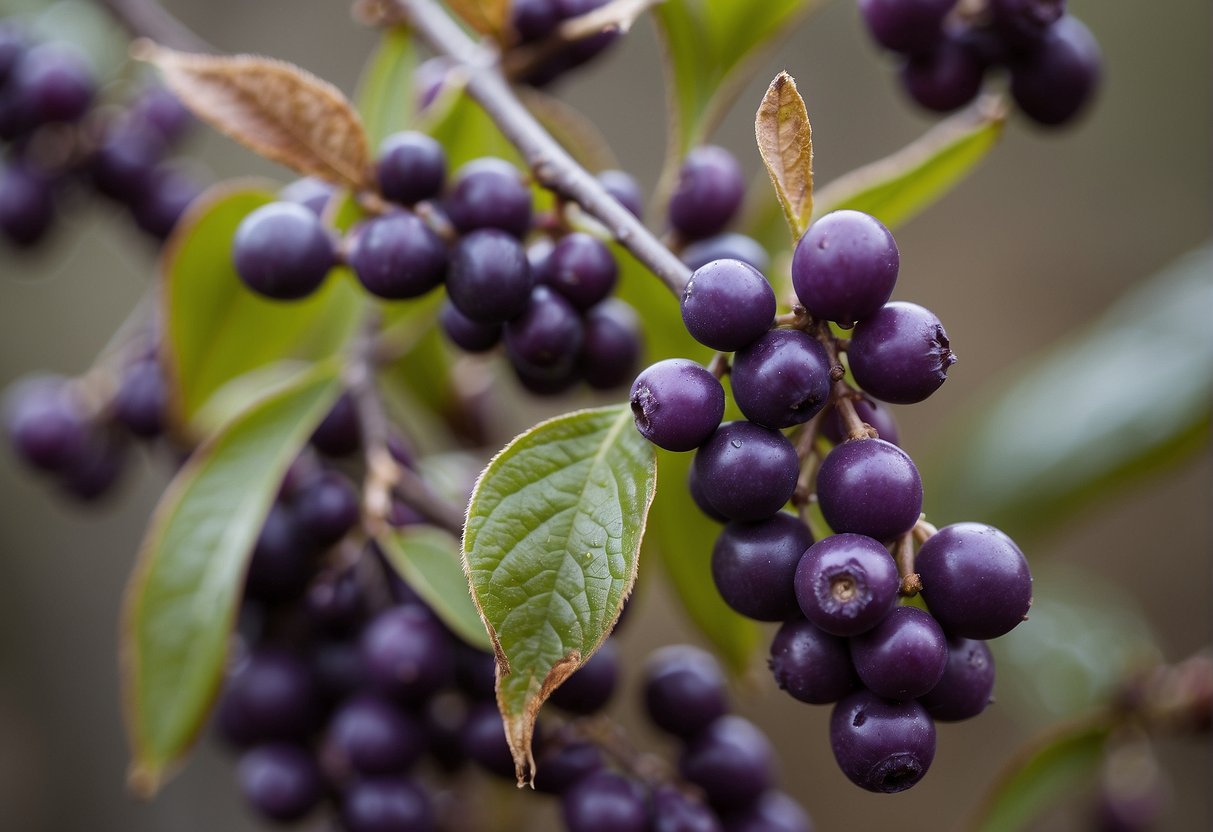
When to Prune Purple Beautyberry Bush: Tips and Guidelines
In the realm of keeping a stunning garden, the act of pruning stands out as a vital chore that mustn’t be ignored. The technique of pruning is a craft that demands both understanding and competence for proper execution. The purple beautyberry bush stands out as a favored choice for gardens, bringing a vibrant splash of color. Yet, for numerous garden enthusiasts, the prospect of pruning this bush can seem intimidating. Within this article, we aim to cover the optimal time for pruning a purple beautyberry bush, alongside several strategies to make sure your bush remains in prime condition and aesthetically pleasing.
Understanding the beautyberry shrub is essential before pruning it. The purple beautyberry is a deciduous shrub that is native to the southeastern United States. It is known for its vibrant purple berries that appear in the fall. Pruning this shrub at the right time can help maintain its shape and encourage healthy growth. However, pruning at the wrong time can lead to stunted growth and fewer berries. In the next section, we will discuss the optimal time to prune your purple beautyberry bush.
Key Takeaways
- Prune your purple beautyberry bush in late winter or early spring before new growth appears.
- Use sterilized pruning tools to prevent the spread of disease.
- Remove dead or damaged branches and thin out the center of the shrub to promote healthy growth.
Understanding Beautyberry
If you are a fan of beautiful shrubs, then you must have come across beautyberry. This deciduous shrub is a great addition to any garden, and it is known for its beautiful foliage and berries. In this section, we will explore the botanical overview, growth and habit, and varieties and colors of beautyberry.
Botanical Overview
Beautyberry is a genus of shrubs that belongs to the Verbenaceae family. The scientific name for beautyberry is Callicarpa spp. This genus of shrubs is native to Asia and North America. The most common species of beautyberry are Callicarpa americana (American beautyberry) and Callicarpa dichotoma (Japanese beautyberry). Beautyberry is a deciduous shrub that can grow up to 6 feet tall and wide.
Growth and Habit
Beautyberry is a slow-growing shrub that prefers full sun to partial shade. It can tolerate a wide range of soil types, including sandy, loamy, and clay soils. Beautyberry is a low-maintenance shrub that requires little pruning. However, pruning can help to maintain its shape and promote new growth. Beautyberry blooms in the summer, producing small pink flowers that attract bees and butterflies. In the fall, the foliage turns yellow, orange, or red, depending on the variety.
Varieties and Colors
Beautyberry comes in a variety of colors, including purple, pink, and white. The most common variety of beautyberry is the purple beautyberry, which produces clusters of purple berries in the fall. Pink beautyberry produces pink berries, while white beautyberry produces white berries. Beautyberry is also available in variegated varieties, which have foliage with white or yellow edges.
In conclusion, beautyberry is a beautiful and low-maintenance shrub that can add color and interest to any garden. With its attractive foliage, blooms, and berries, beautyberry is a must-have for any gardener. By understanding the botanical overview, growth and habit, and varieties and colors of beautyberry, you can choose the best variety for your garden and enjoy its beauty for years to come.
Optimal Pruning Time
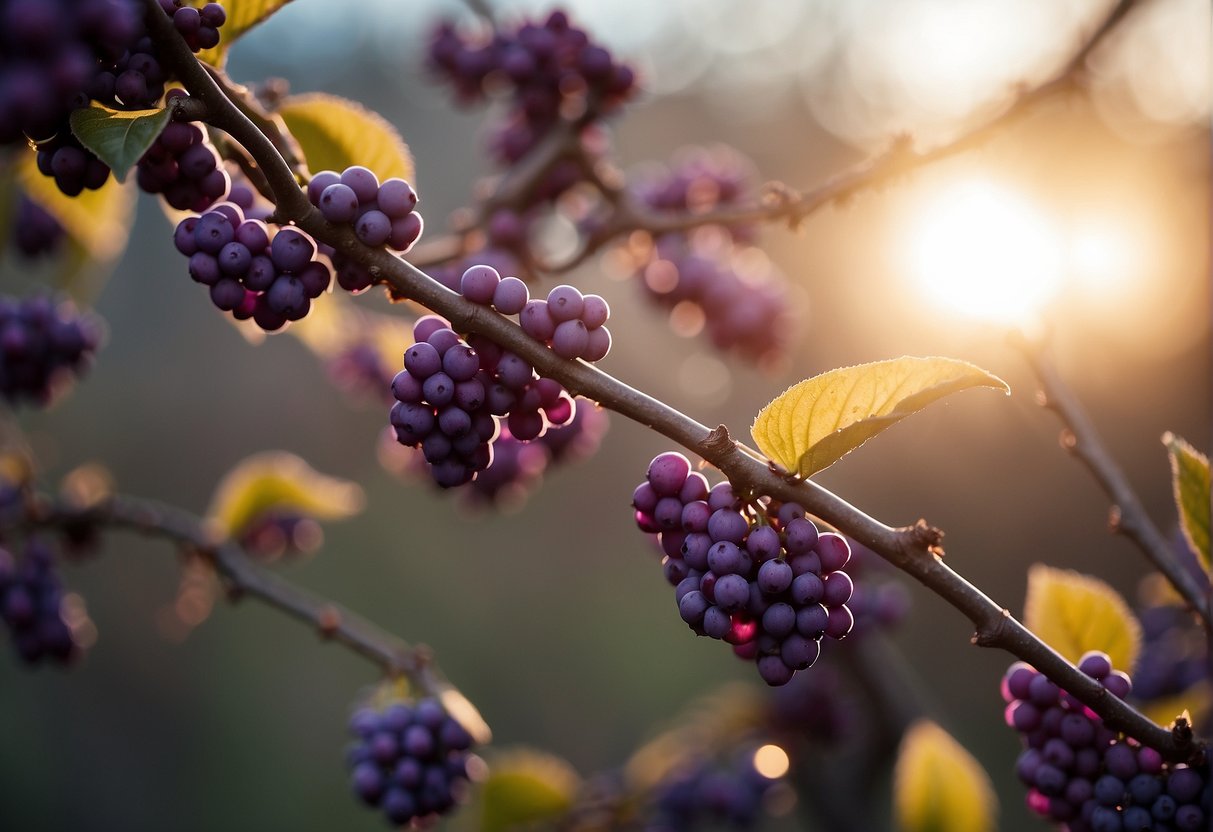
Best Season for Pruning
Pruning is an essential part of maintaining the health and beauty of your Purple Beautyberry bush. The best time to prune your bush is during the late winter or early spring, before new growth begins. This is because pruning during this time will encourage new growth and help to shape your bush for the upcoming growing season.
Signs It’s Time to Prune
It’s important to know when to prune your Purple Beautyberry bush. If you notice dead or damaged branches, it’s time to prune them. Pruning these branches will help to promote new growth and prevent disease from spreading to other parts of the bush.
Another sign that it’s time to prune your bush is if it has become overgrown or has lost its shape. Pruning can help to maintain the shape of your bush and prevent it from becoming too large or unruly.
Tips for Pruning
When pruning your Purple Beautyberry bush, it’s important to use sharp and clean pruning tools to avoid damaging the plant. You should also avoid pruning during the summer or fall, as this can affect the plant’s flower and fruit production.
To prune your bush, start by removing any dead or damaged branches. Then, shape the bush by removing any branches that are crossing or growing in the wrong direction. Finally, thin out the bush by removing any excess growth.
By following these tips, you can ensure that your Purple Beautyberry bush stays healthy and beautiful year after year.
Pruning Techniques
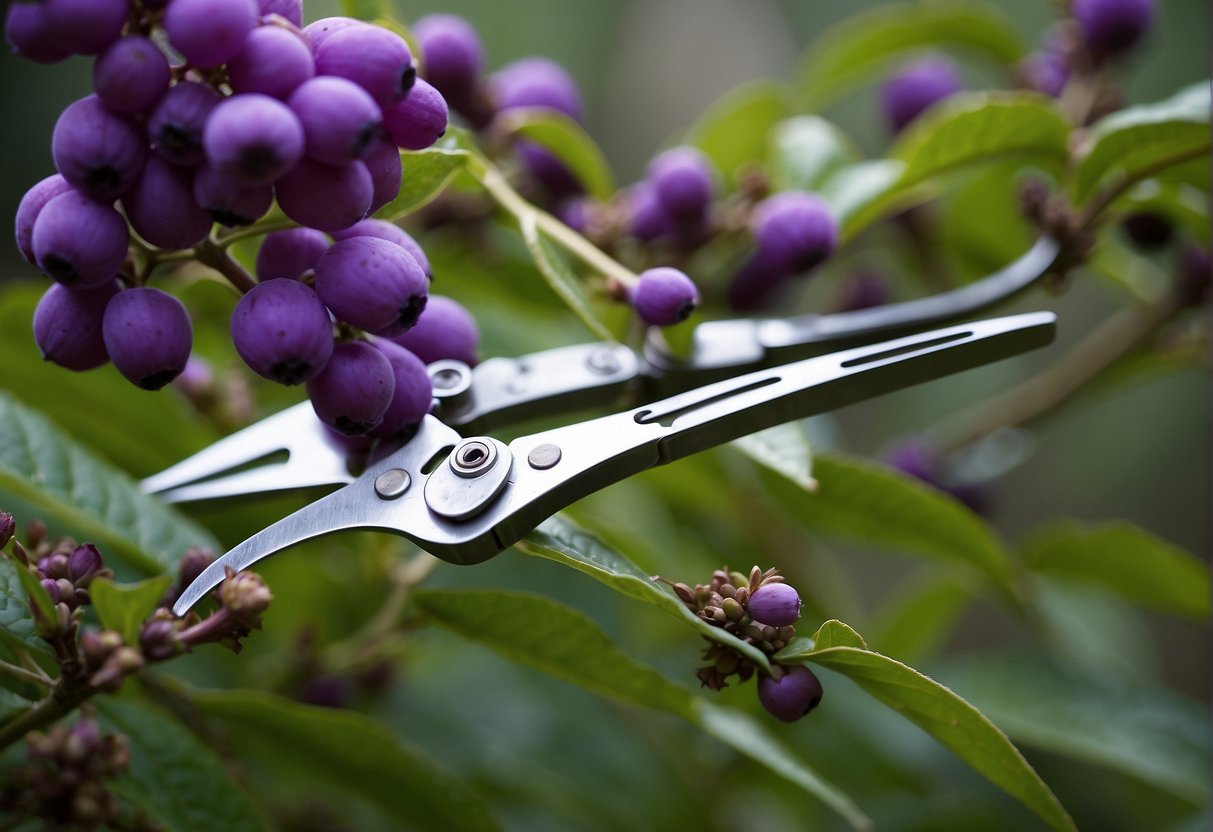
When it comes to pruning a purple beautyberry bush, there are a few techniques you can use to keep your plant looking neat and healthy. Here are some basic pruning steps, tips for pruning for shape, and how to do rejuvenation pruning.
Basic Pruning Steps
Before you start pruning, make sure you have the right tools on hand. You will need a pair of loppers for thicker branches and pruning shears for smaller ones. Once you have your tools, follow these basic steps:
- Remove any dead or damaged branches. These can be identified by their brown or black color and lack of leaves.
- Cut back any long, arching branches to promote a neat, rounded shape.
- Remove any branches that are crossing or rubbing against each other.
- Thin out the center of the bush to promote airflow and sunlight penetration.
Pruning for Shape
If you want to shape your beautyberry bush, start by identifying its natural habit. Beautyberry bushes have arching branches that give them a graceful, flowing appearance. To maintain this habit, follow these tips:
- Cut back any branches that are growing too long or out of shape.
- Remove any branches that are growing in the wrong direction or crossing over other branches.
- Trim the oldest branches to promote new growth and keep the plant looking youthful.
Rejuvenation Pruning
If your beautyberry bush has become overgrown or neglected, it may need rejuvenation pruning. This involves cutting the plant back to its base to promote new growth. Here’s how to do it:
- Cut all the branches back to within 6 inches of the ground.
- Remove any dead or diseased wood.
- Water the plant well and fertilize with a balanced fertilizer.
- Wait for new growth to appear and shape the plant as desired.
By following these pruning techniques, you can keep your purple beautyberry bush looking healthy and beautiful for years to come.
Aftercare Following Pruning
After pruning your purple beautyberry bush, it is important to take care of it properly to ensure its health and vitality. Here are some key steps to follow for aftercare:
Watering and Nutrition
Make sure to water your beautyberry bush regularly, especially during the first few weeks after pruning. Water it deeply and thoroughly, making sure that the soil is moist but not waterlogged. If you live in an area with low rainfall, you may need to supplement with regular watering.
To promote healthy growth, you can also fertilize your beautyberry bush after pruning. Use a balanced fertilizer with equal amounts of nitrogen, phosphorus, and potassium. You can also add compost or other organic matter to the soil to help improve its fertility.
Managing Pests and Diseases
One of the most important steps in aftercare is to monitor your beautyberry bush for pests and diseases. Common pests that can affect beautyberry bushes include aphids, spider mites, and scale insects. To prevent infestations, you can spray your plant with a solution of water and dish soap or use insecticidal soap.
Diseases that can affect beautyberry bushes include powdery mildew and leaf spot. To prevent these diseases, make sure your plant is growing in well-drained soil with a pH between 5.5 and 6.5. If your plant does develop a disease, you can treat it with a fungicide or by removing infected leaves.
By following these simple steps, you can help ensure the health and vitality of your purple beautyberry bush after pruning. With proper care, your plant will continue to thrive and provide you with beautiful foliage and berries for years to come.
Planting and Site Selection
When it comes to planting and site selection for your purple beautyberry bush, there are a few things to consider. By choosing the right location and preparing the soil properly, you can ensure that your beautyberry bush will thrive.
Choosing the Right Location
Purple beautyberry bushes prefer full sun to partial shade, but they can also tolerate dappled shade. When selecting a location, look for an area that receives at least six hours of sunlight per day. Avoid planting your beautyberry bush in an area that is completely shaded, as this can result in poor growth and fewer berries.
It’s also important to choose a location with well-drained soil. Beautyberry bushes do not like wet feet, so make sure the area you choose does not have poor soil drainage. If you have clay soil, consider amending it with compost or other organic matter to improve drainage.
Soil Requirements and Preparation
Beautyberry bushes prefer neutral soil with a pH between 6.0 and 7.0. If your soil is too acidic, you can add lime to raise the pH. If it’s too alkaline, you can add sulfur to lower the pH. It’s a good idea to test your soil before planting to determine its pH and nutrient levels.
Before planting your beautyberry bush, prepare the soil by removing any weeds or debris. Add a layer of compost or other organic matter to the soil and mix it in well. This will help improve soil structure and provide important nutrients to your plant.
After planting, apply a layer of mulch around the base of the plant to help retain moisture and suppress weeds. Avoid placing the mulch directly against the stem of the plant, as this can cause rotting.
By following these tips for planting and site selection, you can ensure that your purple beautyberry bush will thrive and produce plenty of beautiful berries.
Cultivation and Propagation
If you’re interested in growing a purple beautyberry bush, you’ll be happy to know that it’s relatively easy to propagate and cultivate. In this section, we’ll cover the basics of growing this beautiful plant from seed and through propagation techniques.
Growing from Seed
Growing a purple beautyberry bush from seed is a straightforward process. You can either purchase seeds from a reputable nursery or collect them from an existing plant. To collect seeds, wait until the berries have fully ripened and turned a deep purple color. Then, remove the berries from the plant and extract the seeds.
Once you have your seeds, you’ll need to prepare a planting medium. A mixture of equal parts sand, peat moss, and perlite works well. Fill a seed tray with the planting medium, and then sprinkle the seeds on top. Cover the seeds with a thin layer of the planting medium, and then mist the tray with water.
Keep the tray in a warm, well-lit area, and make sure the planting medium stays moist. Germination should occur within two to four weeks. Once the seedlings have emerged, you can transplant them into individual pots.
Propagation Techniques
If you already have a purple beautyberry bush, you can propagate it through softwood cuttings. Softwood cuttings are taken from the tips of new growth, which is still green and pliable. Cuttings should be about four to six inches long and should include at least two nodes.
Remove the leaves from the bottom half of the cutting, and then dip the cut end into rooting hormone. Plant the cutting in a pot filled with a mixture of equal parts sand and peat moss. Keep the pot in a warm, well-lit area, and make sure the soil stays moist.
Within four to six weeks, the cutting should have developed roots and can be transplanted into a larger pot or directly into the ground. Propagating a purple beautyberry bush through softwood cuttings is a great way to expand your garden without having to purchase new plants.
Overall, cultivating and propagating a purple beautyberry bush is a rewarding experience for any gardener. Whether you choose to grow from seed or through propagation techniques, you’ll be rewarded with a stunning plant that adds color and interest to any landscape.
Landscape Uses and Ornamental Value
When it comes to garden design, the purple beautyberry bush is a versatile plant that can be used in a variety of ways. Its compact size makes it ideal for small gardens, borders, and containers. Additionally, its striking foliage color and fall foliage make it a popular choice for adding interest to autumn landscapes.
In Garden Design
The purple beautyberry bush can be used to create a variety of landscape designs. Its small size makes it perfect for planting in borders and along walkways. It can also be used to create a beautiful and colorful hedge. The plant’s compact size and striking foliage color make it a great choice for small gardens and containers.
Beautyberry as a Specimen Plant
The beautyberry bush can also be used as a specimen plant. Its unique foliage color and compact size make it a standout in any landscape. Planting the beautyberry as a specimen plant allows it to be appreciated for its ornamental value and beauty.
Overall, the purple beautyberry bush is a great addition to any landscape. Its versatility and ornamental value make it a popular choice for gardeners. Whether you use it in borders, containers, or as a specimen plant, the beautyberry is sure to add beauty and interest to your landscape.
Maintenance and Seasonal Care
When it comes to maintaining your Purple Beautyberry bush, pruning is an essential task that should be done at the right time. Pruning helps to keep the plant healthy and promotes new growth. In this section, we will discuss the necessary care, watering, fertilization, and mulching required for your Purple Beautyberry bush.
Watering and Drought Tolerance
The Purple Beautyberry bush is a drought-tolerant plant that can survive dry periods. However, it still requires regular watering during the growing season. Water your plant deeply once a week, especially during hot and dry periods. Ensure that the soil is well-drained, and avoid overwatering, as this can lead to root rot.
Fertilization and Mulching
Fertilization is an essential aspect of caring for your Purple Beautyberry bush. Apply a balanced fertilizer once a year in early spring to promote healthy growth. Mulching is also crucial to retain moisture in the soil and prevent weed growth. Apply a layer of organic mulch around the base of the plant, but avoid placing the mulch directly on the stem.
In summary, proper care, watering, fertilization, and mulching are essential for maintaining a healthy Purple Beautyberry bush. With the right care, your plant will thrive and produce beautiful purple berries that will add color and interest to your garden.
Environmental Considerations
When deciding when to prune your Purple Beautyberry bush, it is important to consider the environmental impact of your actions. Here are a few things to keep in mind:
Native vs. Invasive Species
Purple Beautyberry is native to North America, specifically the southeastern United States. It is not considered an invasive species. However, it is important to be aware of other invasive plant species in your area that may be negatively impacting the local ecosystem. If you are unsure about whether a plant is invasive or not, you can check with your local extension office or department of natural resources.
Wildlife Interactions
Purple Beautyberry is an important food source for wildlife, particularly birds. It produces small, purple berries that are high in fat and protein. If you prune your bush at the wrong time, you could be removing a valuable food source for local wildlife. It is recommended that you wait until after the berries have been consumed by wildlife before pruning.
In addition to providing food, Purple Beautyberry also provides cover for wildlife. Deer in particular are known to use the shrub for cover. If you live in an area with high deer populations, you may want to avoid pruning your bush during the winter months when deer are more likely to be seeking cover.
Overall, when deciding when to prune your Purple Beautyberry bush, it is important to consider the impact on the local environment and wildlife. By being mindful of these factors, you can help ensure that your pruning practices are sustainable and beneficial for all.
Frequently Asked Questions
What is the optimal season for pruning a beautyberry bush?
The optimal time to prune a beautyberry bush is in late winter or early spring, before new growth begins. Pruning during this time will help the plant produce new growth and ensure that it flowers in the upcoming season.
How should beautyberry bushes be pruned for best growth?
Beautyberry bushes should be pruned to remove dead or damaged wood, as well as any branches that are crossing or rubbing against each other. To encourage bushier growth, cut back the tips of the branches by about a third.
What are the signs that a beautyberry bush needs pruning?
If your beautyberry bush is overgrown or has a lot of dead wood, it may be time to prune. Look for branches that are crossing or rubbing against each other, as well as any that are dead or damaged.
Is it necessary to prune beautyberry bushes annually?
While it’s not necessary to prune beautyberry bushes annually, regular pruning can help keep the plant healthy and looking its best. Pruning every few years can also help rejuvenate an older plant.
Can pruning affect the flowering of beautyberry bushes?
Pruning can actually improve the flowering of beautyberry bushes. By removing dead wood and cutting back branches, you can encourage the plant to produce new growth and more flowers.
What are the best practices for transplanting a beautyberry bush?
Transplanting a beautyberry bush is best done in the early spring or fall, when the plant is dormant. To transplant, dig a hole twice as wide as the root ball and deep enough to accommodate the plant’s roots. Water the plant well after transplanting and keep it well-watered until it becomes established.

