
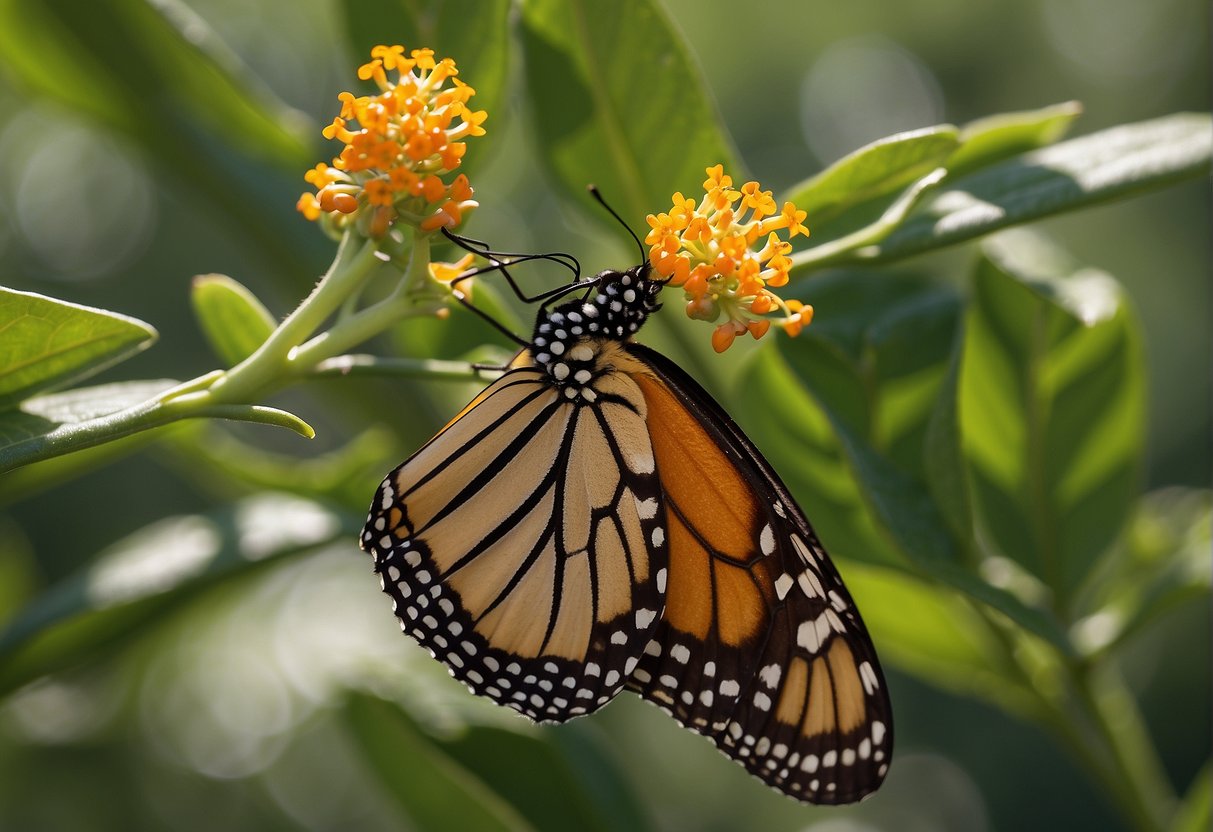
What is the Role of Milkweed in the Life of a Monarch Butterfly?
Anyone who has observed a monarch butterfly can attest to the allure of its orange and black wings. However, are you aware that the existence of a monarch butterfly is intricately linked with one particular type of plant: the milkweed? This plant, which goes beyond being a mere attractive wildflower, plays a crucial role in the life cycle of the monarch butterfly, serving as an essential element for its survival.
As you’ll learn in this article, milkweed serves a crucial role in the life of a monarch butterfly. From providing a place for the butterfly to lay its eggs to serving as a food source for the caterpillars, milkweed is an essential part of the monarch’s life cycle. But milkweed is also facing threats, and its decline is putting the future of the monarch butterfly at risk.
So what exactly is the role of milkweed in the life of a monarch butterfly? Let’s explore the fascinating relationship between these two species and learn how we can help protect them.
Key Takeaways
- Milkweed is essential to the survival of the monarch butterfly, serving as a place for the butterfly to lay its eggs and as a food source for the caterpillars.
- Milkweed is facing threats and its decline is putting the future of the monarch butterfly at risk.
- By learning about the importance of milkweed and taking steps to protect it, we can help ensure the survival of the monarch butterfly.
Milkweed: The Monarch Butterfly’s Lifeline
If you have ever seen a monarch butterfly, you have likely seen it perched on a milkweed plant. Milkweed is not just any plant to the monarch butterfly, it is a lifeline. In this section, we will explore the role of milkweed in the life of a monarch butterfly.
The Symbiotic Relationship
Milkweed and monarch butterflies have a unique relationship. Monarch butterflies lay their eggs on milkweed plants, and the caterpillars that hatch from these eggs feed exclusively on milkweed leaves. In return, milkweed plants have evolved to produce toxic chemicals called cardiac glycosides, which are poisonous to most animals but not to the monarch caterpillars.
Milkweed Species and Their Distribution
There are over 100 species of milkweed in North America, but not all of them are suitable for monarch butterflies. The most common milkweed species used by monarchs are common milkweed (Asclepias syriaca), swamp milkweed (Asclepias incarnata), and butterfly weed (Asclepias tuberosa). These milkweed species are distributed throughout North America, from Canada to Mexico.
Chemical Defense and Nutrition
Milkweed plants produce cardenolides, a type of cardiac glycoside that is toxic to most animals. However, these toxic compounds are essential to the survival of monarch caterpillars. The caterpillars store the cardenolides in their bodies, making them poisonous to predators such as birds.
In addition to providing chemical defense, milkweed plants are also a source of nutrition for monarch butterflies. Milkweed nectar is a rich source of carbohydrates, which provides energy for the butterflies during their long migration to Mexico.
In conclusion, milkweed plays a critical role in the life of a monarch butterfly. Without milkweed, the monarch butterfly would not exist. The symbiotic relationship between milkweed and monarch butterflies is a fascinating example of coevolution in nature.
Monarch Life Cycle and Milkweed
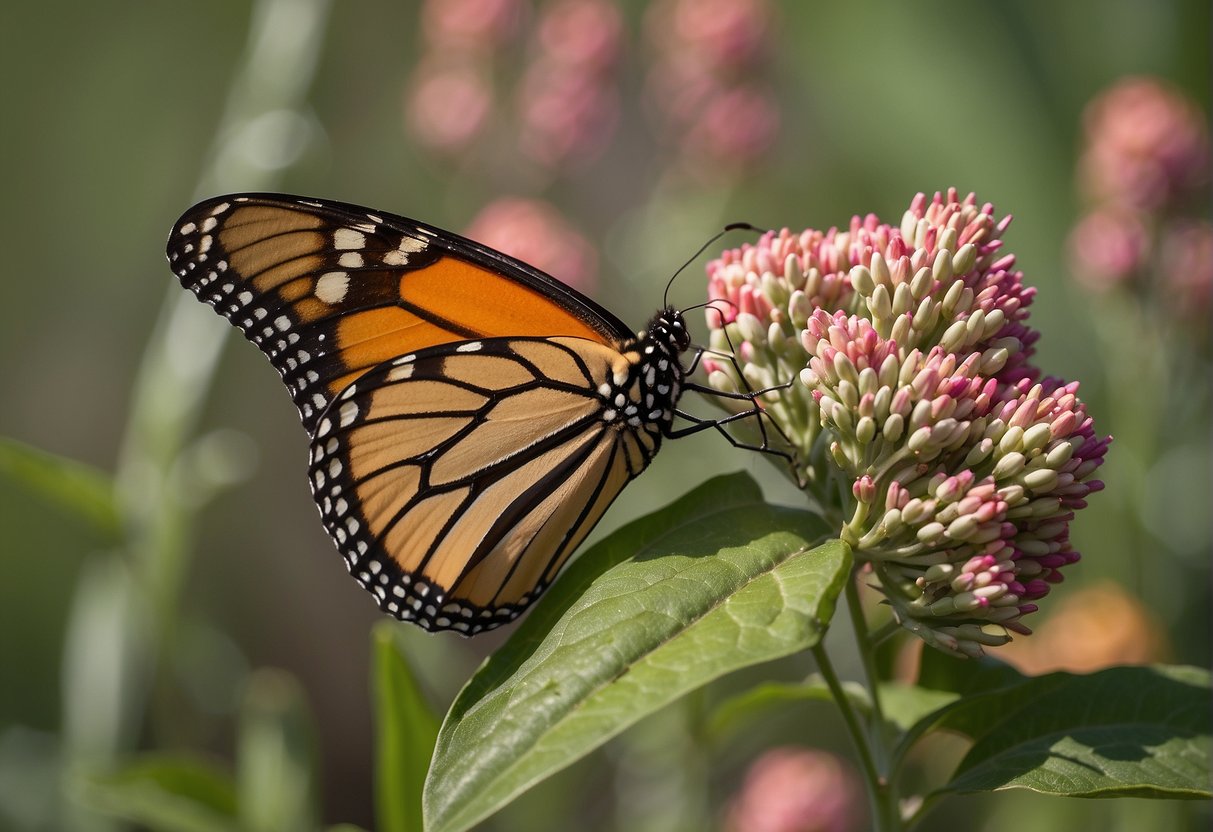
Monarch butterflies are known for their vibrant orange and black wings, but their life cycle is equally fascinating. Milkweed plays a crucial role in the survival of monarch butterflies, as it is the only plant on which they lay their eggs and the sole source of food for their caterpillars.
Egg Laying and Hatching
Monarch butterflies lay their eggs on the underside of milkweed leaves. The eggs are small, white, and cylindrical, and take about 4-5 days to hatch. The female monarch butterfly can lay up to 300 eggs during her lifetime.
Caterpillar Growth and Milkweed Consumption
Once the eggs hatch, the tiny larvae, also known as caterpillars, start feeding on the milkweed plant. The caterpillars are voracious eaters and can consume up to 20 milkweed leaves per day. The milkweed contains toxins that make the caterpillars unpalatable to predators.
As the caterpillars grow, they molt or shed their skin five times. Each molt reveals a new, larger skin underneath, and the caterpillar continues to feed and grow until it reaches its maximum size.
Chrysalis Formation and Metamorphosis
When the caterpillar reaches its maximum size, it forms a chrysalis, also known as a pupa. The chrysalis is green and gold and hangs from a milkweed stem or leaf. Inside the chrysalis, the caterpillar undergoes metamorphosis, transforming into a butterfly.
Emergence of the Adult Monarch
After about two weeks, the adult monarch butterfly emerges from the chrysalis. Its wings are small and crumpled at first, but they quickly expand and dry in the sun. The adult monarch feeds on nectar from various flowers, but it still relies on milkweed for egg-laying.
In conclusion, milkweed is an essential plant in the life cycle of monarch butterflies. From egg-laying to metamorphosis, milkweed provides the necessary nutrients and protection for the monarch larvae. By planting milkweed in your garden, you can help support the survival of these beautiful butterflies.
Milkweed and Monarch Migration
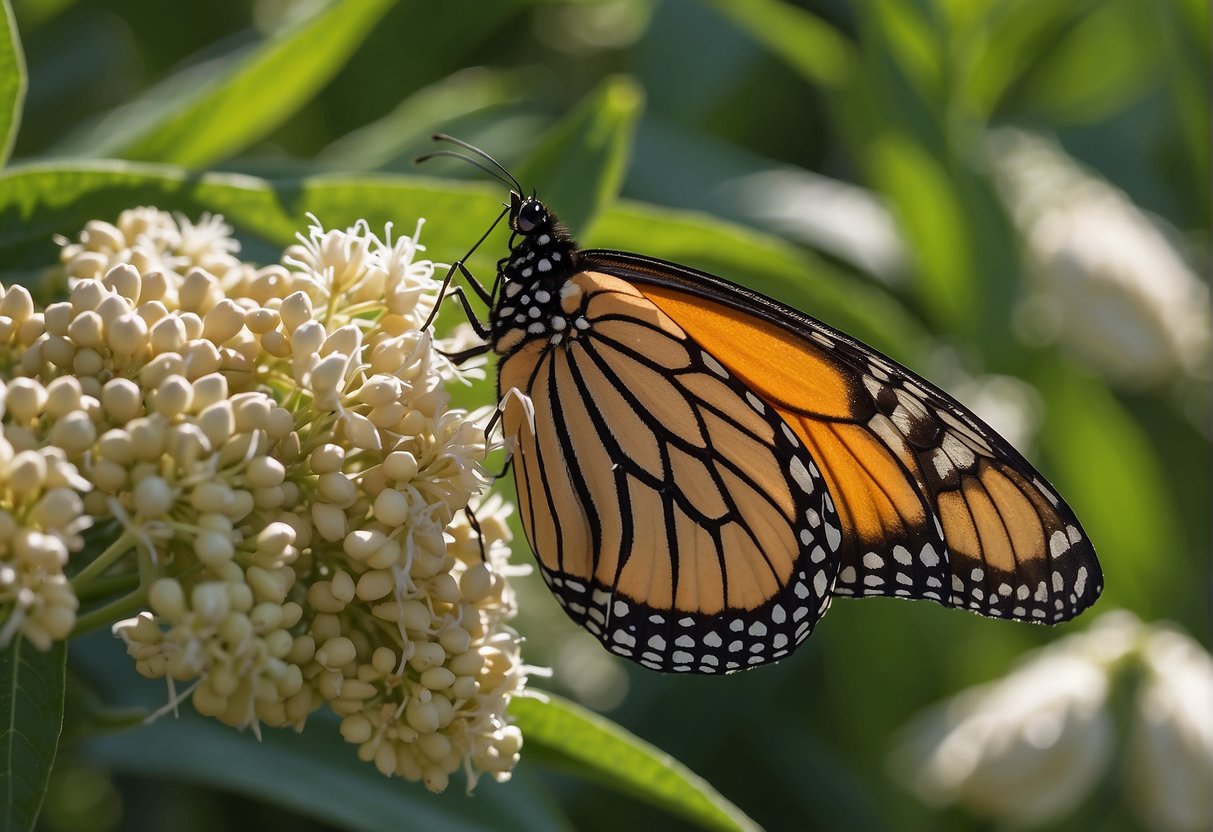
Fuel for the Journey
As you may know, the monarch butterfly is famous for its long-distance migration. Every year, millions of monarchs travel from their breeding grounds in North America to their wintering grounds in Mexico or California. But did you know that milkweed plays a crucial role in this journey?
Milkweed is the exclusive food source for monarch caterpillars, and it provides the necessary nutrients for them to grow and develop into butterflies. But milkweed is also important for adult monarchs, as the nectar it produces is a key source of energy for their long migration. Without milkweed, monarchs would not have the fuel they need to make this incredible journey.
Breeding and Waystations
In addition to providing fuel for the journey, milkweed is also essential for monarch breeding and waystations. Monarchs lay their eggs exclusively on milkweed plants, and without it, they would not be able to reproduce.
Furthermore, milkweed serves as a vital waystation for monarchs during their migration. As they travel long distances, monarchs need to stop and rest, and milkweed provides a perfect place for them to do so. By planting milkweed along their migration route, we can help ensure that monarchs have the resources they need to complete their journey.
Overwintering and the Role of Milkweed
Finally, milkweed is also important for monarchs during their wintering period. Monarchs cluster together in trees and shrubs during the winter months, and they rely on milkweed for protection from the cold.
In addition, the timing of milkweed growth is critical for monarch survival during the winter. If milkweed begins to grow too early or too late, monarchs may not have enough food to sustain them through the winter. By planting native milkweed species, we can help ensure that monarchs have the resources they need to survive during the winter months.
In conclusion, milkweed plays a critical role in the life of a monarch butterfly. From providing fuel for their long migration to serving as a breeding ground and waystation, milkweed is essential for monarch survival. By planting milkweed along their migration route and in their wintering grounds, we can help ensure that monarchs have the resources they need to thrive.
Conservation: Milkweed and Monarch Decline
Threats to Monarch Populations
Monarch butterflies are facing a significant decline in their populations due to habitat loss, climate change, and pesticide use. The destruction of milkweed plants, which are the primary food source for monarch caterpillars, is one of the primary reasons for their decline.
The Importance of Milkweed Conservation
Milkweed is essential to the survival of monarch butterflies. Without milkweed, monarchs cannot complete their life cycle, which includes laying eggs, hatching, and transforming into adult butterflies. Milkweed also provides nectar for adult butterflies, which they need for energy during their long migration.
Gardening and Restoration Efforts
Gardening and restoration efforts can help conserve milkweed and, in turn, monarch butterflies. Gardeners can plant native species of milkweed, such as common milkweed or swamp milkweed, to provide food and habitat for monarchs. Conservationists can also restore milkweed habitats in areas where they have been destroyed, such as along roadsides or in agricultural fields.
Tropical milkweed, a non-native species of milkweed, has been shown to cause harm to monarch populations in some regions. It is important to use caution when planting tropical milkweed and to remove it during the winter months to prevent monarchs from becoming infected with a parasite that can harm them.
Overall, milkweed conservation is crucial for the survival of monarch butterflies. By planting native species of milkweed and restoring habitats, we can help ensure that monarchs have the resources they need to thrive.
Milkweed Cultivation and Care
Growing Milkweed in Gardens
If you want to attract monarch butterflies to your garden, growing milkweed is a must. Milkweed is easy to grow and can be planted in a variety of locations, including gardens, meadows, and even containers. When selecting a site for your milkweed, make sure it receives at least six hours of sunlight each day and has well-draining soil.
There are many different species of milkweed to choose from, each with its own unique characteristics. Some popular varieties include common milkweed, swamp milkweed, and butterfly weed. Before planting, it is important to research which species are native to your area to ensure the best chance of success.
Caring for Milkweed Plants
Milkweed plants are relatively low maintenance, but there are a few things you can do to ensure they thrive. Water your milkweed regularly, especially during dry spells, but be careful not to overwater as this can lead to root rot. Milkweed plants also benefit from a layer of mulch around the base to help retain moisture.
In addition, some species of milkweed require cold stratification, which is the process of exposing the seeds to cold temperatures to encourage germination. Research the specific requirements for the species of milkweed you are growing to ensure successful propagation.
Seed Harvesting and Propagation
If you want to propagate your milkweed, harvesting seeds is a simple and effective method. Wait until the seed pods have turned brown and are starting to split open before collecting them. Gently remove the seeds from the pod and store them in a cool, dry place until you are ready to plant.
To encourage germination, some species of milkweed require cold stratification. To do this, place the seeds in a plastic bag with a small amount of moist sand or vermiculite and refrigerate for four to six weeks before planting.
By following these simple tips for milkweed cultivation and care, you can help support the life cycle of monarch butterflies and enjoy the beauty of these fascinating creatures in your own backyard.
Monarch Butterfly Identification
As you learn about the role of milkweed in the life of a monarch butterfly, it’s important to be able to identify this iconic butterfly species. Here are a few key characteristics to look for:
Physical Characteristics of Monarchs
Monarch butterflies are known for their striking orange and black wings, which are adorned with a network of delicate veins. Adult monarchs have a wingspan of about 3-4 inches, and their wings are relatively broad and rounded. The undersides of their wings are a paler orange, with black veins and a smattering of small white spots.
Male vs. Female Monarch Butterflies
Male and female monarch butterflies look very similar, but there are a few subtle differences to look for. Male monarchs have two black dots on their hind wings, which are absent in females. Additionally, male monarchs tend to have thinner veins in their wings than females.
Mimicry and Predation
One of the most interesting aspects of monarch butterfly identification is their mimicry of other butterfly species. The viceroy butterfly, for example, looks very similar to the monarch, with orange and black wings and a similar size and shape. This is an example of Müllerian mimicry, in which two or more toxic species evolve to look similar, thus increasing their chances of survival by making it easier for predators to learn to avoid them.
By understanding the physical characteristics of monarch butterflies, as well as their mimicry and predation strategies, you can better appreciate the role of milkweed in their life cycle.
Milkweed and Ecosystem Interactions
Milkweed is a crucial plant for the survival of monarch butterflies. It provides a habitat for the butterfly’s eggs and caterpillars, and serves as a food source for adult monarchs. However, milkweed also plays an important role in the larger ecosystem.
Pollinators and Milkweed
Milkweed is not only important for monarchs, but also for other pollinators. The plant produces nectar that attracts bees, butterflies, and other insects. In turn, these insects help pollinate the milkweed flowers, which allows the plant to reproduce.
Milkweed as Part of the Food Web
Milkweed is also an important food source for other animals, including deer and rabbits. Additionally, the plant serves as a host for a variety of insects, including the milkweed bug and the milkweed tussock moth. These insects have adapted to feed on milkweed and have developed unique ways of dealing with the plant’s toxic compounds.
Coexistence with Other Flora
Milkweed is not the only plant that monarchs rely on. Other pollinator plants, such as swamp milkweed, joe-pye weed, blazing star, and coneflower, also provide nectar and serve as host plants for monarchs. These plants can be found growing alongside milkweed in many habitats, creating a diverse and interconnected ecosystem.
In conclusion, milkweed plays a vital role in the life of monarch butterflies and in the larger ecosystem. By providing habitat, food, and nectar for a variety of species, milkweed helps support a healthy and thriving ecosystem.
Frequently Asked Questions
Why do monarch butterflies depend on milkweed plants?
Monarch butterflies depend on milkweed plants because they are the only plants that monarch caterpillars can eat. Milkweed contains toxins that make monarch caterpillars poisonous to predators, which helps to protect them. Additionally, milkweed provides a place for monarch butterflies to lay their eggs, as monarchs will only lay their eggs on milkweed plants.
Can monarch caterpillars survive on alternative food sources besides milkweed?
No, monarch caterpillars cannot survive on alternative food sources besides milkweed. Milkweed is the only plant that monarch caterpillars can eat, and without it, they will not be able to survive and develop into adult butterflies.
How does milkweed contribute to the reproductive cycle of monarch butterflies?
Milkweed contributes to the reproductive cycle of monarch butterflies by providing a place for monarchs to lay their eggs. Monarchs will only lay their eggs on milkweed plants, as the caterpillars need to eat milkweed in order to develop. Without milkweed, monarchs would not be able to reproduce and continue their life cycle.
What are the consequences of planting non-native milkweed for local monarch populations?
Planting non-native milkweed can have negative consequences for local monarch populations. Non-native milkweed may not be as beneficial for monarchs as native milkweed, and it may also introduce new diseases or pests that can harm monarch populations. Additionally, planting non-native milkweed can contribute to the loss of native plant species and disrupt local ecosystems.
How does the toxicity of milkweed affect the survival of monarch butterflies?
The toxicity of milkweed can actually help to protect monarch butterflies from predators. The toxins in milkweed make monarch caterpillars poisonous to predators, which helps to protect them. However, too much toxicity can also be harmful to monarchs, as it can cause deformities or death. Monarchs have evolved to be able to tolerate the toxins in milkweed, but they still need to be careful not to consume too much.
What characteristics make certain milkweed species more beneficial for monarch butterflies?
Certain milkweed species are more beneficial for monarch butterflies because they provide better nutrition and protection. For example, some milkweed species have higher levels of cardenolides, which are the toxins that make monarch caterpillars poisonous to predators. Other milkweed species may be more attractive to monarchs and provide a better habitat for them to lay their eggs. Overall, native milkweed species are generally more beneficial for monarchs than non-native species.

