
What is American Beautyberry? A Guide to this Native Plant
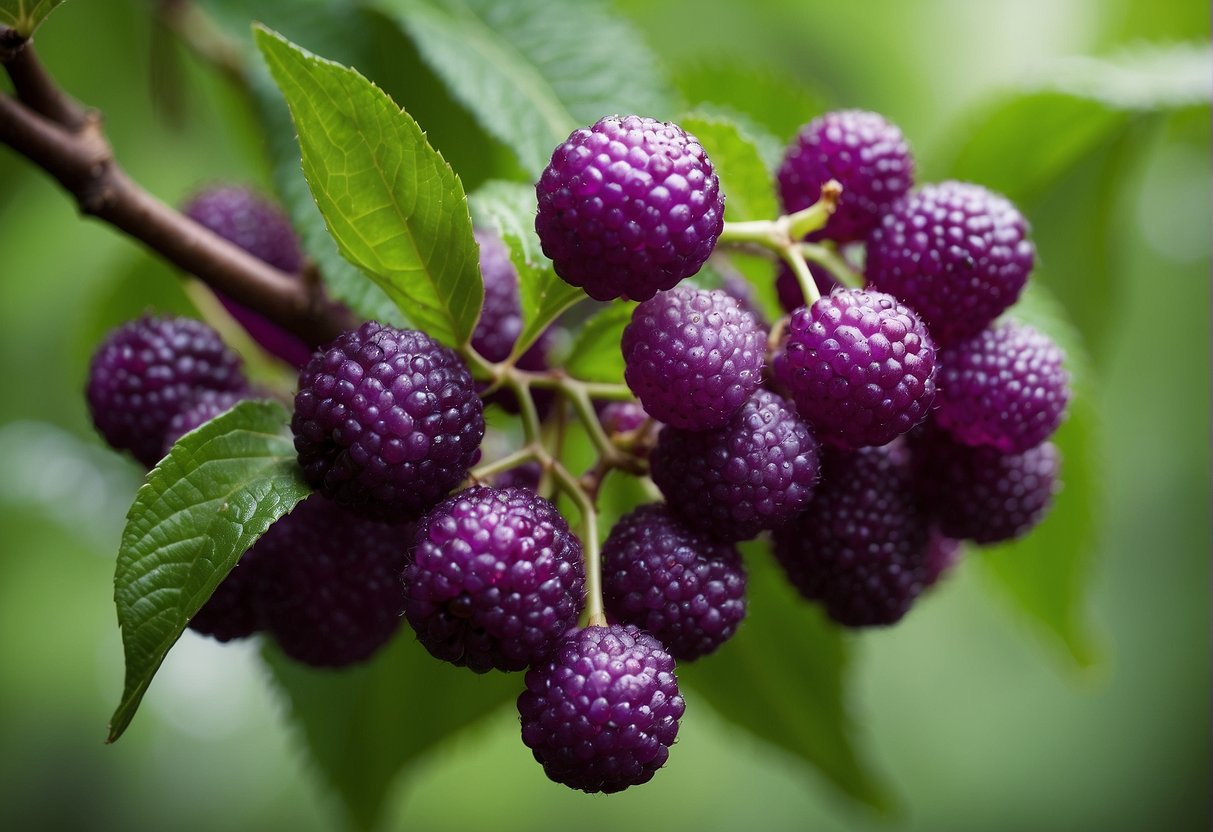
The American beautyberry, scientifically referred to as Callicarpa americana, originates from the southeastern regions of the United States as a deciduous bush. This plant is celebrated for its vibrant purple berries that gather in clusters on its limbs during the autumn season. Besides its visual appeal, the American beautyberry has been traditionally utilized for both its medicinal properties and culinary applications.
The botanical profile of American beautyberry is characterized by its opposite, simple leaves that are elliptical in shape and have serrated margins. The plant typically grows to a height of 3-5 feet, although it can reach up to 9 feet in some cases. The flowers of the beautyberry are small and pinkish in color, and they bloom in the summer months. The berries, which are the plant’s most distinctive feature, grow in clusters along the stems and are about the size of a pea. While they are not typically consumed by humans, they are a favorite food source for many birds and other wildlife.
Key Takeaways
- American beautyberry is a deciduous shrub native to the southeastern United States known for its striking clusters of bright purple berries.
- The plant has a long history of medicinal and culinary uses, although the berries are not typically consumed by humans.
- American beautyberry is an important food source for many birds and other wildlife.
Botanical Profile
Scientific Classification
American Beautyberry, also known as Callicarpa americana, is a deciduous shrub that belongs to the Lamiaceae family. This family includes other well-known plants such as mint, rosemary, and basil.
Physical Characteristics
The American Beautyberry plant can grow up to 6 feet tall and spread up to 6 feet wide. It has green leaves that are 2-6 inches long and 1-3 inches wide. The leaves are arranged oppositely on the stem and have a slightly serrated edge.
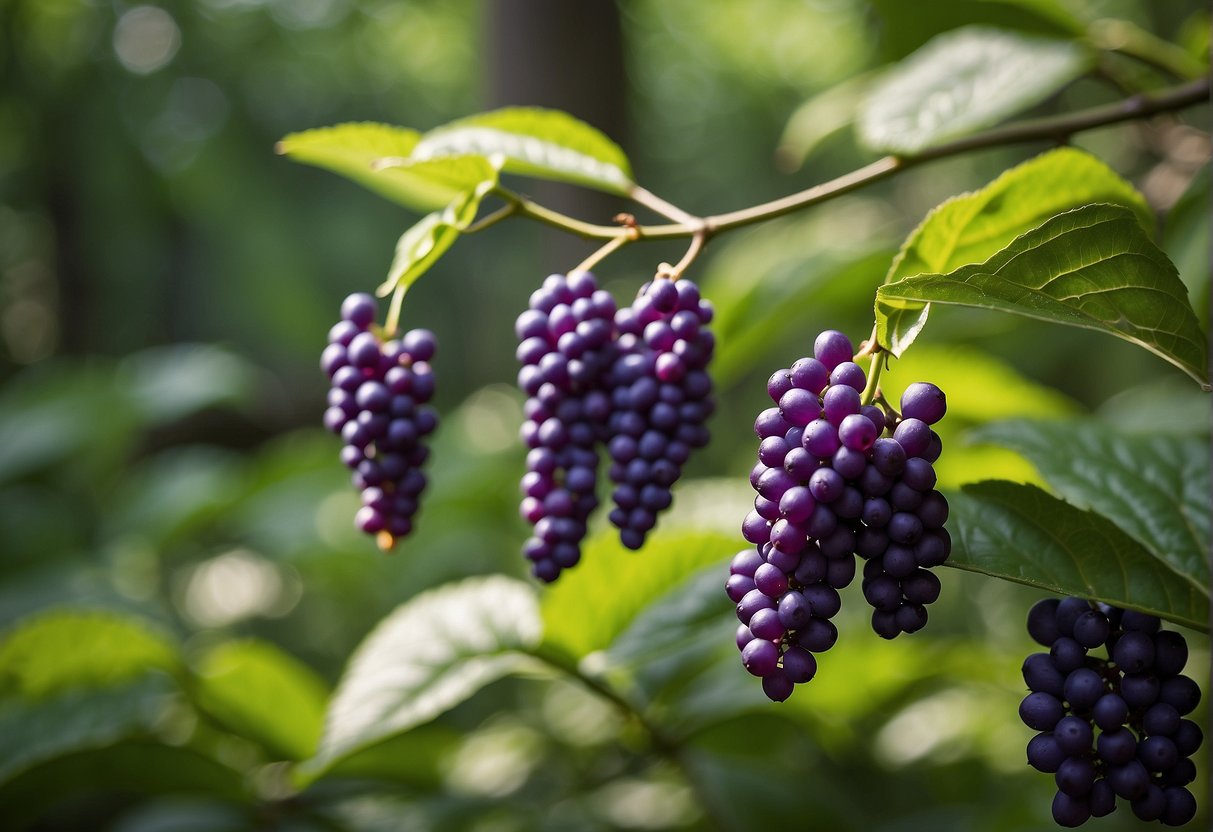
The most striking feature of the American Beautyberry plant is its vibrant purple berries that grow in clusters along the stem. The berries are about 1/4 inch in diameter and are surrounded by bright green foliage. In some cases, the plant can produce white berries instead of purple.
Overall, the American Beautyberry is a beautiful and unique addition to any garden or landscape. Its striking appearance and easy maintenance make it a popular choice among gardeners and landscapers alike.
Habitat and Range
Native Regions
American beautyberry, also known as Callicarpa americana, is a deciduous shrub that is native to the southeastern United States, including Florida, Texas, and the southern United States. It is also found in Bermuda, Cuba, and Mexico. The plant is commonly found in wooded areas and along the edges of forests.
Preferred Climate
American beautyberry prefers a warm and humid climate, making it well-suited for the southeastern United States. It grows best in areas with plenty of sunlight and well-drained soil. The plant is also drought-tolerant and can survive in areas with low rainfall.
In terms of temperature, American beautyberry can tolerate both hot and cold weather. However, it may suffer damage if temperatures drop below 20 degrees Fahrenheit.
Overall, American beautyberry is a hardy plant that can thrive in a variety of environments, making it a popular choice for gardeners and landscapers in the southeastern United States.
Cultivation
Planting Guidelines
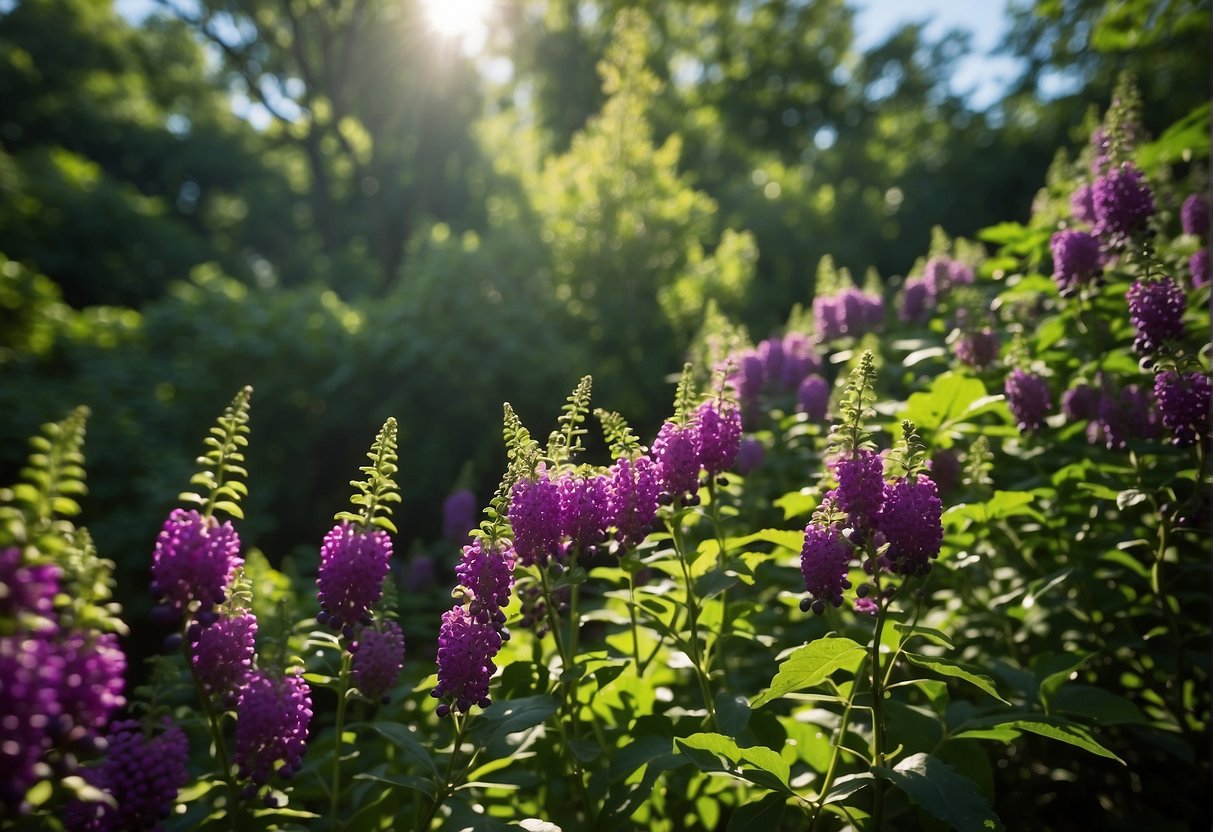
American beautyberry is a hardy plant that can be grown easily in your garden. It is best to plant it in the spring or fall, when the temperatures are mild. You can either plant it in a pot or directly in the ground. If you are planting it in a pot, make sure to choose a pot that is at least 12 inches in diameter.
When planting, dig a hole that is twice the size of the root ball. Make sure to loosen the soil at the bottom of the hole. Place the plant in the hole and backfill with soil. Water the plant thoroughly after planting.
Soil Requirements
American beautyberry prefers well-draining soil that is moist but not waterlogged. It can tolerate a range of soil types, including clay soil and sandy soil. However, it is important to note that the plant prefers slightly acidic soil with a pH between 5.0 and 6.5.
Sunlight and Watering
American beautyberry thrives in full sun or part shade. It requires at least 6 hours of sunlight per day to grow properly. The plant is drought-tolerant, but it is important to water it regularly during the first few weeks after planting. Once established, the plant can survive on natural rainfall alone.
When watering, make sure to water deeply and infrequently. This encourages the roots to grow deeper into the soil, which helps the plant to become more drought-tolerant. Avoid overwatering, as this can lead to root rot.
In summary, American beautyberry is a hardy plant that can grow in a range of soil types and light conditions. It prefers slightly acidic, well-draining soil and requires regular watering during the first few weeks after planting. Once established, the plant can survive on natural rainfall alone.
Propagation
If you want to grow American beautyberry in your garden, you have two primary options for propagation: seed germination and cuttings.
Seed Germination
Propagating American beautyberry from seed can be a bit tricky, but it is possible. The best time to collect the seeds is in the fall when the berries are ripe. After collecting the seeds, you should remove any remaining pulp and soak them in water for a day or two. This will help to soften the seed coat and improve germination rates.
Next, plant the seeds in a well-draining soil mix and cover them with a thin layer of soil. Keep the soil moist, but not waterlogged, and provide plenty of light. Germination can take anywhere from a few weeks to a few months, so be patient.
Cuttings
Propagating American beautyberry from softwood cuttings is a more reliable method than seed germination. The best time to take cuttings is in the early summer when the new growth is still soft and flexible.
To take a cutting, select a healthy stem and make a clean cut just below a node. Remove any leaves from the bottom half of the stem and dip the cut end in rooting hormone. Plant the cutting in a well-draining soil mix and keep it moist. You can cover the cutting with a plastic bag to help retain moisture and improve rooting.
With proper care, your cuttings should root in a few weeks to a few months. Once they have rooted, you can transplant them to their permanent location in your garden.
Growth and Care
When it comes to growing American Beautyberry, it is important to keep in mind that it is a low-maintenance plant that is relatively easy to care for. Here are some tips to help you ensure that your Beautyberry thrives:
Pruning Practices
American Beautyberry can be pruned to control its size and shape. Prune the plant in late winter or early spring before new growth appears. Cut back the branches to about 12 inches from the ground. This will help to promote new growth and prevent the plant from becoming too leggy.
Pest and Disease Management
American Beautyberry is generally not bothered by insects or diseases. However, it may be susceptible to black mold and leaf spots if the plant is kept too wet. To prevent these problems, make sure the plant is not overwatered and that the soil has good drainage.
Fertilization and Maintenance
American Beautyberry does not require a lot of fertilizer. In fact, too much fertilizer can cause the plant to produce too much new growth, which can make it more susceptible to pests and diseases. Apply a balanced fertilizer once a year in the spring to help promote healthy growth.
In terms of maintenance, American Beautyberry is a low-maintenance plant. Water the plant regularly during the first year after planting to help establish a strong root system. After that, the plant can tolerate periods of drought.
Overall, American Beautyberry is a beautiful and easy-to-care-for plant that can add color and interest to any garden. With proper pruning, pest and disease management, and fertilization, you can help ensure that your Beautyberry thrives.
Seasonal Changes
As the seasons change, so does the appearance of American Beautyberry. Understanding these changes can help you better care for and appreciate this unique plant.
Flowering and Fruiting
In the late spring and early summer, American Beautyberry produces small, pink to lavender blooms that attract pollinators. These blooms give way to bright, purple berries that ripen in the fall and persist through the winter. The berries are a favorite food source for birds and other wildlife.
Fall and Winter Appearance
In the fall, the leaves of American Beautyberry turn a vibrant yellow before dropping to the ground. The remaining berries provide a pop of color in the winter garden, standing out against the drab winter landscape.
During late winter, the branches of American Beautyberry may appear bare, but the plant is simply dormant and preparing for the upcoming growing season. With proper care, the plant will come back to life in the spring, producing new growth and blooms.
Overall, American Beautyberry is a hardy and attractive plant that can provide year-round interest in your garden. By understanding its seasonal changes, you can better appreciate its unique beauty and ensure its continued health and vitality.
Ecological Impact
Wildlife Interactions
American Beautyberry is a popular shrub that provides a valuable food source for various wildlife species. Birds, squirrels, deer, horses, foxes, and raccoons are some of the animals that feed on the berries. The berries are rich in carbohydrates and protein, making them an excellent source of nutrition for these animals.
Moreover, the shrub’s dense foliage provides shelter and nesting sites for birds and small mammals. The shrub’s leaves also contain compounds that repel insects, which can help protect birds’ nests from harmful pests.
Environmental Benefits
American Beautyberry is an excellent addition to any pollinator garden. The shrub’s flowers attract bees, butterflies, and other pollinators, which help to promote biodiversity in your garden. Additionally, the shrub’s dense foliage can help to reduce soil erosion and improve soil quality by retaining moisture and nutrients.
Moreover, the shrub’s leaves contain compounds that have been found to repel mosquitoes and other insects, making it an excellent natural insecticide. This property makes the shrub an excellent addition to any environmentally friendly garden.
In conclusion, American Beautyberry is an excellent shrub that provides numerous ecological benefits. Its ability to provide food and shelter for wildlife, attract pollinators, and act as a natural insecticide makes it an excellent addition to any garden.
Landscape Uses
Ornamental Value
American beautyberry is a popular ornamental plant, valued for its bright purple berries that adorn the plant in the fall. The berries are produced in clusters along the stems, and can persist well into winter, providing a colorful accent to the garden or landscape. The plant’s arching branches and bright green leaves also make it an attractive addition to the garden.
In addition to its ornamental value, American beautyberry is also valued for its wildlife habitat. The plant’s berries are a favorite food of birds and other wildlife, and can help attract these animals to the garden or landscape.
Design Considerations
American beautyberry can be used in a variety of landscape settings, from mass plantings to mixed perennial borders. When planting American beautyberry, it is important to consider the plant’s size and growth habit. The plant can grow up to 6 feet tall and wide, and has a tendency to spread by suckers, so it is important to give it plenty of room to grow.
American beautyberry is also relatively easy to cultivate, and can be grown in a variety of hardiness zones. The plant prefers well-drained soil and partial shade, but can tolerate a wide range of soil types and light conditions.
In mass plantings, American beautyberry can be used to create a colorful and eye-catching display. The plant’s arching branches and bright berries can be used to add height and texture to the landscape, while its wildlife value can help attract birds and other animals to the garden.
Overall, American beautyberry is a versatile and attractive plant that can be used in a variety of landscape settings. Whether you are looking to add color and texture to your garden or attract wildlife to your landscape, American beautyberry is a great choice.
Additional Information
Varieties and Cultivars
American beautyberry, also known as French mulberry, is a species of flowering shrub that belongs to the mint family. There are several varieties and cultivars of this plant, including the white-fruited beautyberry, which produces white fruit instead of the typical bright purple. Other notable varieties include the C. americana and the C. dichotoma.
Historical Uses
The American beautyberry has a long history of use in traditional medicine. Native Americans used the leaves to treat a variety of ailments, including fever, rheumatism, and dysentery. The roots were also used to treat toothaches and other oral health issues.
In addition to its medicinal uses, the American beautyberry has also been used for other purposes throughout history. For example, the fruit was used by early settlers to make a purple dye for clothing. The leaves were also used as a natural insect repellent, particularly against mosquitoes.
While the American beautyberry is not toxic to humans, it is toxic to mules and other livestock. As such, it is important to keep these animals away from the plant. When planting American beautyberry in your garden, be sure to place it in an area that is not accessible to your pets or livestock.
Overall, the American beautyberry is a versatile and useful plant with a rich history of use in traditional medicine and other applications. Whether you are looking to add some color to your garden or seeking a natural insect repellent, this plant is definitely worth considering.
Frequently Asked Questions
What are the uses of American beautyberry?
American beautyberry is mainly used for ornamental purposes due to its attractive purple berries and foliage. The plant is also used in traditional medicine for treating various ailments such as fever, rheumatism, and stomach aches.
Is the American beautyberry plant edible for humans?
While the berries of the American beautyberry plant are not toxic, they are not recommended for human consumption due to their astringent taste. However, they can be used to make jelly, wine, and other culinary items.
What are common issues with growing American beautyberry?
American beautyberry is generally easy to grow and maintain, but it can be susceptible to fungal diseases such as powdery mildew and leaf spot. It is important to provide adequate drainage and air circulation to prevent these issues.
Where can I purchase American beautyberry plants?
American beautyberry plants can be purchased at most nurseries and garden centers. They are also available for purchase online from various retailers.
What family does the American beautyberry belong to?
The American beautyberry belongs to the family Verbenaceae, which includes over 3,000 species of flowering plants.
In which regions is the American beautyberry plant native?
The American beautyberry plant is native to the southeastern United States, including parts of Texas, Oklahoma, and Florida. It can also be found in Mexico, Central America, and the Caribbean.

