
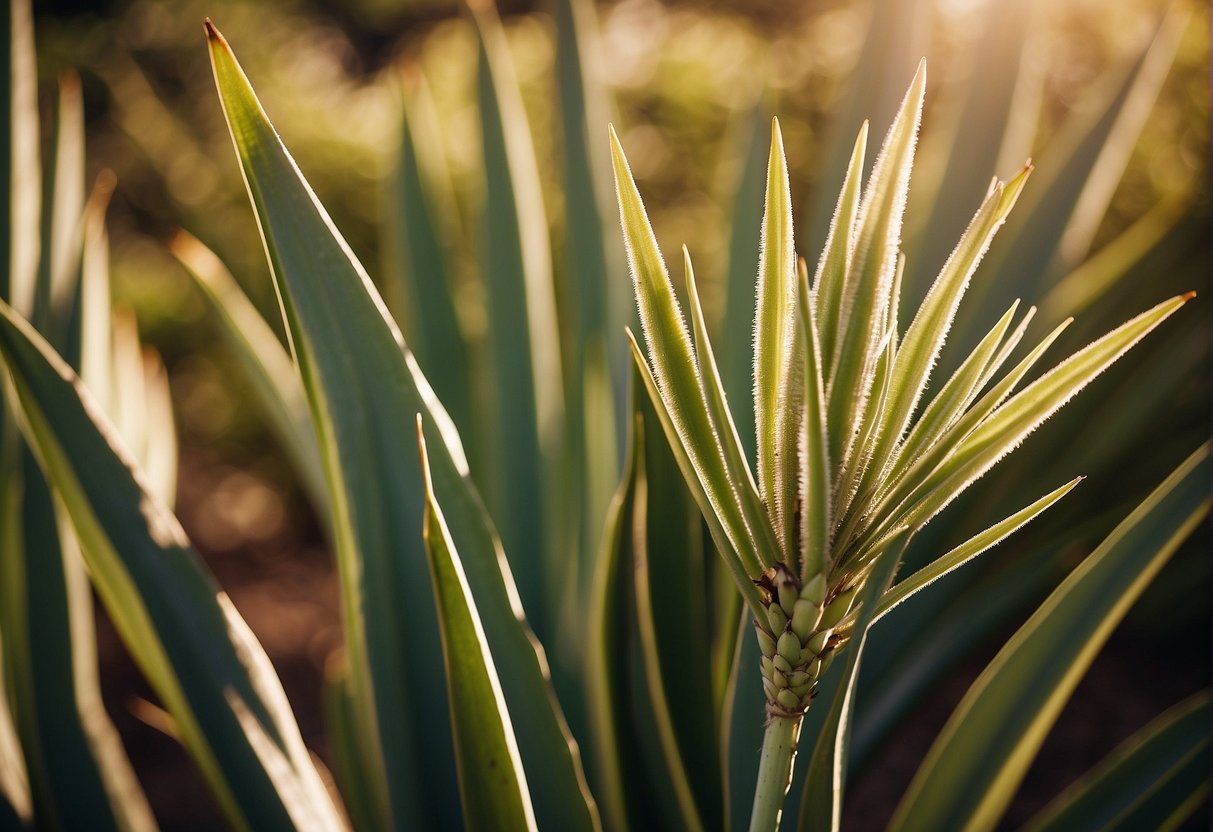
Why Do Yucca Plants Turn Brown: Common Causes and Solutions
If your yucca plant is developing brown spots, rest assured that this is a widespread problem encountered by numerous plant enthusiasts. It can be perplexing to pinpoint the cause of this issue. However, there are several typical reasons behind the browning of yucca plants. Armed with some understanding and attentive care, you can assist your plant in its recovery and ensure it flourishes.
Understanding Yucca Plant Health
Before diving into why yucca plants turn brown, it’s important to understand what makes a healthy yucca plant. Yucca plants are hardy and can survive in a variety of conditions, but they do require some basic care to stay healthy. Proper watering, light, and soil conditions are all important factors to consider when caring for your yucca plant.
Yucca Plant Care and Maintenance
In addition to understanding basic plant health, there are specific care and maintenance tips that can help prevent your yucca plant from turning brown. Regularly watering your plant, avoiding over-fertilization, and providing adequate sunlight are all important steps to take. If you’ve already noticed brown leaves on your yucca plant, there are steps you can take to help it recover, such as pruning away damaged leaves and adjusting your watering schedule.
Key Takeaways
- Yucca plants can turn brown for a variety of reasons, including overwatering, underwatering, and poor soil conditions.
- Proper yucca plant care and maintenance, including watering, fertilization, and sunlight, can help prevent brown leaves.
- If you’ve already noticed brown leaves on your yucca plant, taking steps such as pruning and adjusting watering can help it recover.
Understanding Yucca Plant Health
Yucca plants are known for their hardiness and ability to thrive in harsh conditions. However, even the toughest plants can suffer from stress and environmental factors that can cause them to turn brown. Understanding the health of your yucca plant is key to keeping it healthy and vibrant.
Watering and Soil Conditions
One of the most common causes of brown yucca leaves is overwatering. Yucca plants prefer well-draining soil and can suffer from root rot if they are in soil that is too moist. Make sure your yucca plant is in a pot with drainage holes and use a well-draining soil mix. Water your plant only when the top inch of soil is dry to the touch.
Light and Temperature Factors
Yucca plants need bright light to thrive, but direct sunlight can scorch their leaves. Place your plant in a spot with bright, indirect light. Yucca plants can also suffer from insufficient light, which can cause their leaves to turn brown. If your yucca plant is not getting enough light, move it to a brighter location.
Temperature is another factor that can affect the health of your yucca plant. Yucca plants prefer warm temperatures but can suffer from too much heat. Avoid placing your plant in a spot that gets too hot, such as near a heat vent or radiator.
Pests and Diseases
Yucca plants are generally resistant to pests and diseases, but they can still be affected by fungal leaf spots or rot. If you notice brown spots on your yucca leaves, it could be a sign of a fungal disease. Use a copper fungicide or neem oil to treat the affected leaves. Insecticides can also be used to treat pests that may be affecting your plant.
By understanding the factors that affect the health of your yucca plant, you can keep it looking healthy and vibrant. Keep an eye on your plant’s leaves and make adjustments to its care as needed to keep it thriving.
Yucca Plant Care and Maintenance
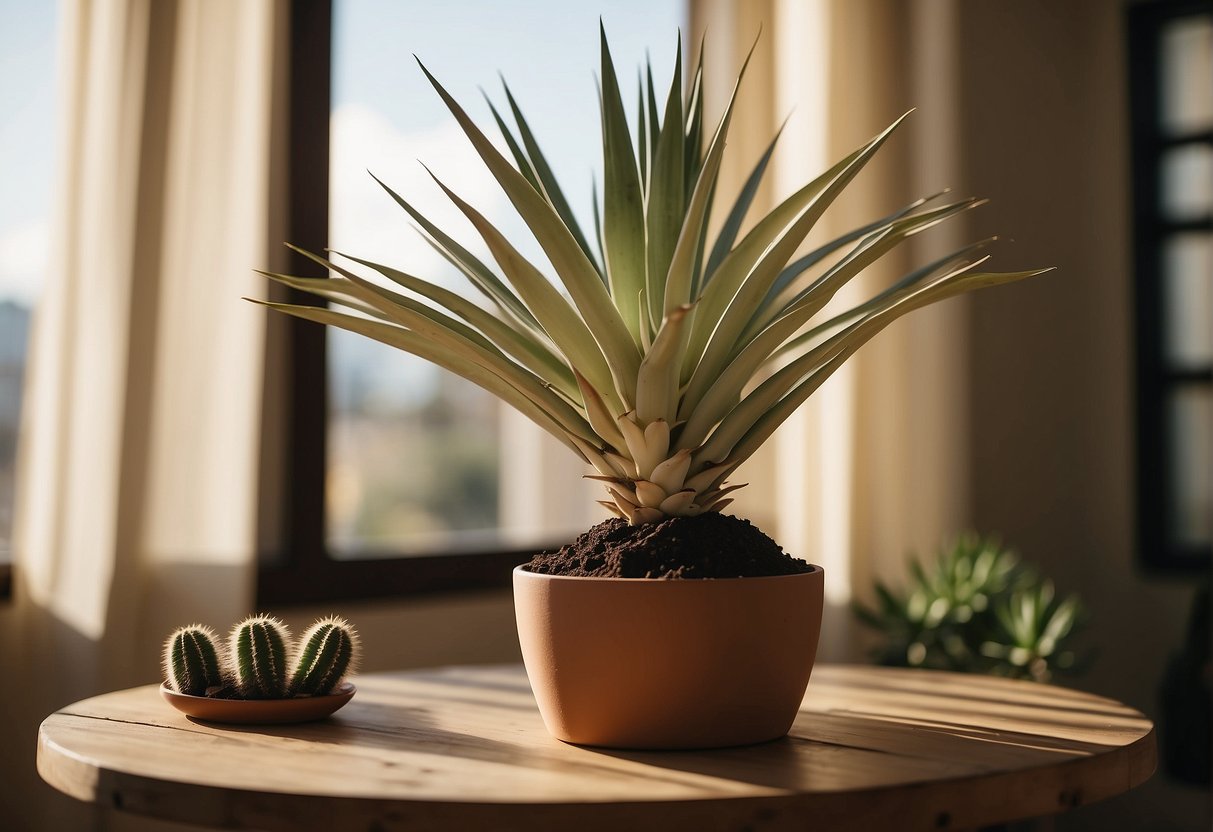
Yuccas are hardy plants that require minimal care, but they still need proper maintenance to keep them looking healthy and vibrant. Here are some essential care tips for your yucca plant:
Optimal Watering Practices
Yuccas are drought-tolerant plants, so they don’t need frequent watering. Overwatering can cause the plant to wilt, droop, and turn yellow, while lack of water can lead to brown tips and drooping leaves. To prevent these issues, water your yucca plant only when the top inch of soil is dry. Use a moisture meter to check the soil’s moisture level, and avoid using tap water, as it may contain harmful minerals. Rainwater is an excellent alternative as it is free of minerals and chlorine.
Proper Lighting and Placement
Yuccas thrive in bright light, but they can also tolerate low light conditions. However, if the plant is not getting enough light, it may start to drop off its lower leaves. If you notice this happening, move the plant to a brighter location. On the other hand, if the plant is exposed to direct sunlight, it may develop scorch marks on its leaves. To prevent this, place the plant in a location that receives bright, indirect light.
Soil and Repotting Essentials
Yuccas prefer sandy, well-draining soil that is slightly acidic. Avoid using heavy soils that retain moisture as they can cause root rot. Terracotta pots are an excellent choice for yuccas as they are porous and allow air to circulate around the roots. Repot your yucca plant every two to three years using fresh soil to provide it with the necessary nutrients for new growth.
Pruning and Managing Growth
Yuccas are slow-growing plants, but they can still benefit from pruning to manage their growth and appearance. Use clean and sharp pruners to remove any brown or yellowing leaves, or to shape the plant. Avoid over-pruning as it can stress the plant and slow down its growth.
Balancing Humidity and Airflow
Yuccas prefer low humidity and good airflow, so avoid misting the plant as it can lead to leaf burn and fungal growth. Instead, provide the plant with good ventilation by opening windows or using a fan to circulate the air. If the air in your home is dry, you can place a humidifier near the plant to maintain the optimal humidity level.
By following these care tips, you can ensure that your yucca plant stays healthy and vibrant for years to come.
Frequently Asked Questions
What causes brown tips on yucca plant leaves?
Brown tips on yucca plant leaves are often caused by underwatering, low humidity, or too much direct sunlight. Yucca plants prefer well-draining soil, so if the soil is too wet, it can lead to root rot, which can cause the tips of the leaves to turn brown.
How can you tell if a yucca plant is overwatered?
Overwatering a yucca plant can lead to yellowing leaves, root rot, and even death. You can tell if your yucca plant is overwatered by checking the soil moisture level. If the soil is consistently moist or waterlogged, it’s a sign that you’re overwatering your yucca plant.
What is the best way to treat yucca plants with brown spots on their leaves?
If your yucca plant has brown spots on its leaves, it may be suffering from a fungal or bacterial infection. To treat the plant, you should remove any affected leaves and apply a fungicide or bactericide to the plant. You should also make sure that the plant is getting enough sunlight and that the soil is well-draining.
How do I prevent my indoor yucca plant leaves from turning brown?
To prevent your indoor yucca plant leaves from turning brown, you should make sure that the plant is getting enough sunlight and that the soil is well-draining. You should also avoid overwatering the plant and make sure that the humidity level in the room is adequate.
Why are my yucca plant’s leaves turning yellow and brown?
Yucca plant leaves can turn yellow and brown due to a variety of reasons, including overwatering, underwatering, low humidity, and pests. It’s important to identify the underlying cause of the problem and address it accordingly.
How can a dying yucca plant be revived?
If your yucca plant is dying, you should first identify the underlying cause of the problem. If the plant is suffering from root rot, you should remove any affected roots and repot the plant in fresh soil. If the plant is suffering from a fungal or bacterial infection, you should apply a fungicide or bactericide to the plant. You should also make sure that the plant is getting enough sunlight and that the soil is well-draining.

