
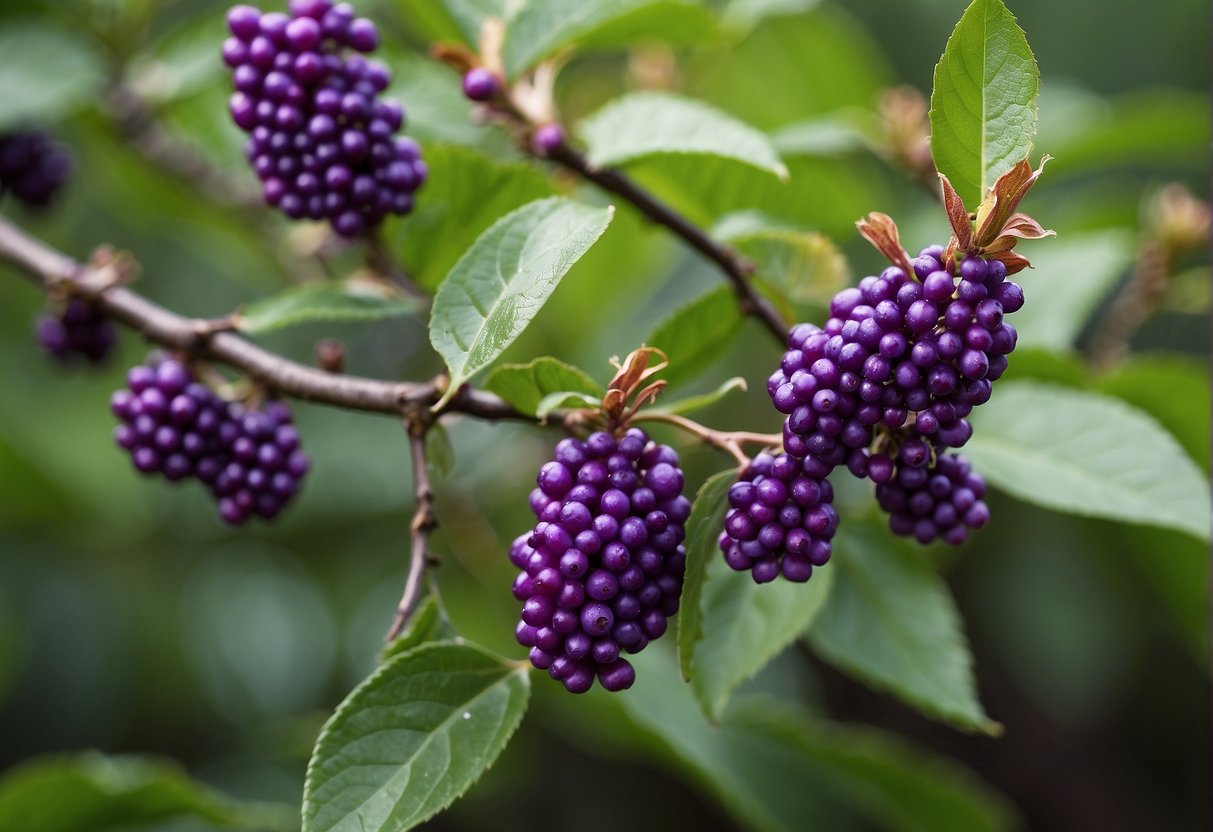
How to Prune Beautyberry Bush: A Step-by-Step Guide
Trimming your beautyberry bush might seem like an overwhelming chore, yet it’s crucial for keeping it healthy and attractive. Correct pruning can lead to your shrub having brighter leaves and a greater yield of berries. In this article, we’ll walk you through the steps for properly pruning your beautyberry bush.
Understanding the basics of beautyberry shrubs is crucial to pruning them effectively. Beautyberries are deciduous shrubs that produce vibrant purple berries in the fall. They grow best in well-drained soil and partial shade. Pruning your beautyberry bush can help to control its size, shape, and density, and promote new growth.
Pruning your beautyberry bush requires some fundamental knowledge of pruning techniques. In this article, we will cover the basics of pruning, including the tools you will need, the best time to prune, and the different types of pruning cuts. We will also discuss how to care for your beautyberry bush after pruning, including watering, fertilizing, and pest control. By following our step-by-step guide, you can keep your beautyberry bush healthy and beautiful for years to come.
Key Takeaways
- Pruning your beautyberry bush can help control its size, shape, and density, and promote new growth.
- Understanding the basics of beautyberry shrubs is crucial to pruning them effectively.
- Proper pruning techniques, such as using the right tools and making the right cuts, can help keep your beautyberry bush healthy and beautiful.
Understanding Beautyberry
Species Overview
Beautyberry, also known as Callicarpa, is a deciduous shrub that is commonly found in gardens and the wild. There are two main species of beautyberry: Callicarpa americana, or American beautyberry, and Callicarpa japonica, or Japanese beautyberry. Both species have purple berries and white fruit, but the berries of C. americana are larger than those of C. japonica.
Beautyberry is a popular shrub among gardeners because it is easy to grow and requires minimal maintenance. It is also a favorite among wildlife, as birds and other animals are attracted to the berries.
Optimal Growing Conditions
Beautyberry thrives in full sun to partial shade and is hardy in zones 6-10. It is drought-tolerant and prefers well-drained soil. However, it can adapt to a variety of soil types and pH levels.
When planting beautyberry, it is important to prepare the soil by adding organic matter. This will help to improve soil structure and provide necessary nutrients.
Beautyberry has light requirements and can tolerate a range of temperatures and humidity levels. However, it is important to avoid planting in areas with extreme temperatures or high humidity, as this can stress the plant.
In summary, beautyberry is a low-maintenance shrub that is easy to grow and attracts wildlife. It prefers well-drained soil with added organic matter and can tolerate a range of light, temperature, and humidity conditions.
Pruning Fundamentals
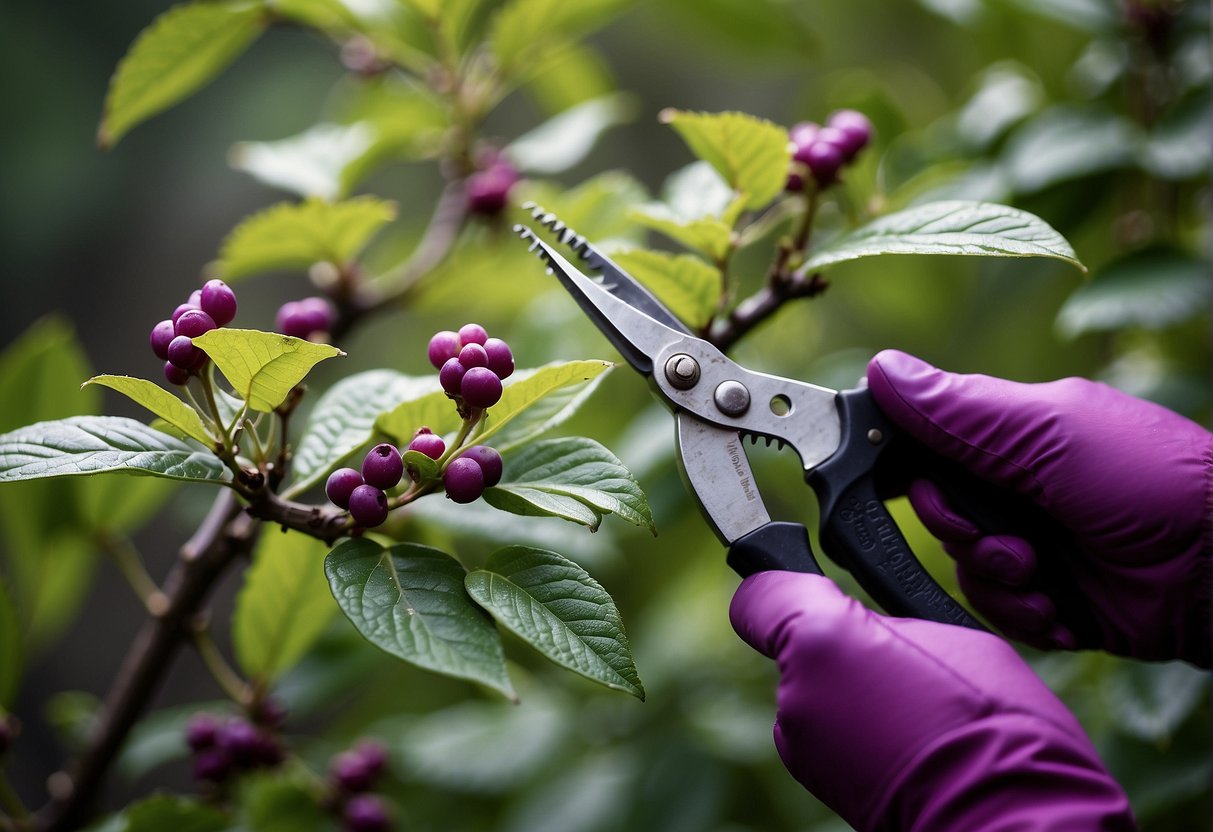
When it comes to pruning your beautyberry bush, there are a few fundamentals you should keep in mind. Proper pruning can help maintain the health and appearance of your plant, and encourage new growth and blooms. Here are some key things to keep in mind:
Best Time to Prune
The best time to prune your beautyberry bush is in late winter or early spring, before new growth begins. This is when the plant is dormant and will not be harmed by pruning. Pruning at this time will also encourage new growth and promote a neat, rounded shape.
Tools and Techniques
When pruning your beautyberry bush, it’s important to use the right tools and techniques. You’ll need a pair of sharp pruning shears or loppers, as well as gloves to protect your hands. Begin by removing any damaged or diseased branches, cutting them back to healthy wood. Then, prune any crossing or rubbing branches, as well as any branches that are growing in the wrong direction. Finally, shape the plant by selectively pruning to promote a neat, rounded shape.
Pruning for Health
Regular pruning is an important part of maintaining the health of your beautyberry bush. By removing damaged or diseased branches, you can prevent the spread of diseases and pests, and promote healthy new growth. Pruning can also help renew the plant, encouraging new growth and blooms.
Overall, proper pruning is an important part of caring for your beautyberry bush. By following these fundamentals, you can maintain the health and appearance of your plant, and enjoy beautiful blooms year after year.
Caring for Your Beautyberry
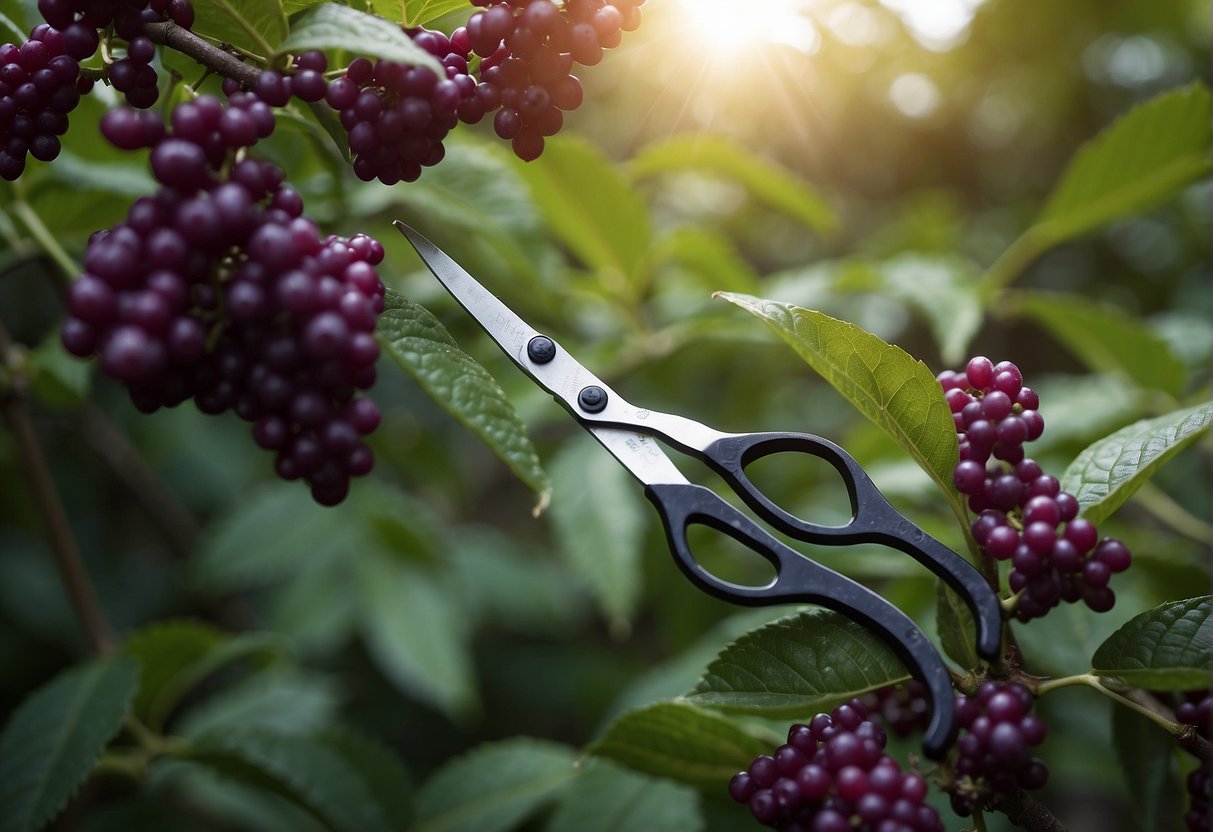
If you want your beautyberry bush to thrive and produce an abundance of berries, it’s important to give it proper care and maintenance. Here are some tips on how to care for your beautyberry bush.
Watering and Fertilizing
Beautyberry bushes prefer well-drained soil, so make sure the soil around the plant doesn’t get waterlogged. Water the plant deeply once a week during the growing season, and reduce watering during the winter months. To encourage healthy growth and berry production, fertilize the plant with a balanced fertilizer in the spring and again in mid-summer.
Dealing with Pests and Problems
Beautyberry bushes are generally pest and disease resistant, but they can be susceptible to certain issues. One common problem is spider mites, which can cause yellowing and wilting of leaves. To prevent spider mites, keep the plant well-watered and spray it with a strong jet of water to knock off any mites. Another issue is powdery mildew, which can be prevented by ensuring good air circulation around the plant and avoiding overhead watering.
If you notice any invasive plants growing near your beautyberry bush, remove them promptly to prevent competition for nutrients and water. Additionally, if you notice any signs of disease or pests, take action immediately to prevent the problem from spreading to other plants in your garden.
By following these simple tips for care and maintenance, you can enjoy a healthy and productive beautyberry bush in your garden.
Propagation and Planting
If you want to propagate beautyberry bushes, there are two main methods: growing from seed or transplanting. Here are some tips on how to do both successfully.
Growing from Seed
If you want to grow beautyberry from seed, you will need to start by collecting fresh seeds from mature plants. You can do this in the fall when the berries are ripe and have turned purple. Once you have collected the seeds, you will need to clean them and dry them out for a few days.
Once the seeds are dry, you can start the germination process. You can either sow the seeds directly into the ground or start them in containers indoors. If you choose to start them indoors, use a seed-starting mix and keep the soil moist but not waterlogged. The seeds should germinate in about two to three weeks.
When the seedlings are about two inches tall, you can transplant them into larger containers or into the ground. Make sure to give them plenty of space to grow, as beautyberry bushes can get quite large.
Transplanting and Spacing
If you want to transplant an existing beautyberry bush, the best time to do it is in the early spring or late fall when the plant is dormant. When you dig up the plant, make sure to keep the root ball intact and try not to damage any of the roots.
When you are ready to replant the beautyberry bush, choose a location that gets partial shade and has well-draining soil. Dig a hole that is twice the size of the root ball and place the plant in the hole. Fill in the hole with soil and water the plant well.
When it comes to spacing, beautyberry bushes should be planted about six feet apart to give them enough room to grow. If you are planting in containers, choose a container that is at least 18 inches in diameter to give the plant enough space to spread out.
By following these tips, you can successfully propagate and plant beautyberry bushes in your garden.
Landscape Design with Beautyberry
Beautyberry bushes are known for their stunning foliage color and purple or white berries. They are native to the southeastern United States and can be found throughout North America. Incorporating beautyberry into your garden setting can add borders and fall interest with its arching branches and fall foliage.
Incorporating into Gardens
Beautyberry bushes are a great addition to any garden setting. They can be used as a border plant or as a focal point in your garden. The beautyberry bush is known for its fall color and can add a pop of color to your garden during the fall season. They also attract wildlife, making it a great addition to any garden that wants to support local wildlife.
Companion Planting
Beautyberry bushes can also be used in companion planting. They are a great addition to any garden that experiences dry periods as they are drought tolerant. They also attract beneficial insects such as bees and butterflies, making it a great addition to any garden that wants to support local wildlife. Some great companion plants for the beautyberry bush include coneflowers, black-eyed susans, and butterfly weed.
Incorporating beautyberry bushes into your landscape design can add fall interest and attract wildlife to your garden. Whether you use it as a border plant or in companion planting, the beautyberry bush is a great addition to any garden.
Maintaining Beautyberry Long-Term
To keep your beautyberry bush healthy and looking its best, it’s important to provide proper care and maintenance. With the right techniques and attention, you can ensure that your beautyberry bush thrives for years to come.
Seasonal Care
In late summer, it’s important to prune your beautyberry bush to promote healthy growth and maintain its shape. Cut back any dead or damaged branches, as well as any that are growing in an undesirable direction. This will encourage new growth and help your bush maintain a neat, rounded shape.
During dry periods, it’s important to water your beautyberry bush regularly to ensure it stays healthy and hydrated. While beautyberry bushes are drought-tolerant, they still require adequate moisture to thrive. Be sure to water deeply and thoroughly, allowing the soil to dry out slightly between waterings.
Managing Growth and Shape
To maintain a neat, tidy appearance, it’s important to shape your beautyberry bush on a regular basis. Use pruning shears to carefully trim back any branches that are growing out of bounds or disrupting the overall shape of the bush.
When pruning your beautyberry bush, be sure to cut back to just above a bud or node. This will encourage new growth and help maintain the bush’s shape over time.
With proper care and maintenance, your beautyberry bush can provide years of beauty and enjoyment in your garden. By following these simple tips, you can ensure that your bush remains healthy, vibrant, and beautiful for years to come.
Frequently Asked Questions
What is the best season to prune a beautyberry bush?
The best time to prune a beautyberry bush is in late winter or early spring while the plant is still dormant. Pruning during this time will help promote healthy growth and flowering during the growing season.
Can beautyberry bushes be pruned when grown in containers?
Yes, beautyberry bushes can be pruned when grown in containers. However, it is important to be mindful of the size of the container and the amount of foliage that is removed during pruning. Pruning too much foliage can stress the plant and impact its overall health.
What are the proper techniques for pruning a Callicarpa?
When pruning a Callicarpa, it is important to use sharp, clean pruning shears and make cuts at a 45-degree angle. Start by removing any dead or damaged branches, then focus on thinning out the interior of the plant to promote airflow and light penetration. Avoid cutting back more than one-third of the plant at once.
How can I manage an overgrown beautyberry bush?
If your beautyberry bush has become overgrown, it is best to tackle the pruning in stages over a period of a few years. Start by removing any dead or damaged branches, then focus on thinning out the interior of the plant to promote airflow and light penetration. Avoid cutting back more than one-third of the plant at once.
What care should be taken after pruning a beautyberry plant?
After pruning a beautyberry plant, it is important to water it thoroughly and apply a balanced fertilizer to promote healthy growth. Avoid fertilizing the plant for at least a month after pruning to allow it to recover.
Are there any common issues to look out for after pruning beautyberry?
After pruning a beautyberry plant, it is important to watch for signs of stress or disease. Keep an eye out for wilting, yellowing leaves, or any other unusual symptoms. If you notice any issues, take action promptly to prevent further damage to the plant.

