
How to Propagate Beautyberry Bushes: A Step-by-Step Guide
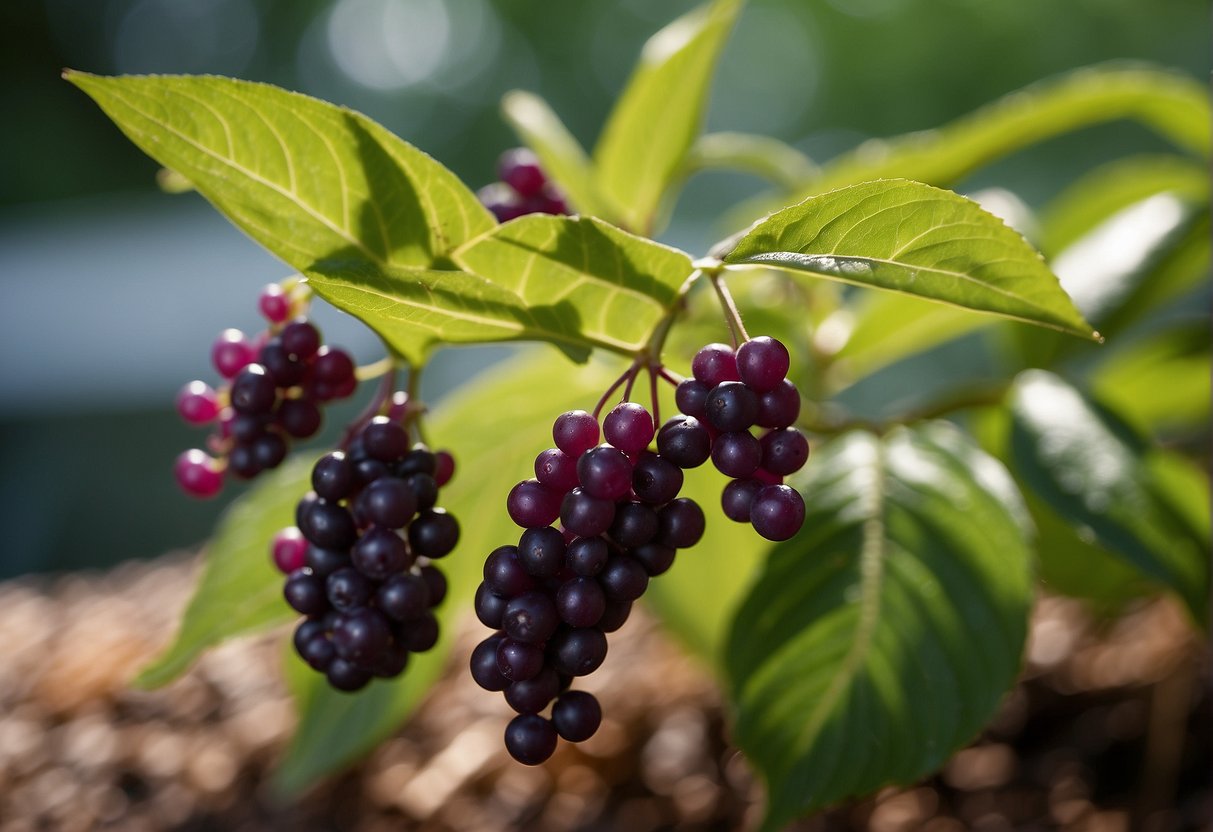
If you’re in search of an easy-to-care-for bush that brings a splash of color to your outdoor space, consider the beautyberry. This robust shrub bears vibrant purple berry clusters that remain vivid from autumn through winter. Moreover, beautyberry is straightforward to propagate, allowing you to effortlessly grow your assortment or pass them on to loved ones.
Understanding Beautyberry
Beautyberry (Callicarpa spp.) is a genus of shrubs and small trees native to Asia and the Americas. The most common species is Callicarpa americana, which is native to the southeastern United States. Beautyberry is prized for its showy, long-lasting berries, which are produced on the current season’s growth. The plant typically grows 3-6 feet tall and wide, with arching branches and bright green leaves.
Propagation Basics
Propagating beautyberry is relatively easy, and can be done using a variety of techniques. The most common method is stem cuttings, which involves taking a piece of stem with a few leaves and rooting it in soil or water. You can also propagate beautyberry from seed or by layering, which involves burying a low-growing branch and waiting for it to form roots before cutting it away from the parent plant. Regardless of the method you choose, the key is to provide the right conditions for the plant to form roots and establish itself.
Understanding Beautyberry
Species Overview
Beautyberry, also known as Callicarpa, is a genus of shrubs known for their vibrant purple berries that appear in fall. The American Beautyberry (Callicarpa americana) is a native plant that can be found in the southeastern United States. It is a popular choice for gardens and landscapes due to its unique appearance and low maintenance requirements.
Optimal Growing Conditions
To ensure the best growth and development of your beautyberry shrub, it is important to provide it with optimal growing conditions.
Light
Beautyberry thrives in full sun to partial shade, but it can tolerate some shade as well. If planted in full shade, the plant may produce fewer berries and have a less dense growth habit.
Soil
Beautyberry prefers well-draining soils that are rich in organic matter. It can grow in a variety of soil types, but it prefers slightly acidic soils with a pH range of 5.5 to 6.5.
Temperature and Moisture
Beautyberry can tolerate a wide range of temperatures and moisture levels, but it prefers moderate temperatures and consistent moisture. It can tolerate drought conditions, but it may produce fewer berries in dry conditions.
Maintenance
Beautyberry is a low-maintenance plant that requires little pruning or fertilization. It is generally pest and disease resistant, but it may be susceptible to deer browsing.
In summary, beautyberry is a unique and low-maintenance shrub that can add a pop of color to your garden or landscape. By providing it with optimal growing conditions, you can ensure the best growth and development of your plant.
Propagation Basics
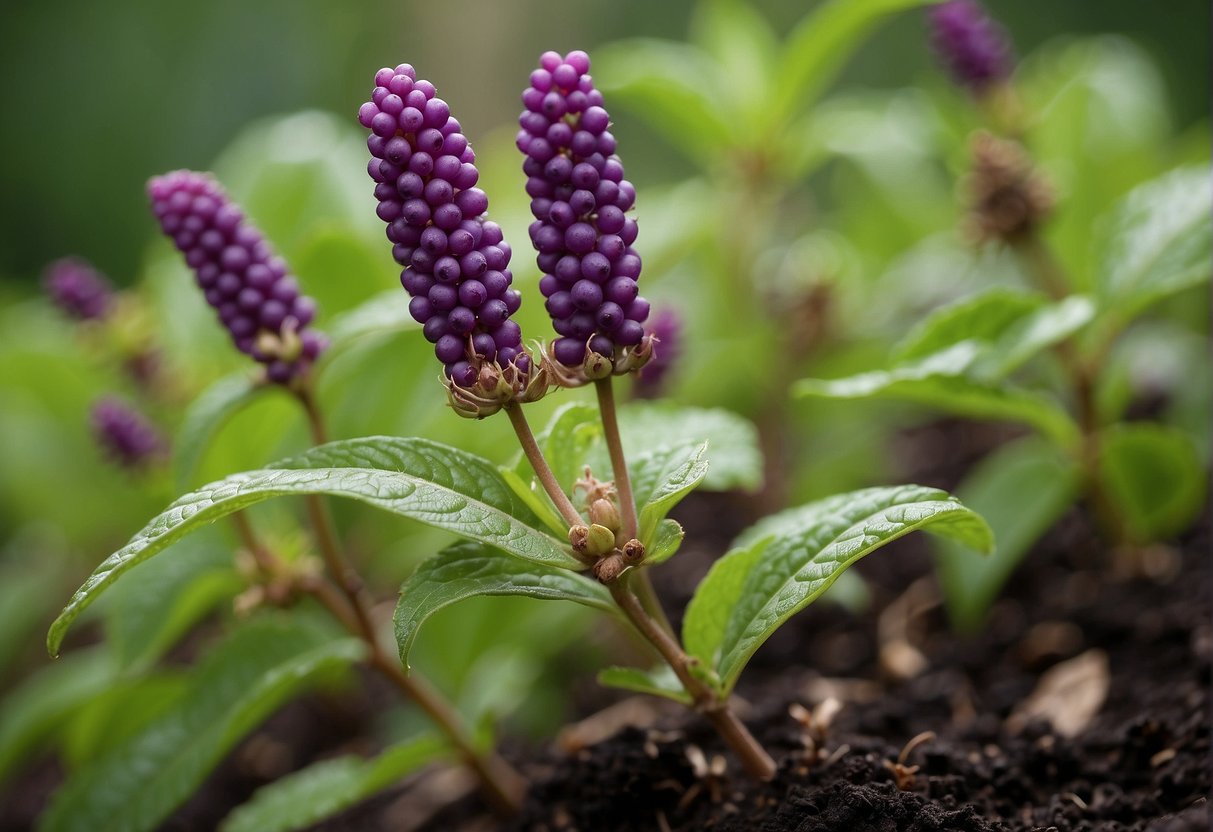
If you want to propagate your beautyberry bushes, you have several options. The two most common methods are softwood cuttings and seed propagation. Both methods require some patience and energy, but with the right timing and technique, you can successfully grow new plants.
Propagation Methods
Softwood cuttings are a popular and effective way to propagate beautyberry bushes. You should take cuttings in the late spring or early summer, when the plant is actively growing new shoots. Look for healthy, young stems that are still flexible and haven’t hardened yet. Cut a 4- to 6-inch section of the stem and remove the leaves from the bottom half. Dip the cut end in rooting hormone and plant it in a well-draining soil mix. Keep the soil moist and the cutting in a warm, bright location. With proper care, your cutting should root and start to develop new growth within a few weeks.
Seed propagation is another option, but it requires more time and effort than cuttings. Collect ripe berries in the fall or winter and remove the seeds. Soak the seeds in water for 24 hours and then plant them in a well-draining soil mix. Keep the soil moist and the seeds in a warm, bright location. It may take several weeks for the seeds to germinate, and several months for the seedlings to develop into sturdy plants.
Timing for Propagation
Timing is crucial for successful propagation. Softwood cuttings should be taken in the late spring or early summer, when the plant is actively growing new shoots. Seed propagation should be done in the fall or winter, when the plant is dormant. Make sure to choose healthy, disease-free plants for propagation, and to provide the right growing conditions for your cuttings or seedlings. With patience and care, you can grow new beautyberry bushes to enjoy in your garden.
Preparing for Propagation
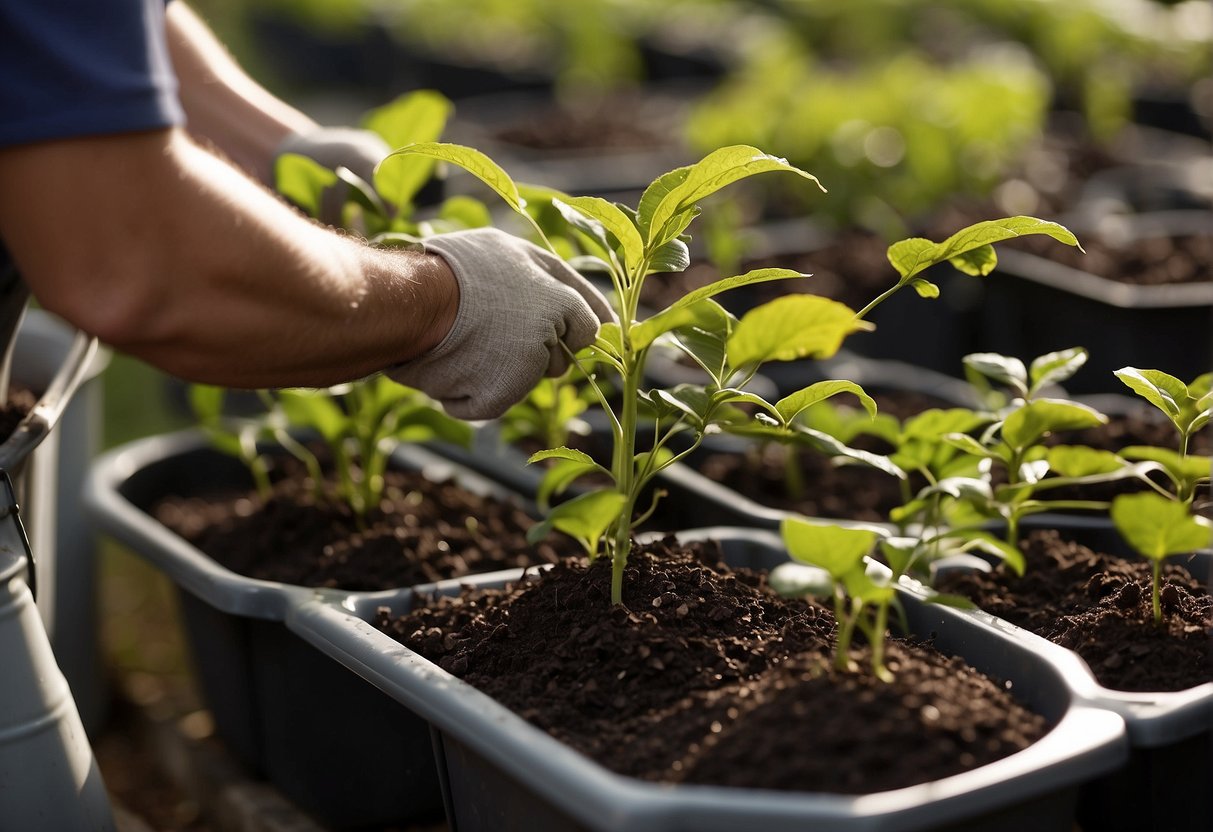
If you want to propagate beautyberry bushes successfully, you need to prepare properly. Here are some tips on how to get started:
Selecting Cuttings
To propagate beautyberry bushes, you need to select healthy cuttings. Look for softwood stems or branches that are about 4-6 inches long and have at least two nodes. Make sure the cutting is free from any diseases or pests.
Soil and Containers
The next step is to prepare the soil and containers. You can use a potting mix that is moist and well-draining. It is recommended to add vermiculite, perlite, or peat moss to improve drainage. You can use seedling trays or small containers to plant the cuttings. Make sure the container has drainage holes to prevent waterlogging.
Rooting Hormone
Using rooting hormone can increase your chances of success. Dip the cut end of the stem in the rooting hormone before planting it in the soil. This will help the cutting to develop roots faster.
Greenhouse
If you have a greenhouse, it is an ideal place to propagate beautyberry bushes. The controlled environment will provide the perfect conditions for the cuttings to grow. However, if you don’t have a greenhouse, you can still propagate the cuttings indoors.
Native Soil
If you want to plant the cuttings directly in the ground, make sure to use native soil. It will provide the best growing conditions for the new plants.
Compost
Adding compost to the soil can also improve the growth of the new plants. It will provide the necessary nutrients for the cuttings to develop into healthy bushes.
By following these tips, you can prepare for propagation and increase your chances of success.
Propagation Techniques
Cutting Preparation
Propagating beautyberry bushes through stem cuttings is the most common method. It is best to take cuttings in the spring or early summer when the plant is actively growing. Start by selecting healthy stems that are at least 6 inches long and have several leaves. Cut the stem at a 45-degree angle just below a node, which is where the leaf meets the stem. Remove any leaves from the bottom 2 inches of the stem.
Before planting the cuttings, dip the cut ends into rooting hormone powder to promote root growth. You can also mist the cuttings with water using a spray bottle to keep them moist. Place the cuttings in a greenhouse environment with bright, indirect light and keep the soil moist. Cover the cuttings with a plastic bag to create a humid environment, which will help them root.
Seed Propagation
Another way to propagate beautyberry bushes is through seeds. You can collect the berries from the plant when they are fully ripe and the pulp is soft. Remove the pulp and rinse the seeds in water. Dry the seeds for a few days before planting them in moist soil.
Keep the soil moist and place the seeds in a warm, bright location with indirect light. The seeds should germinate within a few weeks. Once the seedlings have grown to a few inches tall, you can transplant them to their permanent location.
Whether you choose to propagate beautyberry bushes through stem cuttings or seeds, it is important to provide the right conditions for success. With proper care and attention, you can easily propagate these beautiful plants and enjoy their edible berries for years to come.
Caring for New Beautyberry Plants
Once you have successfully propagated your beautyberry bushes, it is important to care for them properly to ensure healthy growth and a beautiful landscape. Here are some tips on how to care for your new beautyberry plants.
Watering and Light
Watering is crucial for the growth of new beautyberry plants. Make sure to water them regularly, especially during the first few weeks after planting. However, be careful not to overwater them as this can damage the root system. It is important to keep the soil moist but not waterlogged.
Beautyberry plants prefer full sun but can also tolerate partial shade. Direct sunlight is necessary for optimal growth and berry production. Make sure to plant your beautyberry bushes in a location that receives at least six hours of direct sunlight per day.
Pruning and Training
Pruning is essential for maintaining the shape and size of your beautyberry bushes. Prune your plants in late winter or early spring before new growth begins. Cut back any dead or damaged branches to promote healthy growth.
Beautyberry bushes have arching branches that can become too heavy and cause the plant to bend or break. To prevent this, you can train your beautyberry plant by tying the branches to a stake or trellis. This will help the plant grow upright and maintain its shape.
In summary, caring for new beautyberry plants involves regular watering, providing adequate sunlight, and pruning and training the plant to maintain its shape and prevent damage. By following these tips, you can ensure healthy growth and a beautiful landscape.
Troubleshooting Common Issues
If you encounter any issues while propagating beautyberry bushes, don’t worry. Here are some common problems and solutions to help you out.
Pests and Diseases
Beautyberry bushes are generally hardy and resistant to pests and diseases. However, there are a few issues that you may encounter.
One common pest is the Japanese beetle. These beetles can cause significant damage to the foliage of your beautyberry bushes. If you notice any signs of damage, such as holes in the leaves, you can try spraying the affected areas with a neem oil solution.
Another potential issue is fungal diseases, such as powdery mildew or leaf spot. These diseases can cause the leaves to turn yellow or brown and fall off. To prevent fungal diseases, make sure to keep the area around your beautyberry bushes clean and free of debris. You can also use a fungicide spray to treat any affected areas.
Environmental Stress
Beautyberry bushes are native to the southeastern United States and are adapted to thrive in hot and humid conditions. However, they can still be susceptible to environmental stress.
One common issue is damage to the fall foliage. If the temperature drops too quickly, the leaves may turn brown and fall off prematurely. To prevent this, make sure to water your beautyberry bushes regularly and provide them with plenty of sunlight.
Another potential issue is damage from extreme temperatures. If the temperature drops below 10°F, your beautyberry bushes may suffer damage or die. To prevent this, make sure to protect your plants during the winter months by covering them with a layer of mulch or burlap.
By following these tips, you can help ensure that your beautyberry bushes thrive and provide a beautiful addition to your garden.
Beautyberry in the Landscape
Beautyberry is a stunning shrub that can add a pop of color to any garden or landscape. It is native to the southeastern United States and is known for its clusters of bright purple berries that appear in the fall. Here are some design considerations and wildlife benefits to keep in mind when incorporating beautyberry into your landscape.
Design Considerations
Beautyberry is a versatile shrub that can be used in a variety of ways. It can be planted in groups to create a naturalistic look, or used as a focal point in a garden. It can also be grown in containers, making it a great option for small spaces.
When planting beautyberry, it is important to consider its size and shape. It can grow up to 6 feet tall and wide, so make sure to give it plenty of room to spread out. It prefers full sun to partial shade and well-drained soil.
In the garden, beautyberry can be paired with other native plants to create a naturalistic look. It looks great planted alongside asters, goldenrod, and other fall-blooming plants. It can also be used as a backdrop for smaller plants.
Wildlife and Ecosystem Benefits
Beautyberry is not only beautiful, but it also provides important benefits to wildlife and the ecosystem. The berries are a favorite food source for birds, including bluebirds, robins, and mockingbirds. They are also a source of food for small mammals like squirrels and raccoons.
In addition to providing food for wildlife, beautyberry is also an important host plant for several butterfly species. The leaves are a food source for the larvae of the white peacock butterfly, the Io moth, and the American dagger moth.
Beautyberry is also a great choice for gardeners who are interested in creating a more sustainable landscape. It is a native plant, meaning it is adapted to the local climate and soil conditions. This makes it more resilient and less reliant on fertilizers and pesticides.
In summary, beautyberry is a stunning shrub that can add both beauty and ecological benefits to your landscape. Consider incorporating it into your garden or landscape for a pop of color and to support local wildlife.
Advanced Propagation Techniques
If you have successfully propagated beautyberry bushes using the basic methods, you may want to try some advanced techniques to increase your success rate.
Creating a Propagation Environment
Creating a suitable propagation environment is crucial for success when using advanced propagation techniques. You may want to consider using a greenhouse to control the temperature and humidity levels. The ideal temperature for rooting beautyberry cuttings is around 70°F (21°C). To maintain the moisture level, you can use a misting system or cover the cuttings with a plastic dome.
Layering and Grafting Methods
Layering is a propagation technique that involves bending a low branch of the beautyberry bush to the ground and covering it with soil. The branch will root and can be cut from the parent plant once it has developed its own roots. Grafting is another technique that involves joining two plants together to form a single plant. This method is more complex and requires more patience and skill.
When layering or grafting, it is important to select healthy, disease-free plants. You should also make sure that the plants are compatible, as some beautyberry varieties may not graft well with others.
Both layering and grafting can take several months to produce new growth, so patience is key. However, these techniques can be very rewarding and can result in stronger, more vigorous plants.
By using these advanced propagation techniques, you can increase your success rate when propagating beautyberry bushes. With the right conditions and a little patience, you can enjoy the beauty of these plants for years to come.
Frequently Asked Questions
What is the optimal time of year to propagate beautyberry from cuttings?
The best time for propagating beautyberry bushes from cuttings is in late spring or early summer, when the plant is actively growing and producing new shoots. Avoid taking cuttings during the dormant season or during periods of extreme heat or cold.
Can beautyberry bushes be started from seeds, and if so, how?
Yes, beautyberry bushes can be started from seeds. Collect ripe berries in the fall and remove the pulp by macerating them in water. Dry the seeds and store them in a cool, dry place until spring. Sow the seeds in a well-draining soil mix and keep them moist until they germinate.
What are the necessary conditions for rooting beautyberry cuttings in water?
To root beautyberry cuttings in water, select healthy stems that are at least 4 inches long and have several nodes. Remove the leaves from the bottom half of the stem and place it in a container of water. Change the water every few days and keep the container in a bright, but not direct, light. Roots should start to form in about 2-4 weeks.
What are the best practices for planting beautyberry bushes in pots?
When planting beautyberry bushes in pots, choose a container that is at least 12 inches in diameter and has drainage holes. Use a well-draining potting mix and water the plant regularly, but avoid overwatering. Fertilize the plant with a balanced fertilizer every 4-6 weeks during the growing season.
How can you ensure successful growth of beautyberry from cuttings?
To ensure successful growth of beautyberry from cuttings, select healthy stems that are at least 4 inches long and have several nodes. Remove the leaves from the bottom half of the stem and dip the cut end in rooting hormone. Plant the cutting in a well-draining soil mix and keep it moist, but not waterlogged. Cover the cutting with a plastic bag or dome to create a humid environment and place it in a bright, but not direct, light. Roots should start to form in about 2-4 weeks.
What is the ideal location for planting a beautyberry bush for optimal growth?
Beautyberry bushes prefer a sunny to partially shaded location with well-draining soil. They can tolerate a wide range of soil types, but prefer a slightly acidic soil. Avoid planting beautyberry bushes in areas with standing water or where the soil is constantly wet.

