
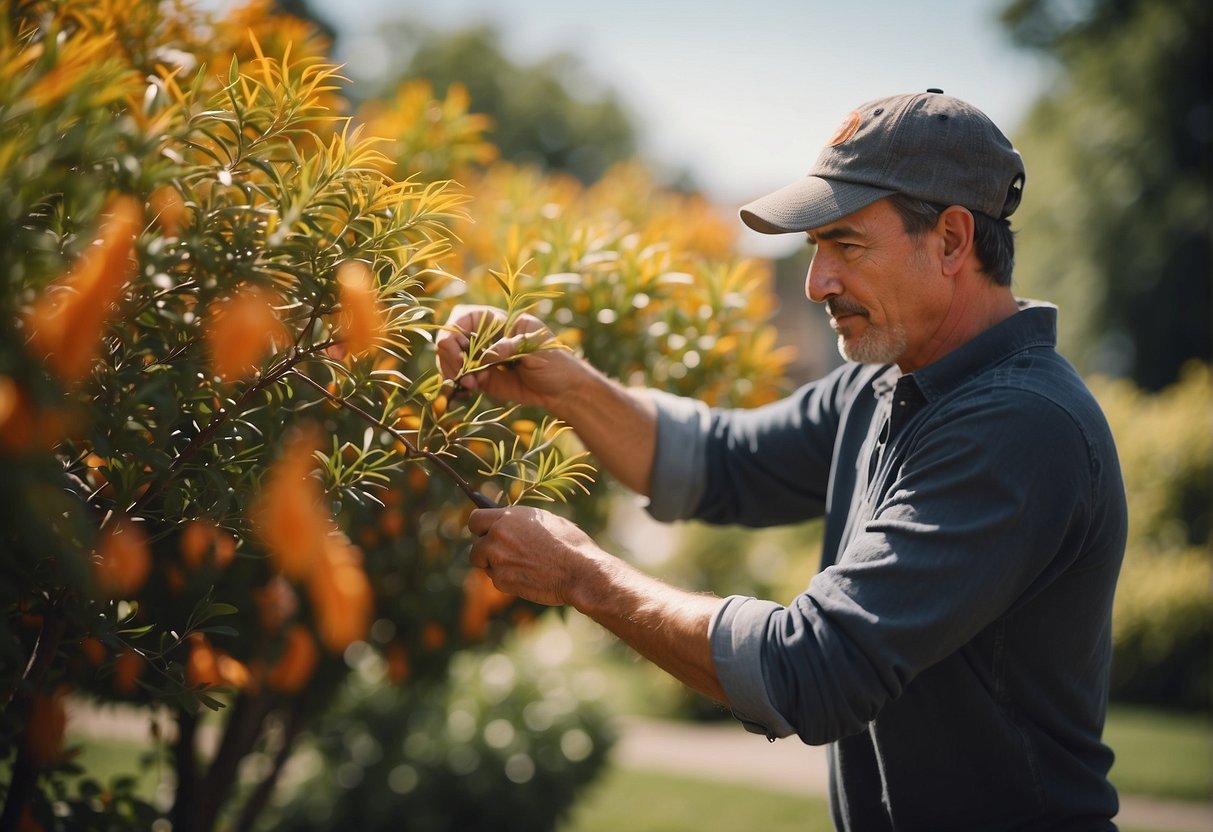
When to Prune Firebush: A Guide to Timing and Techniques
If you’re curious about the best time to trim your firebush, rest assured, many share your question. The firebush (Hamelia patens), a favored shrub native to Florida and other warm areas across the Americas, is celebrated for its vivid leaves and its knack for drawing in wildlife. However, when pruning is on the agenda, there are several important considerations to remember to keep your firebush in a flourishing condition.
First, it’s important to understand the growth habits of firebush. This shrub can grow up to 10 feet tall and 6 feet wide, but is often pruned to a more manageable size. Firebush blooms in late summer and fall, producing clusters of tubular red-orange flowers that are a favorite of hummingbirds and butterflies. The leaves are also attractive, with a glossy green surface and a slightly fuzzy underside.
When it comes to pruning firebush, timing is everything. You should avoid pruning in the fall or winter, as this can remove the buds that will produce flowers in the coming year. Instead, wait until early spring to prune your firebush. This will allow you to remove any dead or damaged branches and shape the shrub as desired, while still preserving the new growth that will produce flowers later in the year.
Key Takeaways
- Understanding the growth habits of firebush is key to knowing when to prune.
- Pruning in the fall or winter can remove flower buds, so wait until early spring to prune.
- Proper pruning techniques can help keep your firebush healthy and vibrant.
Understanding Firebush
If you’re looking for a shrub that can add some color to your garden, the firebush (Hamelia patens) might just be the perfect choice for you. This native Florida plant is a woody shrub that can also be grown as a perennial in tropical regions. In this section, we’ll take a closer look at the firebush and its varieties.
Botanical Profile
The firebush, also known as Hamelia patens, is a member of the Rubiaceae family. It is a woody shrub that can grow up to 15 feet tall, but it is usually around 6 to 8 feet tall. The leaves of the firebush are simple and opposite, and they can range from 2 to 6 inches long. The flowers are tubular and bright red or orange, and they attract hummingbirds and butterflies.
Firebush Varieties
There are several varieties of firebush, including Hamelia patens var. glabra and various cultivars such as Firefly. Hamelia patens var. glabra is a variety that has smoother leaves and blooms that are a deeper red than the species. Firefly is a cultivar that has a more compact growth habit and smaller leaves than the species.
When it comes to pruning firebush, it’s important to keep in mind that it blooms on new growth. This means that you can prune it back in late winter or early spring before new growth begins. This will encourage the plant to produce new growth and more blooms. However, if you prune it too late in the season, you may be cutting off the buds that will produce the next round of flowers.
In summary, the firebush is a beautiful and easy-to-care-for shrub that can add some color to your garden. Understanding its botanical profile and varieties can help you choose the right one for your needs. And when it comes to pruning, timing is key to ensure you get the most out of your firebush.
Optimal Growing Conditions
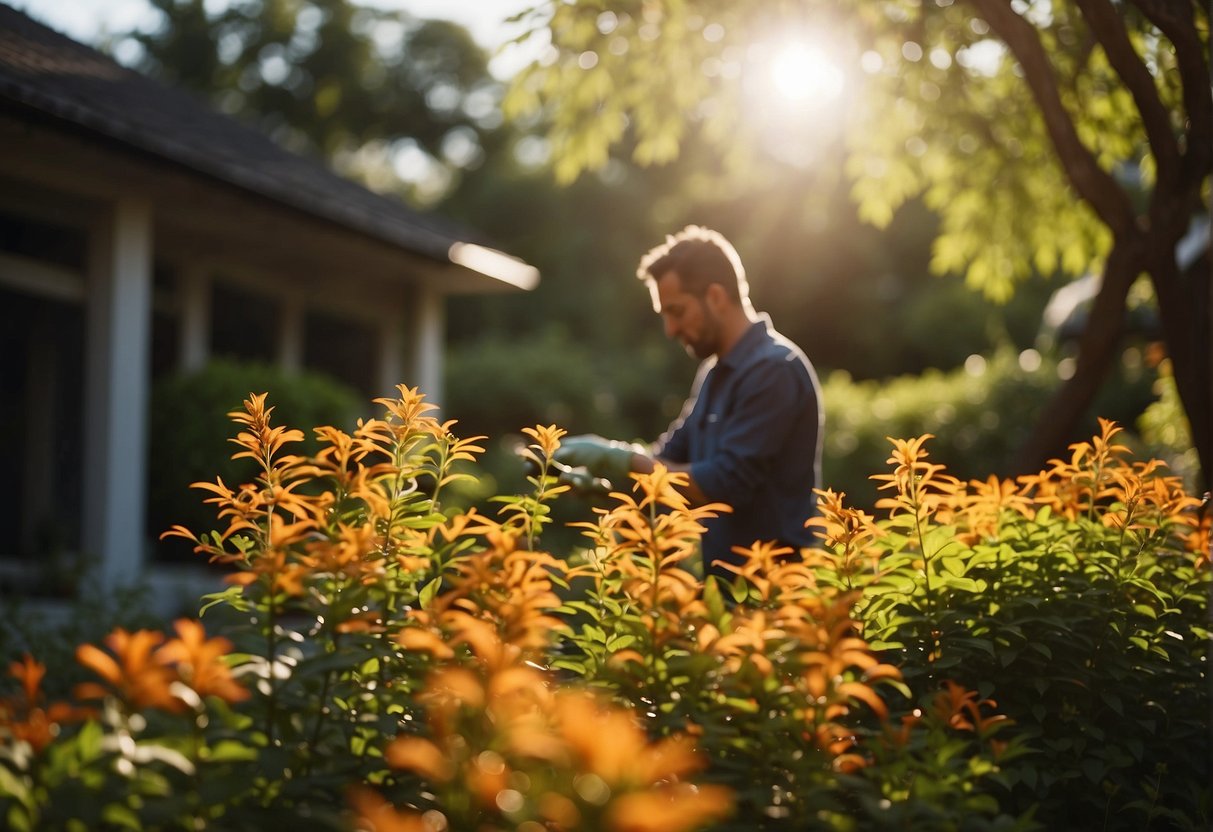
When it comes to growing firebush, providing the right growing conditions is key to ensuring healthy growth and optimal flowering. In this section, we’ll cover the three main factors that contribute to firebush growth: sunlight and shade, soil and water requirements, and temperature and climate.
Sunlight and Shade
Firebush thrives in full sun to partial shade, making it a versatile plant that can be grown in a variety of locations. In areas with hot summers, providing some afternoon shade can help prevent stress and sunburn. However, too much shade can lead to leggy growth and reduced flowering. Aim for at least 6 hours of direct sunlight per day for best results.
Soil and Water Requirements
Firebush prefers well-drained soil that is slightly acidic. If your soil is heavy or clay-like, consider amending it with compost or sand to improve drainage. Water your firebush regularly, especially during periods of drought, but be careful not to overwater as this can lead to root rot. Aim to keep the soil consistently moist but not waterlogged.
Temperature and Climate
Firebush is native to South Florida and thrives in warm, tropical climates. It can be grown in northern Florida and other southern states, but may require some winter protection in colder climates. In general, firebush prefers temperatures above 60°F and can tolerate occasional frosts. If you live in an area with cold winters, consider growing firebush in a container that can be moved indoors during the winter months.
By providing the right growing conditions, you can ensure that your firebush thrives and produces beautiful flowers year after year. Remember to monitor your plant’s sunlight, soil, and water needs regularly to ensure it stays healthy and happy.
Pruning Firebush
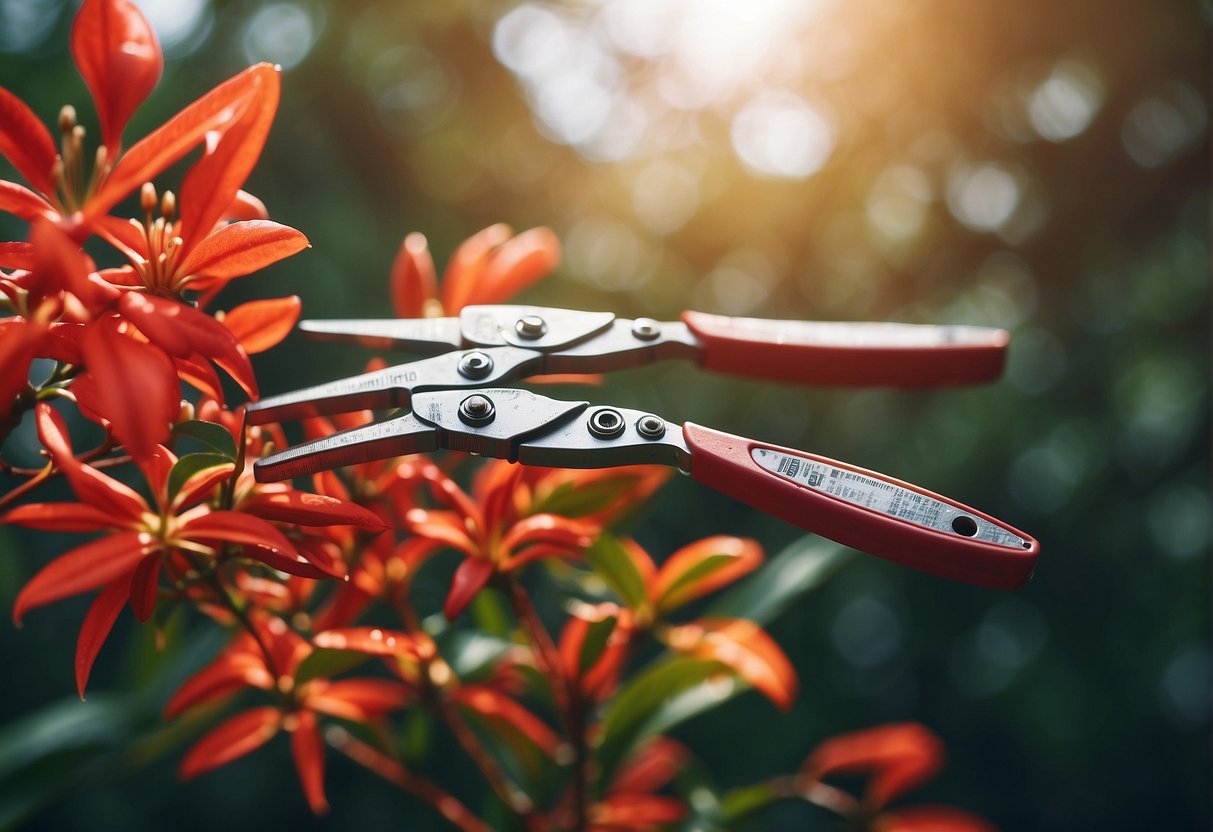
If you want to keep your firebush healthy and looking its best, pruning is an essential task. Here are some tips on how to prune your firebush effectively.
Best Time to Prune
The best time to prune your firebush is in late winter or early spring, just before new growth begins. Pruning at this time will encourage your firebush to produce new growth, resulting in a fuller, healthier plant. If you live in a colder climate, it’s best to wait until after the last frost to prune your firebush.
Pruning Techniques
When pruning your firebush, it’s important to use the right techniques to avoid damaging the plant. Start by removing any dead, diseased, or damaged branches. Then, use sharp, keen-edged tools to trim back any overgrown or wayward branches. To shape your firebush, prune the tips of the branches to encourage bushier growth.
Pruning for Plant Health
Regular pruning can help keep your firebush healthy and prevent disease and pest problems. When pruning, be sure to remove any diseased or pest-infested branches, as well as any branches that show signs of dieback or frost injury. To prevent the spread of disease, disinfect your pruning tools between cuts.
In summary, pruning your firebush can help keep it healthy and looking its best. By pruning in late winter or early spring, using the right techniques, and pruning for plant health, you can help your firebush thrive.
Caring for Firebush
Firebush is a beautiful and low-maintenance plant that can add a pop of color to your garden. However, to ensure that your firebush stays healthy and vibrant, you need to take proper care of it. Here are some tips to help you care for your firebush.
Fertilization and Nutrition
Firebush is an annual plant that requires regular fertilization to promote blooming and new growth. You should fertilize your firebush every two to four weeks during the growing season, which typically lasts from spring to fall. Use a balanced fertilizer that contains equal amounts of nitrogen, phosphorus, and potassium.
Watering and Maintenance
Firebush is a drought-tolerant plant that requires moderate watering. Water your firebush deeply once a week during the growing season and reduce watering in the winter. Make sure the soil is well-draining to prevent waterlogging, which can cause root rot.
To maintain the compact shape of your firebush, prune it regularly. You should prune your firebush in late winter or early spring before new growth appears. Use clean and sharp pruning shears to cut back the old growth by about one-third of its length.
Dealing with Pests and Diseases
Firebush is susceptible to some pests and diseases, including mites and aphids. To prevent pest infestations, inspect your firebush regularly and remove any affected leaves or branches. You can also use alcohol or insecticidal soap to kill the pests.
Firebush is also prone to some fungal diseases, such as root rot and leaf spot. To prevent fungal infections, avoid overwatering your firebush and ensure good air circulation around the plant. If your firebush is already infected, you can use a fungicide to treat the disease.
By following these tips, you can ensure that your firebush stays healthy and vibrant throughout the year. With proper care, your firebush can be a beautiful addition to your garden.
Propagation and Planting
Firebush can be propagated by seed or cuttings. Seed propagation is relatively easy, but it can take longer to establish compared to cuttings. Cuttings are a faster way to propagate firebush, and it allows you to produce plants that are genetically identical to the parent plant.
Seed Propagation
To propagate firebush from seeds, you will need to collect the seeds from a mature plant. The seeds are small and can be collected by cutting off the spent flowers. Allow the flowers to dry out and the seeds will be visible in the center of the flower.
Once you have collected the seeds, you can plant them in a well-draining soil mix. Cover the seeds lightly with soil and keep the soil moist. The seeds should germinate within two to three weeks.
Cuttings and Rooting
Propagation by cuttings is a faster way to produce new plants. Take cuttings from a mature plant in the spring or summer. Cuttings should be taken from the current year’s growth and should include a few leaves and a growth node.
Prepare the cutting by removing the lower leaves and dipping the cut end in rooting hormone. Plant the cutting in a well-draining soil mix and keep the soil moist. The cutting should root within a few weeks.
Firebush can also be propagated by layering. This involves bending a low-hanging branch to the ground and burying a portion of it in the soil. Once roots have formed, the new plant can be separated from the parent plant and transplanted.
When planting firebush, choose a location that receives full sun to partial shade. The soil should be well-draining and enriched with organic matter. Water the plant regularly, especially during dry periods. With proper care, firebush can grow into a beautiful and vibrant addition to your garden.
Firebush Aesthetics and Wildlife
Firebush is a beautiful and versatile plant that can add color and interest to your garden. It is known for its striking red flowers and attractive foliage, which can vary in color and texture depending on the variety.
Flower and Foliage Characteristics
Firebush blooms in the summer and fall, producing tubular red flowers that are popular with butterflies, hummingbirds, and other pollinators. The flower buds are orange-red and add a pop of color to the plant before they open. The leaves are typically green, but some varieties have purple or bronze foliage that can add visual interest to the plant.
Attracting Pollinators and Birds
Firebush is a great plant for attracting pollinators and birds to your garden. The tubular flowers are perfect for butterflies and hummingbirds, and the plant produces berries and fruits that are popular with birds. Adding firebush to your garden can help support local wildlife and create a thriving ecosystem.
Seasonal Changes and Interest
Firebush is a plant that can provide interest throughout the year. In the summer and fall, it produces beautiful red flowers and attracts pollinators and birds. In the winter, the plant can lose its leaves, but it still produces berries and fruits that can add color to your garden.
Overall, firebush is a great plant for adding color and interest to your garden while also supporting local wildlife. It is easy to care for and can thrive in a variety of conditions, making it a versatile choice for any garden.
Frequently Asked Questions
What is the ideal season for pruning a firebush to maintain its health?
The ideal season for pruning a firebush is late winter or early spring, just before new growth begins. This will help to maintain the health of the plant and promote healthy growth throughout the growing season.
How late in the year can you safely trim a firebush without risking damage?
It is generally safe to trim a firebush until late summer or early fall. After this time, the plant may not have enough time to recover before the cooler weather sets in, which can lead to damage or stress.
Is it advisable to cut back a firebush during the fall season?
It is generally not advisable to cut back a firebush during the fall season. This is because the plant needs time to recover and prepare for the cooler weather, and cutting it back too late in the season can put unnecessary stress on the plant.
What are the best practices for pruning an overgrown firebush?
When pruning an overgrown firebush, it is best to remove one-third of the plant at a time, over the course of several years. This will help to avoid shock and stress to the plant, and allow it to recover and grow back healthier and stronger.
How can you shape a firebush into a tree form through pruning techniques?
To shape a firebush into a tree form, begin by removing any lower branches or growth that you do not want to keep. Then, gradually shape the remaining branches into a tree-like form, trimming as necessary to maintain the desired shape.
What strategies can be employed to keep a firebush at a smaller size?
To keep a firebush at a smaller size, regular pruning is necessary. This can be done by trimming back the plant by one-third to one-half each year, or by selectively pruning branches to maintain the desired size and shape.

