
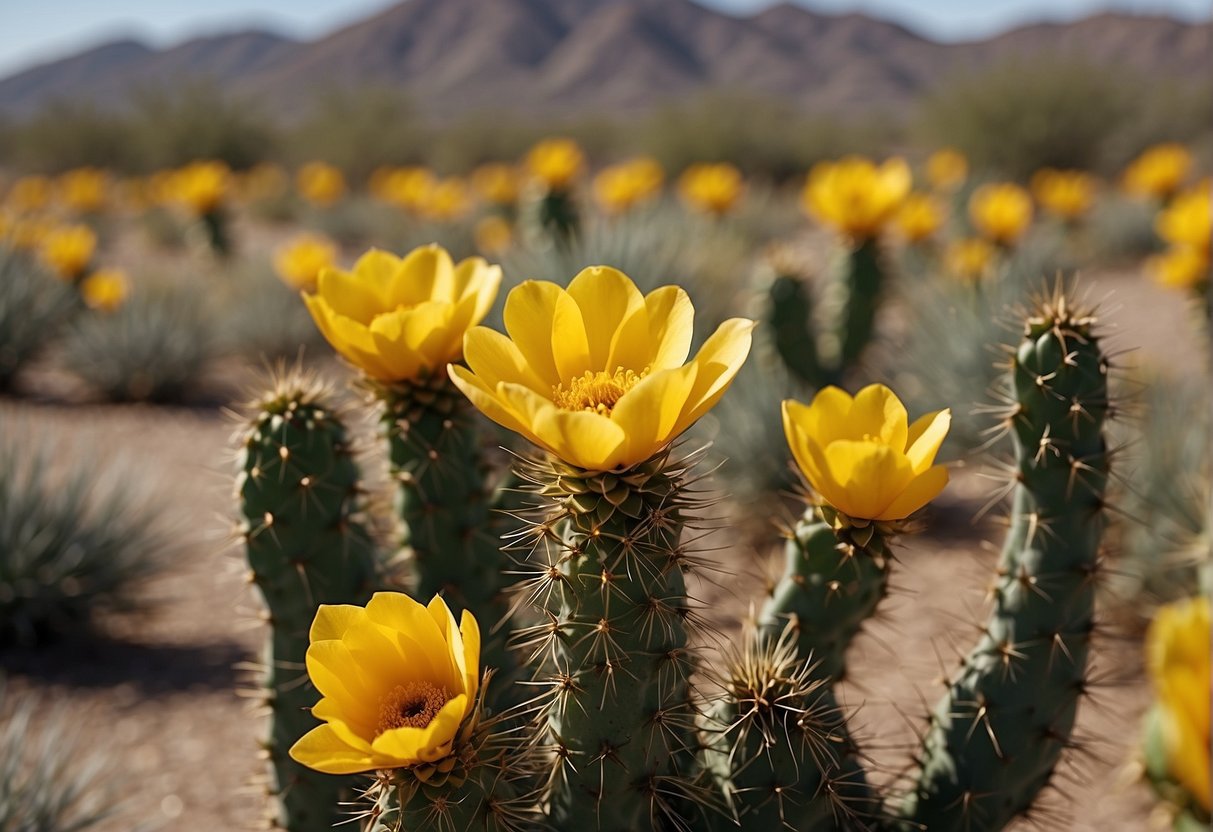
Which Plants, Such as Prickly Pears, Yucca, and Brittlebush, Thrive in Arid Climates?
Should you be interested in incorporating desert vegetation into your outdoor space or garden, think about integrating prickly pears, yucca, and brittlebush. Not only do these plants offer an aesthetically pleasing appeal through their distinctive forms and hues, but they also come with environmental advantages and possess the resilience to thrive in dry settings.
Ecology and Habitat:
Prickly pears, yucca, and brittlebush are all native to desert regions of North America. They have evolved to thrive in hot, dry conditions, making them low-maintenance options for landscaping in areas with limited water resources. Additionally, these plants can provide habitat and food for wildlife, such as birds and insects.
Botanical Characteristics:
Prickly pears are a type of cactus with flat, paddle-shaped stems and vibrant flowers. Yucca plants have long, spiky leaves and tall, showy flowers. Brittlebush, as the name suggests, has delicate, silvery leaves and yellow flowers. All three of these plants are drought-tolerant and can survive in a variety of soil types.
Key Takeaways
- Prickly pears, yucca, and brittlebush are visually appealing and well-adapted to survive in arid environments.
- These plants provide ecological benefits by providing habitat and food for wildlife.
- Prickly pears, yucca, and brittlebush are low-maintenance options for landscaping in areas with limited water resources.
Ecology and Habitat
Adaptations to Arid Landscapes
Plants such as prickly pears, yucca, and brittlebush have unique adaptations that allow them to survive in arid environments. These adaptations include features such as thick, succulent leaves that store water, deep roots that can reach underground water sources, and spines or hairs that reduce water loss through transpiration.
In addition, these plants have evolved to thrive in full sun and sandy soil, which are common conditions in arid landscapes. They are also able to tolerate high temperatures and low humidity, which are characteristic of these environments.
Geographical Distribution
Prickly pears, yucca, and brittlebush are found in various regions around the world, including North America, Africa, Australia, and South America. They are particularly abundant in arid regions such as the Mojave and Sonoran deserts in North America and the Mediterranean region.
In North America, prickly pears and yucca are commonly found in the southwestern United States, while brittlebush is more common in the Sonoran Desert. In Africa, yucca is found in the Sahara Desert, while prickly pears are found in the Namib Desert. In Australia, prickly pears are found in the arid interior, while in South America, they are found in the Andes Mountains.
Overall, these plants have adapted to thrive in arid conditions and are an important part of the ecosystems in which they are found.
Botanical Characteristics
Morphology and Growth
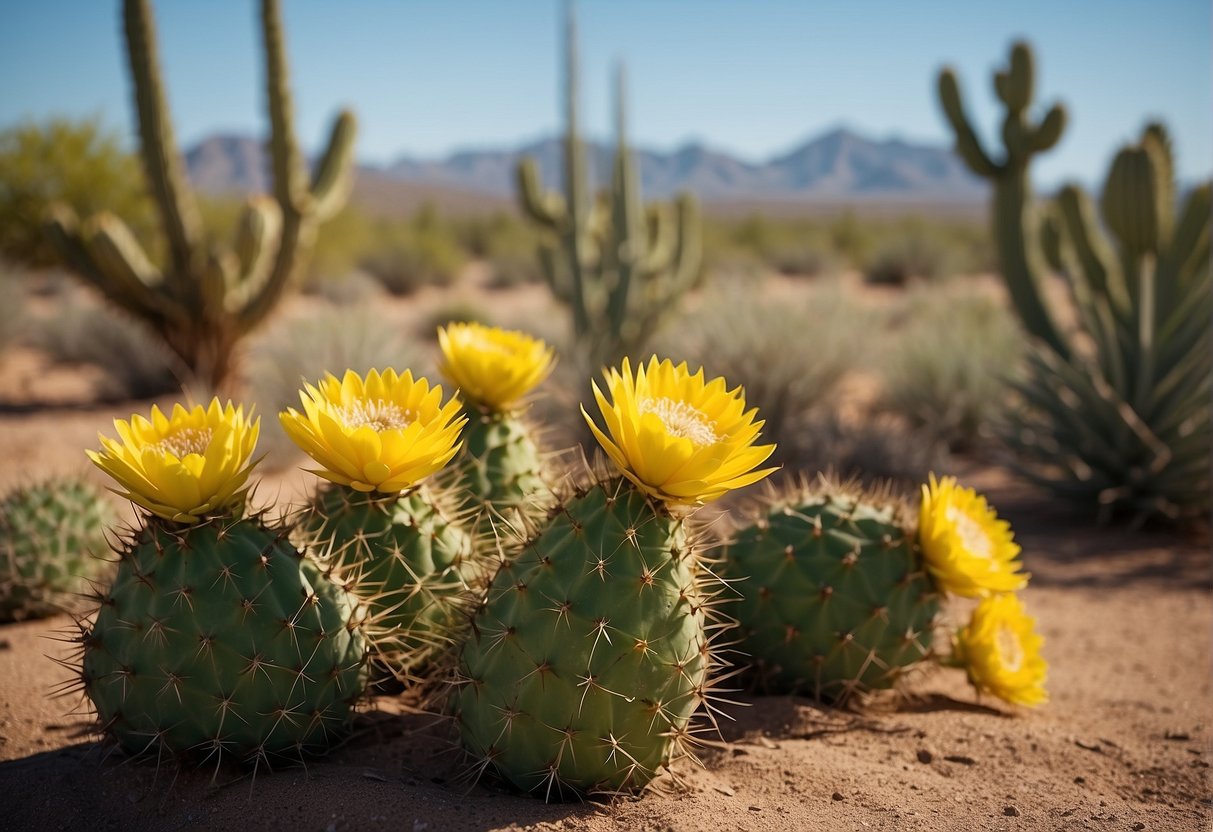
Prickly pears, yucca, and brittlebush are all plants that share some common botanical characteristics. Prickly pears, also known as Opuntia, are a type of cactus that have flattened, oval-shaped pads called cladodes that are covered in spines and glochids. Yucca plants have long, sword-shaped leaves that grow in a rosette pattern and produce tall, branching flower stalks. Brittlebush, also known as Encelia farinosa, are shrubs that have gray-green leaves and produce yellow flowers.
All of these plants are adapted to survive in arid environments and have developed characteristics that help them conserve water. Prickly pears and yucca are both succulent plants, meaning they store water in their leaves or stems. Brittlebush has adapted to survive in dry conditions by growing deep roots that can reach water sources underground.
Reproductive Systems
Prickly pears, yucca, and brittlebush all have different reproductive systems. Prickly pears produce fruit that is edible and contains seeds. Yucca plants rely on the yucca moth for pollination, as the moth lays its eggs in the yucca flower and pollinates the plant in the process. Brittlebush produces seeds that are dispersed by the wind.
When it comes to bloom time, prickly pears typically bloom in the spring or summer, while yucca plants bloom in the summer. Brittlebush blooms in the winter or spring, after rainfall.
To thrive, these plants require well-draining soil and plenty of sunlight. They are all members of the Cactaceae family, which includes over 2,000 species of plants that are adapted to arid environments. These plants rely on photosynthesis to produce energy and are able to survive in areas with limited water resources.
Frequently Asked Questions
What are the characteristics of desert biomes where plants like prickly pears and yucca thrive?
Desert biomes are characterized by their hot and dry climate, receiving less than 10 inches of rainfall annually. The soil is often sandy and rocky, and the temperature can fluctuate greatly between day and night. Plants that thrive in these conditions, such as prickly pears and yucca, have adapted to store water in their leaves and stems, and have developed extensive root systems to absorb as much water as possible.
How do plants like brittlebush adapt to arid environments with minimal rainfall?
Plants like brittlebush have adapted in various ways to survive in arid environments. They have developed small, thick leaves that help to reduce water loss through transpiration. Brittlebush also has a taproot that can reach deep into the soil to absorb water from deeper layers. Additionally, they have developed a waxy coating on their leaves to protect them from the sun’s intense heat.
Which types of ecosystems are home to succulents and cacti, including species like prickly pears?
Succulents and cacti, including species like prickly pears, are typically found in arid and semi-arid ecosystems. These ecosystems include deserts, grasslands, and scrublands. They are also found in rocky and mountainous areas, particularly in regions with low rainfall and high temperatures.
What adaptations do desert plants have to survive in ecosystems with extreme temperatures?
Desert plants have developed numerous adaptations to survive in ecosystems with extreme temperatures. They have thick, waxy leaves that help to reduce water loss and protect them from the sun’s intense heat. Some plants, such as cacti, have developed spines to deter herbivores and to provide shade for the plant. Additionally, many desert plants are able to enter a state of dormancy during the hottest and driest parts of the year to conserve energy and water.
In what ways do plants like yucca and brittlebush contribute to their biome’s food chain?
Yucca and brittlebush are important sources of food and shelter for many animals in their biome. The flowers of yucca, for example, are pollinated by yucca moths, which in turn lay their eggs in the flowers. The larvae of the moths then feed on the seeds of the yucca plant. Brittlebush provides food and shelter for a variety of desert animals, including birds, rodents, and reptiles.
How do human activities impact the survival of desert plants such as prickly pears and yucca?
Human activities, such as urbanization, agriculture, and mining, can have a significant impact on the survival of desert plants. The destruction of habitat and the introduction of non-native species can threaten the survival of native plants. Additionally, climate change can lead to more extreme weather conditions, such as droughts and heatwaves, which can further stress desert plant populations. Conservation efforts, such as habitat restoration and the protection of endangered species, can help to mitigate these threats and ensure the survival of desert plants.

