
The Role of Milkweed in a Monarch Butterfly’s Life: Explained
Have you ever observed a monarch butterfly? Its vibrant orange and black wings are truly eye-catching. However, are you aware that milkweed plants are essential for the survival of these butterflies? Milkweed is vital in the lifecycle of monarch butterflies, providing them with both a place to live and sustenance.
Monarch butterflies are known for their incredible migration patterns, traveling thousands of miles each year to reach their overwintering grounds. However, this journey wouldn’t be possible without milkweed. Milkweed is the only plant that monarch butterflies lay their eggs on, and it’s also the primary food source for monarch caterpillars. Without milkweed, the survival of monarch butterflies would be in jeopardy.
Key Takeaways
- Milkweed is essential to the survival of monarch butterflies, serving as both a habitat and a food source.
- Monarch butterflies rely on milkweed for their migration and overwintering patterns.
- Without milkweed, the survival of monarch butterflies would be in jeopardy.
Monarch Butterflies and Milkweed
As you may know, monarch butterflies (Danaus plexippus) are famous for their long-distance migration across North America, covering up to 3,000 miles each way. But did you know that milkweed (Asclepias) plays a vital role in the life cycle of these beautiful insects?
Biological Significance of Milkweed
Milkweed is the only plant that monarch butterflies lay their eggs on, and it’s also the primary food source for their caterpillars. The leaves of milkweed contain toxins that are harmful to most animals, but monarch caterpillars have evolved to be able to tolerate and even store these toxins in their bodies. This makes them unpalatable to predators, such as birds, which learn to avoid them.
In addition to providing food and protection for monarch caterpillars, milkweed also plays a crucial role in the reproductive cycle of monarch butterflies. Female monarchs use their sense of smell to locate milkweed plants, where they lay their eggs on the underside of the leaves. Once the eggs hatch, the caterpillars begin to feed on the leaves, eventually forming a chrysalis and emerging as an adult butterfly.
Milkweed Species Diversity
There are over 100 species of milkweed in North America, each with its own unique characteristics. Some species are more attractive to monarch butterflies than others, and some are better suited to different climates and growing conditions. By planting a variety of milkweed species in your garden, you can help support a diverse population of monarch butterflies and ensure that they have access to the resources they need to survive and thrive.
In conclusion, milkweed is an essential component of the monarch butterfly life cycle, providing food, protection, and habitat for these remarkable insects. By learning more about milkweed and planting it in your garden, you can help support the coevolution of monarch butterflies and the plants they rely on.
Life Cycle of Monarch Butterflies
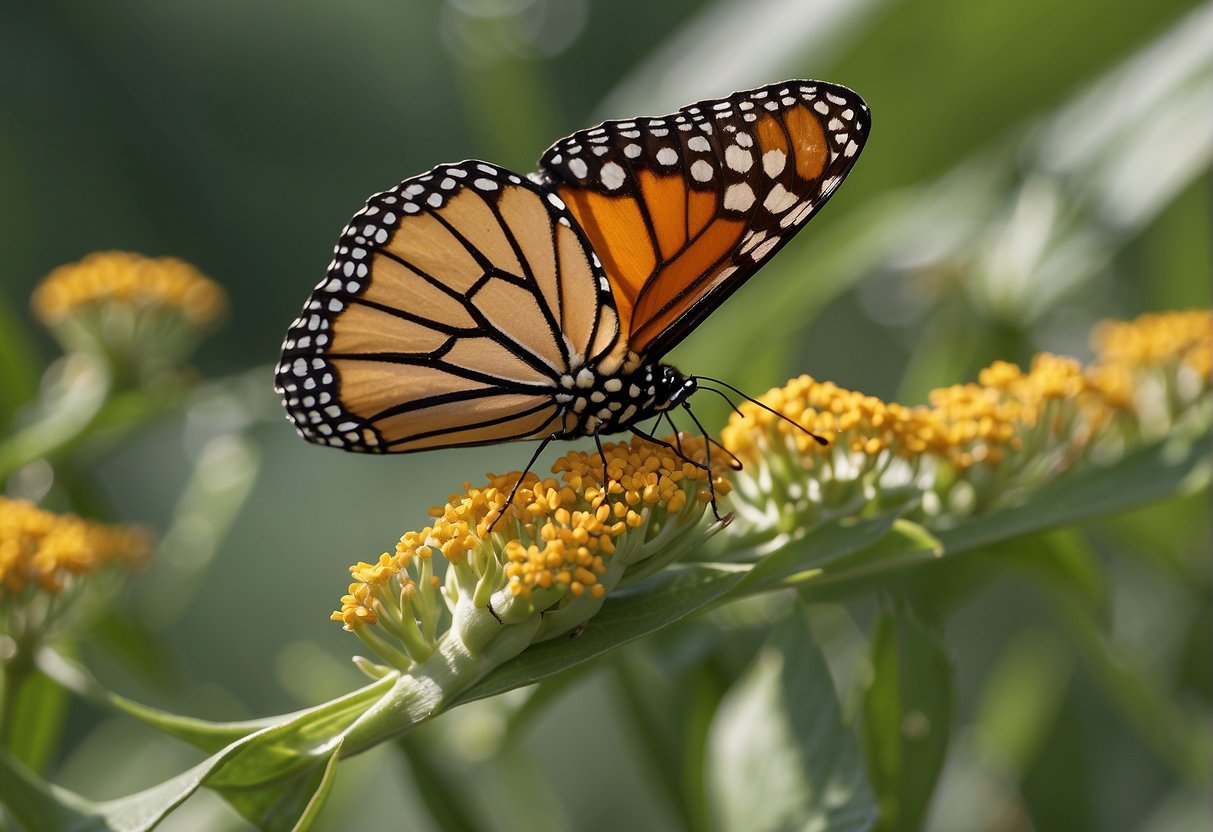
Monarch butterflies have a unique life cycle that is closely tied to the milkweed plant. Understanding the different stages of their life cycle can help you appreciate these beautiful creatures even more.
Egg Laying on Milkweed
The first stage of a monarch butterfly’s life cycle begins when the female butterfly lays her eggs on the underside of milkweed leaves. Milkweed is the only plant that monarch butterflies will lay their eggs on, making it a crucial part of their life cycle. The female butterfly can lay up to 400 eggs over the course of her lifetime.
Caterpillar Development
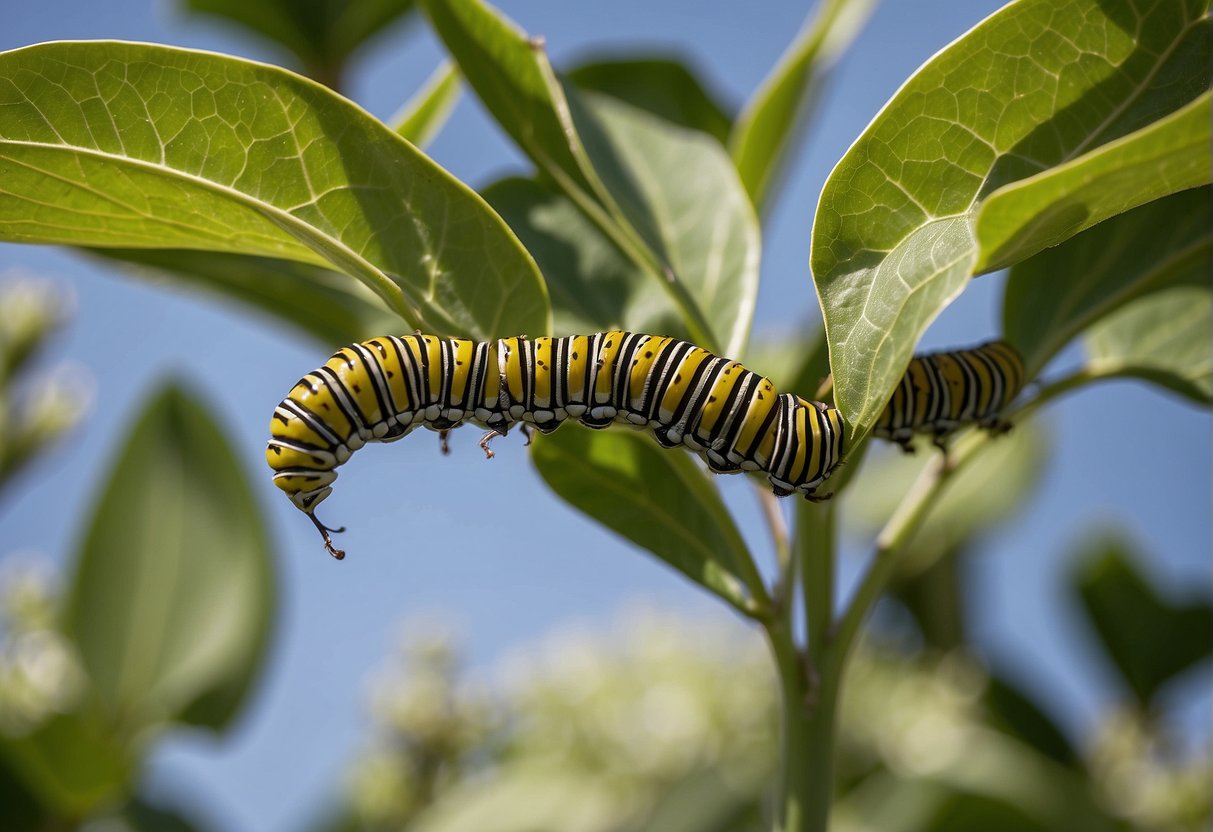
Once the eggs hatch, the caterpillars emerge and begin to feed on the milkweed leaves. The milkweed plant provides the necessary nutrients for the caterpillars to grow and develop. As the caterpillars grow, they shed their skin several times in a process called molting. This allows them to grow larger and stronger.
Pupation and Metamorphosis
After about two weeks of feeding on the milkweed leaves, the caterpillars will find a safe place to pupate. They will attach themselves to a leaf or stem and form a chrysalis. Inside the chrysalis, the caterpillar will undergo metamorphosis and transform into a butterfly. This process takes about 10 days.
Emergence of Adult Monarchs
Finally, the adult monarch butterfly emerges from the chrysalis. It takes a few hours for the butterfly’s wings to dry and harden before it can fly. The adult butterfly will then begin the process of finding a mate and laying eggs on milkweed plants to start the life cycle all over again.
In conclusion, milkweed plays a vital role in the life cycle of monarch butterflies. Without milkweed, these beautiful creatures would not be able to survive and thrive. By planting milkweed in your garden, you can help support the monarch butterfly population and enjoy their beauty for years to come.
Migration and Overwintering
Importance of Milkweed in Migration
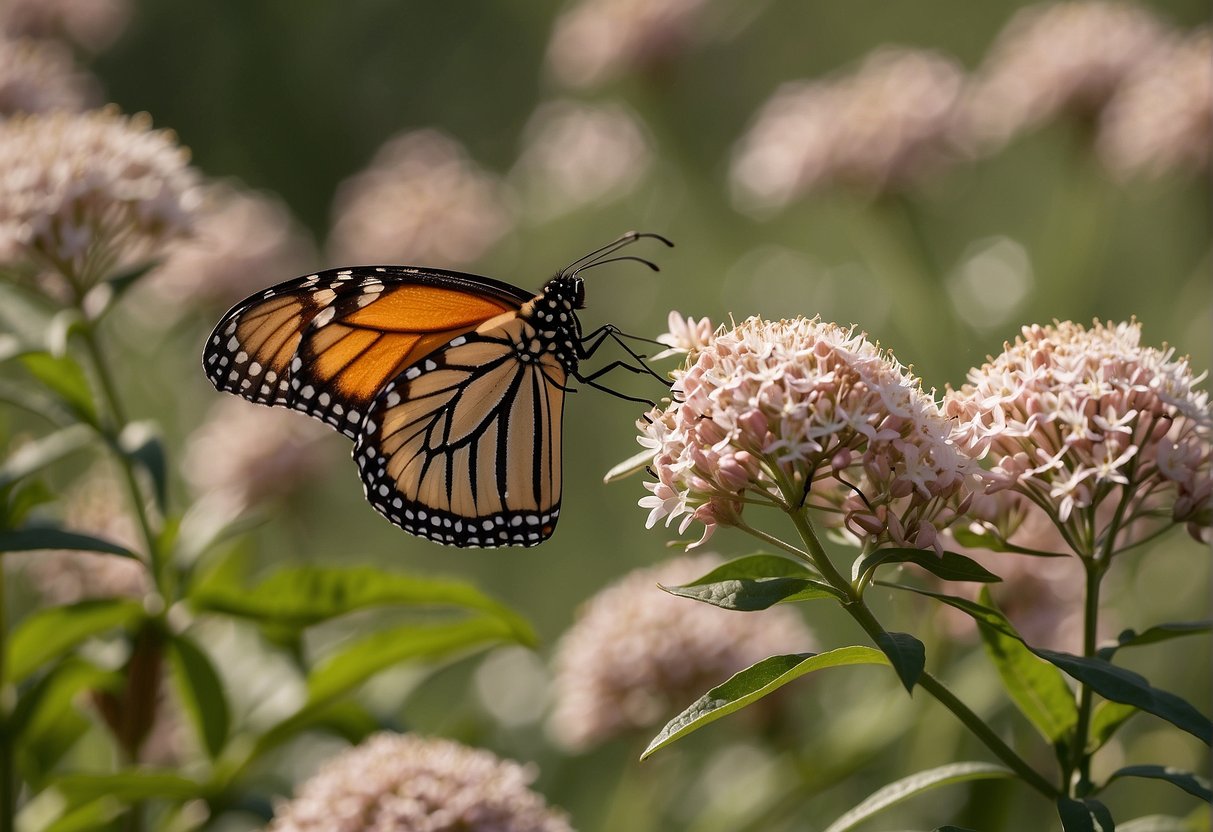
As a monarch butterfly, you rely heavily on milkweed during your annual migration from the United States and Canada to Mexico. Milkweed is the only plant that monarch butterflies lay their eggs on, and it is the sole food source for monarch caterpillars. Without milkweed, the monarch population would not be able to survive.
During the fall migration, monarch butterflies fly thousands of miles to reach their overwintering sites in Mexico. As they fly, they rely on milkweed plants to provide them with the energy they need to complete their journey. Without milkweed, they would not have the necessary energy to complete their long journey.
Overwintering Sites and Milkweed Availability
Monarch butterflies overwinter in the oyamel fir forests of central Mexico. These forests provide the perfect microclimate for the monarchs to survive the winter months. However, the availability of milkweed in these forests is limited. This is why it is crucial for monarch butterflies to have access to milkweed during their fall migration.
In recent years, the availability of milkweed in the United States and Canada has decreased due to habitat loss and the increased use of herbicides. This has had a significant impact on monarch butterfly populations. Without milkweed, monarch butterflies cannot complete their life cycle, and their population will continue to decline.
It is important to ensure that milkweed is available along the monarch butterfly’s migration route and in their overwintering sites to ensure the survival of this iconic species. By planting milkweed in your own garden or supporting conservation efforts, you can help ensure the survival of monarch butterflies for generations to come.
Milkweed as a Habitat
Milkweed is a crucial plant for the survival of monarch butterflies. It serves as a habitat for both breeding and feeding, making it an essential part of the monarch butterfly’s life cycle.
Nectar Source for Monarchs
Milkweed is a valuable source of nectar for monarch butterflies. Monarchs rely on nectar to provide them with the energy they need for their long migration journey. The nectar from milkweed is also important for monarchs during their breeding season. The nectar provides the energy needed for the male and female monarchs to mate and for the female to lay her eggs.
Breeding and Feeding Habitat
Milkweed is the only plant that monarch butterflies lay their eggs on. The leaves of milkweed plants provide the necessary food for the monarch caterpillars to grow and develop. The caterpillars feed on the leaves of the milkweed plant and eventually form a chrysalis, where they undergo metamorphosis and emerge as adult butterflies.
In addition to serving as a breeding and feeding habitat, milkweed also provides shelter for monarch butterflies. The dense foliage of the milkweed plant provides a safe place for monarchs to rest and hide from predators.
Common milkweed and native milkweed are both important types of milkweed for monarch butterflies. While common milkweed is more widely distributed, native milkweed is better adapted to local conditions, making it an ideal choice for planting in monarch butterfly habitats.
Overall, milkweed plays a critical role in the survival of monarch butterflies. By providing a habitat for breeding, feeding, and shelter, milkweed ensures the continuation of this iconic species.
Conservation and Threats
Decline of Monarch Populations
Monarch butterflies are facing a serious decline in populations due to several factors, including habitat loss and climate change. According to the Xerces Society for Invertebrate Conservation, the population of monarchs in North America has declined by over 80% in the last 20 years. This decline is a cause for concern as monarchs are an important pollinator species and play a crucial role in maintaining the balance of ecosystems.
Habitat Restoration Efforts
To address the decline in monarch populations, habitat restoration efforts are underway across North America. One key strategy to restore monarch habitat is to plant milkweed, the only plant on which monarchs lay their eggs and the primary food source for monarch caterpillars. Many organizations are working to promote milkweed planting, including the Monarch Joint Venture and the Xerces Society.
Challenges in Milkweed Conservation
Despite the importance of milkweed for monarchs, milkweed populations are also facing threats. Habitat loss due to development and agriculture is a major factor contributing to the decline of milkweed populations, and invasive species such as the common milkweed beetle and the milkweed bug can also cause damage to milkweed plants. Additionally, the use of herbicides and pesticides in agriculture can harm milkweed and other native plants.
To ensure the conservation of milkweed and the survival of monarchs, it is important to address these threats and promote habitat restoration efforts. By planting milkweed and supporting conservation initiatives, you can help protect monarchs and other pollinator species for future generations.
Milkweed and Ecosystem Interactions
Milkweed is a crucial plant in the life cycle of the monarch butterfly. It serves as the sole food source for the monarch butterfly larvae, and it also plays a critical role in supporting pollinators and other organisms in the ecosystem.
Role in Supporting Pollinators
Milkweed flowers are an essential source of nectar for many pollinators, including bees, butterflies, and moths. They provide a high-quality food source that is rich in sugars and other nutrients. Milkweed flowers are also unique in that they produce large amounts of pollen, which is crucial for the survival of many insect species.
Predators and Milkweed Toxins
While milkweed is essential for the survival of monarch butterflies, it also has a dark side. Milkweed contains cardiac glycosides, which are toxic to many animals, including birds and mammals. These toxins are concentrated in the leaves and stems of the plant and are used by the monarch butterfly as a defense mechanism against predators.
However, some predators, such as the milkweed bug, have evolved to be able to tolerate these toxins and even use them to their advantage. These bugs lay their eggs on milkweed plants, and their offspring feed on the seeds, which are rich in cardiac glycosides. This allows the bugs to build up a tolerance to the toxins, which they can then use to deter predators.
In conclusion, milkweed plays a critical role in the ecosystem by supporting pollinators and providing a food source for monarch butterfly larvae. However, its toxins also have a significant impact on predators and other organisms in the ecosystem. It is important to understand the complex interactions between milkweed and other species in the ecosystem to ensure the long-term survival of all organisms involved.
Cultivation and Use of Milkweed
Planting Milkweed for Monarchs
If you want to attract monarch butterflies to your garden, planting milkweed is a must. Monarchs lay their eggs on milkweed plants, and their caterpillars feed exclusively on the leaves. Without milkweed, monarchs cannot complete their life cycle.
When planting milkweed for monarchs, it’s important to choose the right type of milkweed for your region. Some species of milkweed are better suited to certain climates and soil types than others.
Types of Milkweed for Different Regions
There are over 100 species of milkweed, but not all of them are suitable for monarch butterflies. Here are some of the most popular types of milkweed for different regions:
-
Swamp milkweed: This wildflower is native to wetlands and marshes in the eastern and central United States. It grows up to 5 feet tall and produces clusters of pink or purple flowers.
-
Tropical milkweed: This milkweed is native to Central and South America, but is commonly grown in gardens throughout the United States. It produces bright orange and yellow flowers and can be grown as an annual in colder climates.
-
Common milkweed: This native milkweed is found throughout most of the United States and Canada. It can grow up to 6 feet tall and produces large clusters of pink or purple flowers.
-
Butterfly weed: This milkweed is native to the eastern and central United States. It produces bright orange flowers and is a favorite of both monarchs and other butterfly species.
When planting milkweed, you can use milkweed seeds or milkweed plugs. Milkweed seeds can be sown directly into the ground in the fall or early spring. Milkweed plugs are young plants that have already been started and can be planted directly into the ground.
If you live in an urban area, you can still plant milkweed for monarchs. Milkweed can be grown in containers on balconies or rooftops, or in community gardens.
By planting milkweed for monarchs, you can help support the survival of this iconic butterfly species.
Frequently Asked Questions
Why do monarch butterflies rely on milkweed plants?
Monarch butterflies rely on milkweed plants because they are the only plants that monarch caterpillars can eat. Milkweed plants contain toxic chemicals that are harmless to the caterpillars but make them unpalatable to predators. Without milkweed, monarch butterflies would not be able to complete their life cycle.
How does milkweed contribute to the lifecycle of monarch butterflies?
Milkweed plants are essential to the lifecycle of monarch butterflies. Female monarch butterflies lay their eggs on milkweed plants, and when the eggs hatch, the caterpillars feed exclusively on the leaves of the milkweed. After the caterpillars have matured, they form chrysalises on the milkweed plants, where they undergo metamorphosis and emerge as adult butterflies.
What are the benefits of milkweed to monarch caterpillars?
Milkweed plants provide several benefits to monarch caterpillars. The leaves of the milkweed contain toxic chemicals that make the caterpillars unpalatable to predators. Additionally, milkweed leaves are high in nutrients, which help the caterpillars grow and develop. Milkweed plants also provide a safe and stable environment for the caterpillars to feed and form their chrysalises.
How does the toxicity of milkweed affect monarch butterflies?
The toxicity of milkweed does not affect adult monarch butterflies, but it does play a crucial role in protecting the caterpillars from predators. The toxic chemicals in the milkweed leaves make the caterpillars unpalatable to birds and other predators. Monarch butterflies have evolved to tolerate these toxic chemicals, which they accumulate in their bodies and use to deter predators.
Can monarch butterflies survive without milkweed?
Monarch butterflies cannot survive without milkweed. Milkweed is the only plant that monarch caterpillars can eat, and without it, they would not be able to complete their life cycle. The decline of milkweed populations due to habitat loss, pesticide use, and other factors is a major threat to monarch butterfly populations.
What impact does the presence of milkweed have on monarch butterfly populations?
The presence of milkweed is essential to the survival of monarch butterfly populations. Milkweed provides the only food source for monarch caterpillars, and without it, monarch butterflies would not be able to reproduce. The decline of milkweed populations has led to a decline in monarch butterfly populations, and efforts to restore milkweed habitats are critical to the conservation of these iconic butterflies.

