
How to Grow American Beautyberry: A Confident and Knowledgeable Guide
Should you be in search of a shrub that’s easy to care for and can brighten your garden with a splash of color, the American beautyberry is a perfect choice. This indigenous species stands out with its vibrant purple berries that emerge in the autumn. Beyond its visual appeal, the American beautyberry offers environmental advantages by drawing diverse wildlife to your garden.
To successfully grow American beautyberry, it’s important to understand the plant’s needs and preferences. This includes selecting an appropriate site for planting, providing proper care and maintenance, and understanding how to propagate the plant. By following these guidelines, you can enjoy the beauty and benefits of American beautyberry in your own backyard.
Key Takeaways
- Understanding the needs and preferences of American beautyberry is key to successfully growing this low-maintenance shrub.
- Proper site selection, care, and maintenance are essential for healthy growth and berry production.
- Propagation methods can help you expand your American beautyberry collection and share the benefits of this native plant with others.
Understanding American Beautyberry
Botanical Profile
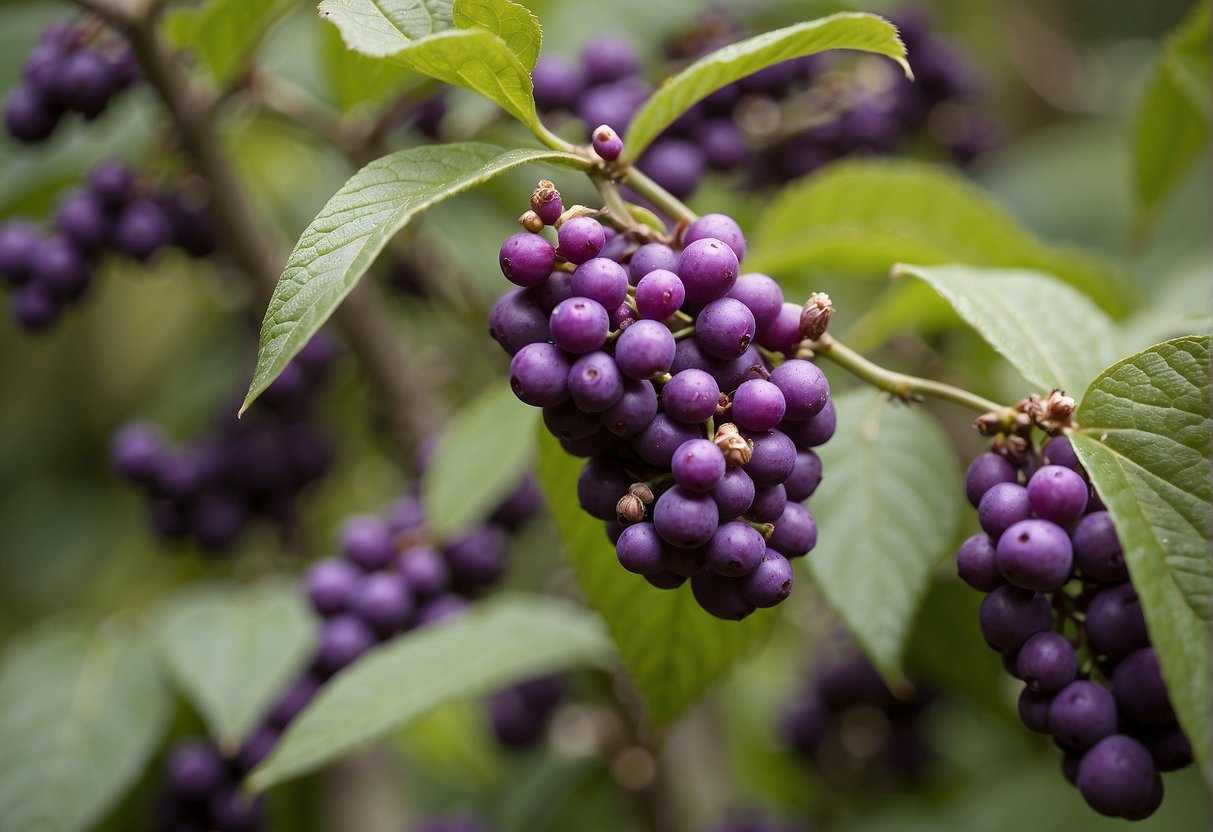
American beautyberry, also known as Callicarpa americana, is a deciduous shrub native to the southeastern United States. It belongs to the Verbenaceae family and can grow up to 6 feet tall and wide. The leaves are simple, opposite, and elliptical, with a serrated margin. The flowers are small and pinkish, and they bloom in the summer. The fruit is a bright purple drupe that grows in clusters along the stems and branches, which is the most distinctive feature of the plant.
Native Habitats
American beautyberry is native to North America and can be found in the southeastern United States, including Florida, Georgia, Alabama, Mississippi, Louisiana, Arkansas, and Texas. It grows in a variety of habitats, including woodlands, savannas, and disturbed areas such as roadsides and fence rows. It prefers moist, well-drained soils and partial shade.
Growth Habit
American beautyberry is a fast-growing shrub that can reach maturity in 3 to 5 years. It can be propagated by seeds, cuttings, or layering. It is a low-maintenance plant that requires little pruning or fertilization. However, it may benefit from occasional pruning to maintain its shape and remove dead or damaged branches. American beautyberry is a great addition to any garden or landscape, as it provides year-round interest with its attractive foliage, flowers, and fruit. It is also an important food source for wildlife, including birds, deer, and small mammals.
Site Selection and Planting

Choosing the Right Location
When selecting a location for your American beautyberry plant, it is important to choose an area that receives partial shade to full sun. The plant can tolerate full sun, but it may struggle in areas with intense afternoon sun.
Additionally, the plant prefers well-drained soil with a pH range of 6.0 to 7.5. It is best to avoid areas with heavy clay soil or soil that is constantly wet, as this can lead to root rot.
Soil Requirements
The American beautyberry plant prefers well-drained soil that is rich in organic matter. Before planting, it is recommended to amend the soil with compost or other organic matter to improve drainage and fertility.
In terms of soil pH, the plant can tolerate a range of 6.0 to 7.5. If your soil is outside of this range, it may be necessary to adjust the pH before planting.
Planting Procedure
To plant your American beautyberry, dig a hole that is twice as wide and just as deep as the root ball. Place the plant in the hole, making sure that the top of the root ball is level with the surrounding soil.
Backfill the hole with soil, gently tamping it down to remove any air pockets. Water the plant thoroughly after planting to help settle the soil around the roots.
It is recommended to plant American beautyberry in the spring or fall when temperatures are mild. This will give the plant time to establish before the heat of summer or the cold of winter.
By following these guidelines for site selection and planting, you can ensure that your American beautyberry plant has the best chance for success.
Caring for Your Beautyberry
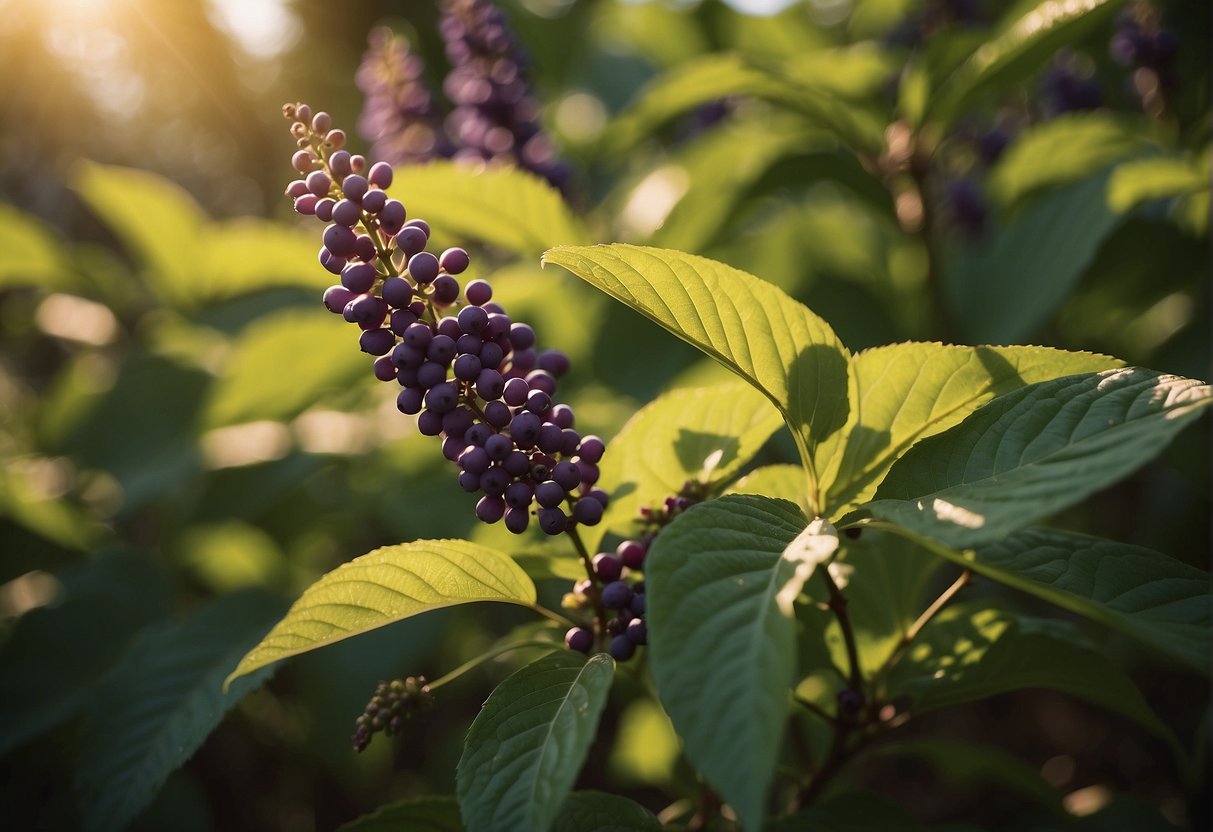
If you want to grow healthy and vigorous American Beautyberry shrubs, you need to provide them with proper care. Here are some essential tips to help you take care of your Beautyberry plants.
Watering Essentials
Watering is crucial for the growth and development of Beautyberry plants. These shrubs require moist soil, especially during the growing season. You should water your Beautyberry regularly, especially during hot and dry weather. Make sure the soil remains moist but not waterlogged. Overwatering can lead to root rot and other issues.
Mulching and Fertilization
Mulching is an effective way to retain moisture in the soil and suppress weed growth around your Beautyberry plants. You can use organic mulch such as compost, shredded leaves, or bark chips. Apply a layer of mulch around the base of the shrub, but avoid piling it up against the stem.
Fertilization is also important for the growth and health of Beautyberry plants. You can use a balanced fertilizer, such as a 10-10-10 or 20-20-20 formulation, during the growing season. Apply the fertilizer according to the manufacturer’s instructions.
Pruning Techniques
Pruning is necessary to maintain the shape and size of your Beautyberry shrubs. You should prune your Beautyberry plants in late winter or early spring before new growth begins. Remove any dead, damaged, or diseased branches. You can also prune back the shrub to control its size or promote bushier growth.
Avoid pruning your Beautyberry shrubs in the fall or summer, as this can stimulate new growth that may not have time to harden off before winter. Also, avoid pruning too much at once, as this can stress the plant and reduce its vigor.
By following these tips, you can help your Beautyberry shrubs thrive and produce their beautiful purple berries.
Propagation Methods
If you want to propagate American beautyberry, you can do so using either seeds or cuttings. Here are some tips on how to propagate American beautyberry using these methods.
Seed Propagation
One way to propagate American beautyberry is by using seeds. You can collect seeds from ripe fruits in the fall. Once you have collected the seeds, you can start the propagation process.
To start, you should clean the seeds by removing any pulp or debris. Then, you can stratify the seeds by placing them in a plastic bag with moist sand or peat moss. Keep the bag in the refrigerator for about 3 months.
After stratification, you can sow the seeds in a pot filled with a well-draining soil mix. Keep the soil moist and place the pot in a warm, bright location. The seeds should germinate in about 2-3 weeks.
Cuttings
Another way to propagate American beautyberry is by using softwood cuttings. Softwood cuttings are taken from new wood in early spring.
To take a cutting, you should select a healthy stem and cut a 4-6 inch section. Remove the leaves from the bottom half of the stem and dip the cut end in rooting hormone. Then, you can plant the cutting in a pot filled with a well-draining soil mix.
Keep the soil moist and place the pot in a warm, bright location. The cutting should root in about 4-6 weeks. Once the cutting has rooted, you can transplant it to a larger pot or to the garden.
Overall, propagating American beautyberry can be a rewarding process. Whether you choose to use seeds or cuttings, following these tips can help ensure success.
Pests and Disease Management
Common Pests
American beautyberry is generally resistant to pests, but there are a few insects that can cause damage to the plant. One common pest is the Japanese beetle, which feeds on the leaves and can quickly defoliate the plant. You can control Japanese beetles by handpicking them off the plant or using insecticidal soap or neem oil.
Another common pest is the beautyberry maggot, which is a type of fruit fly that lays eggs on the fruit of the plant. The larvae then feed on the fruit, causing it to rot and fall off prematurely. To control beautyberry maggots, you can use insecticidal soap or neem oil.
Disease Prevention
American beautyberry is susceptible to a few diseases, including leaf spot and powdery mildew. Leaf spot appears as brown or black spots on the leaves and can be caused by a variety of fungal pathogens. To prevent leaf spot, avoid overhead watering and remove any infected leaves as soon as they are noticed.
Powdery mildew appears as a white, powdery coating on the leaves and can be caused by poor air circulation and high humidity. To prevent powdery mildew, make sure the plant is in a location with good air circulation and avoid overhead watering.
Overall, by keeping an eye out for common pests and diseases and taking preventative measures, you can help ensure a healthy and beautiful American beautyberry plant.
American Beautyberry Varieties
When it comes to American Beautyberry, there are two main varieties that you can choose from: Callicarpa Americana and Other Species.
Callicarpa Americana
Callicarpa Americana, also known as French Mulberry, is the most common variety of American Beautyberry. It is a deciduous shrub that can grow up to 6 feet tall and wide. The leaves are light green and have a slightly fuzzy texture, while the flowers are small and pinkish-white. The most distinguishing feature of this variety is the bright purple berries that grow in clusters along the stems.
Other Species
In addition to Callicarpa Americana, there are other species of Beautyberry that you may come across, including C. japonica and C. dichotoma. These species are native to Asia and have slightly different characteristics than the American variety. However, they still produce the same beautiful berries and can be grown in a similar manner.
If you’re looking for a specific cultivar of American Beautyberry, there are several types to choose from, including ‘Lactea’, ‘Issai’, and ‘Profusion’. Each cultivar has its own unique characteristics, such as berry size and color, so be sure to do your research before making a purchase.
Overall, American Beautyberry is a beautiful and easy-to-grow shrub that can add a pop of color to any garden. Whether you choose the classic Callicarpa Americana or opt for a different species or cultivar, you’re sure to enjoy the stunning purple berries that this plant produces.
Wildlife and Ecological Benefits
American beautyberry is a great addition to any wildlife-friendly garden. The shrub’s clusters of purple or white berries are a good source of food for birds and other wildlife. In this section, we will discuss some of the wildlife and ecological benefits of growing American beautyberry.
Attracting Birds and Butterflies
The beautyberry shrub is a favorite among many songbirds, including thrushes, towhees, and catbirds. These birds are attracted to the shrub’s berries, which provide a good source of food. Butterflies are also attracted to the shrub’s flowers, which bloom in the summer.
Supporting Biodiversity
Growing American beautyberry in your garden can help support biodiversity. The shrub provides habitat and food for a variety of wildlife, including birds, butterflies, and other pollinators. Additionally, the shrub’s leaves and branches provide cover for small mammals and insects.
To create a pollinator garden with American beautyberry, plant the shrub in a sunny location with well-draining soil. Water the shrub regularly during the first year of growth to help establish its root system. Once established, the shrub is relatively low maintenance and can thrive with minimal watering.
In summary, growing American beautyberry in your garden can provide many wildlife and ecological benefits. The shrub’s clusters of purple or white berries attract birds and butterflies, while its leaves and branches provide cover for small mammals and insects. Additionally, planting American beautyberry can help support biodiversity in your garden.
Landscape Uses and Ornamental Value
If you are looking for an attractive and low-maintenance shrub for your garden, American beautyberry (Callicarpa americana) is an excellent choice. This native plant is known for its striking clusters of bright purple berries that appear in late summer and fall, making it a beautiful addition to any landscape.
Design Considerations
American beautyberry is a versatile shrub that can be used in a variety of garden settings. Its arching branches and bright purple berries make it an eye-catching specimen plant, while its ability to grow in dense clumps makes it ideal for mass plantings or borders.
This shrub also looks great when planted in woodland or naturalized areas, where it can provide a pop of color and interest. Its leaves are a soft green color and have a slightly fuzzy texture, which adds to its ornamental value.
Seasonal Interest
One of the best things about American beautyberry is its long period of interest. In the summer, the shrub produces small, pale pink flowers that are not particularly showy but attract pollinators. As fall approaches, the flowers give way to clusters of bright purple berries that persist through the winter months.
The berries are not only attractive, but they also provide a valuable food source for birds and other wildlife. In addition, the shrub’s leaves turn a yellowish-green color in the fall, adding to its seasonal interest.
Overall, American beautyberry is a great choice for gardeners who want a low-maintenance shrub that provides both ornamental value and ecological benefits. Its bright purple berries, arching branches, and soft green leaves make it a standout in any landscape.
Maintenance and Long-Term Care
Seasonal Care Calendar
To keep your American beautyberry shrubs healthy and thriving, it is important to follow a seasonal care calendar. In late winter or early spring, prune any damaged or diseased branches to promote new growth. You can also prune any weak or crossing branches to maintain a strong framework. In late summer, prune the shrubs again to control their size and shape.
During the growing season, it is important to water your beautyberry shrubs regularly, especially during periods of drought. These shrubs are drought-tolerant, but they will produce more berries if they receive consistent moisture.
Longevity and Maturation
American beautyberry shrubs can live for several decades with proper care. They can reach a mature size of 6 to 8 feet tall and wide, making them a great choice for mass plantings or as a specimen plant.
As the shrubs mature, they may require less pruning and maintenance. However, it is still important to monitor their growth and health regularly. If you notice any signs of disease or pest infestation, take action immediately to prevent further damage.
Overall, American beautyberry shrubs are relatively low-maintenance and easy to care for. By following a seasonal care calendar and providing consistent moisture, you can enjoy these beautiful shrubs for many years to come.
Interactions with Fauna
Mammals and Beautyberry
American Beautyberry is a popular plant among wildlife enthusiasts due to its ability to attract a variety of animals. The fruit of the plant is a favorite among many mammals, including raccoons, squirrels, and opossums. These animals are known to eat the fruit and spread the seeds, which helps to propagate the plant.
If you have horses on your property, it is important to note that the leaves and stems of the American Beautyberry plant are toxic to them. It is recommended to keep the plant out of reach of horses or to fence off the area where the plant is growing.
Insect Repellent Properties
One of the unique features of the American Beautyberry plant is its ability to repel mosquitoes. The leaves of the plant contain compounds that have been shown to be effective in repelling mosquitoes. While the plant may not be as effective as commercial insect repellents, it can still provide some protection against mosquitoes.
It is important to note that while the plant may repel mosquitoes, it does not repel all insects. Bees and other pollinators are attracted to the plant and play an important role in pollinating the flowers. It is recommended to plant the American Beautyberry away from areas where people congregate to avoid any potential conflicts with bees.
In conclusion, the American Beautyberry plant has many interactions with fauna, both positive and negative. It is important to be aware of the potential toxicity to horses and to take precautions to protect them. The plant’s ability to repel mosquitoes is a unique feature that can be useful in certain situations.
Frequently Asked Questions
What are the ideal conditions for germinating American Beautyberry seeds?
American Beautyberry seeds require a warm and moist environment for germination. You can start the seeds indoors in a seed tray or directly sow them in the garden after the last frost. The ideal temperature for germination is between 70-85°F. Keep the soil moist but not waterlogged. The seeds should germinate within 2-4 weeks.
Can American Beautyberry thrive in container gardens?
Yes, American Beautyberry can be grown in containers. Choose a container that is at least 18 inches in diameter and depth. Use a well-draining potting mix and water the plant regularly. Place the container in a location that receives partial shade and protect it from strong winds.
What is the process for propagating American Beautyberry from cuttings?
The best time to take cuttings is in the early spring before the new growth appears. Take 4-6 inch cuttings from the tips of the branches. Remove the leaves from the bottom half of the cutting and dip the end in rooting hormone. Plant the cutting in a well-draining potting mix and keep it moist. Place the pot in a warm, bright location but out of direct sunlight. The cutting should root within 4-6 weeks.
What are common issues encountered when growing American Beautyberry?
American Beautyberry is generally a low-maintenance plant, but it can be susceptible to fungal diseases and insect infestations. To prevent fungal diseases, avoid overhead watering and make sure the plant has good air circulation. Insect infestations can be controlled with insecticidal soap or neem oil.
How much space is required to cultivate a healthy American Beautyberry plant?
American Beautyberry can grow up to 6 feet tall and wide. To cultivate a healthy plant, space them at least 6 feet apart. Prune the plant in the late winter or early spring to maintain its shape and size.
Does American Beautyberry perform well as a perennial in Zone 5?
American Beautyberry is hardy in USDA Zones 6-10. However, it can be grown as a perennial in Zone 5 with proper winter protection. Mulch the plant heavily in the fall to protect the roots from freezing temperatures.

