
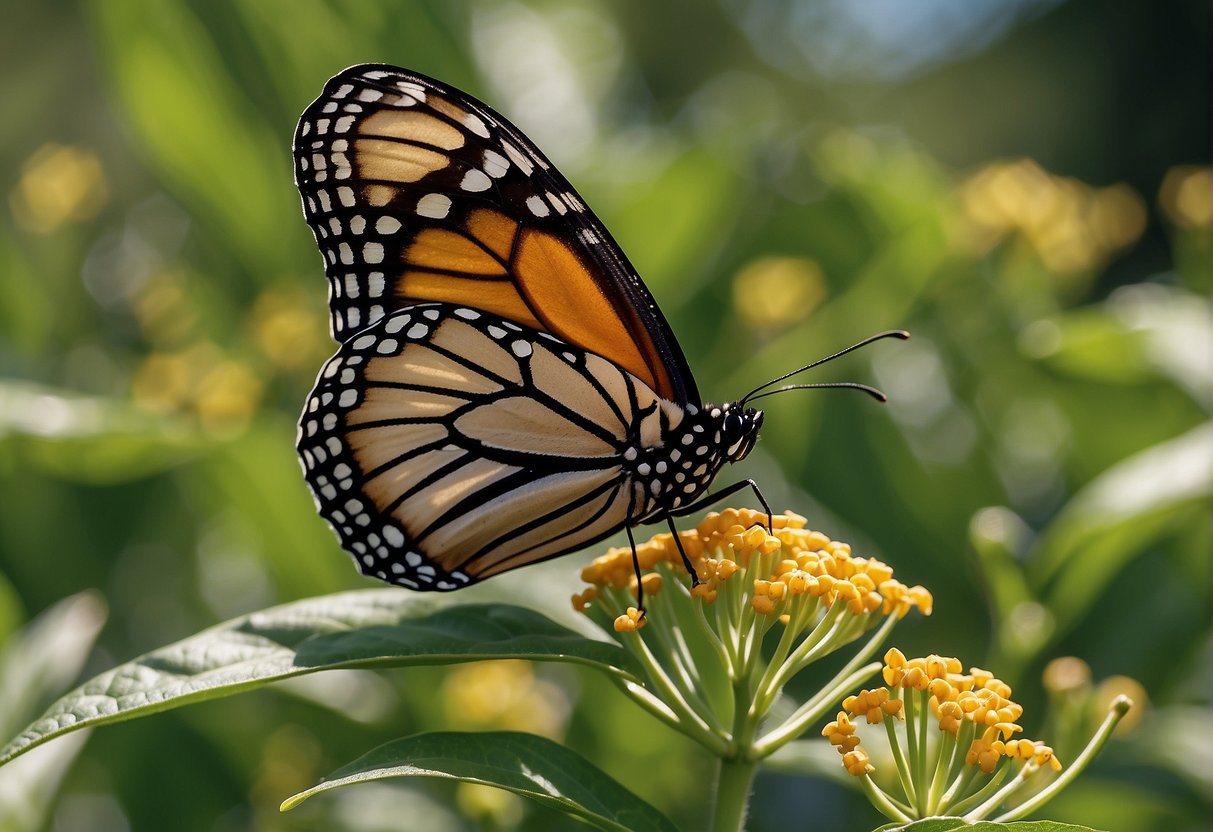
The Monarch Butterfly and the Milkweed Plant: A Symbiotic Relationship
Have you ever pondered the connection between the monarch butterfly and the milkweed plant? This duo exhibits a distinct interdependence pivotal to their existence. Milkweed plants are the main nourishment for monarch larvae, whereas the butterfly is vital in pollinating the milkweed vegetation.
The Monarch-Milkweed Relationship is fascinating and complex. The monarch butterfly depends on the milkweed plant for its survival, and the milkweed plant relies on the monarch butterfly for pollination. This relationship is an excellent example of how nature works in harmony, where both species benefit from each other. However, the relationship between monarchs and milkweed is not without its challenges, and there are many factors that can impact their survival.
Key Takeaways
- The monarch butterfly and milkweed plant share a unique and essential relationship.
- Monarch caterpillars rely on milkweed as their primary food source, while the milkweed plant depends on monarchs for pollination.
- The relationship between monarchs and milkweed faces many challenges, and their survival is impacted by various factors.
The Monarch-Milkweed Relationship
Symbiotic Dynamics
The relationship between the monarch butterfly and the milkweed plant is a classic example of a symbiotic relationship. The monarch butterfly relies on the milkweed plant for its survival, as it is the only plant that the monarch caterpillar can feed on. In turn, the milkweed plant benefits from the pollination services provided by the adult monarch butterfly.
The symbiotic relationship between the monarch butterfly and the milkweed plant is complex and dynamic. The monarch butterfly has evolved to be able to tolerate the toxic chemicals produced by the milkweed plant, which it stores in its body as a defense against predators. The milkweed plant, in turn, has evolved to produce these toxic chemicals as a defense against herbivores.
Coevolutionary Aspects
The relationship between the monarch butterfly and the milkweed plant is an example of coevolution, where two species evolve in response to each other over time. The monarch butterfly and the milkweed plant are engaged in an “arms race” of sorts, as each species tries to outsmart the other.
For example, the monarch butterfly has evolved to be able to detect the presence of toxic chemicals in the milkweed plant, and will avoid laying its eggs on plants that are too toxic. The milkweed plant, in turn, has evolved to produce more toxic chemicals in response to the presence of monarch caterpillars.
Overall, the relationship between the monarch butterfly and the milkweed plant is a fascinating example of how evolution has shaped the relationships between species.
Monarch Lifecycle and Milkweed
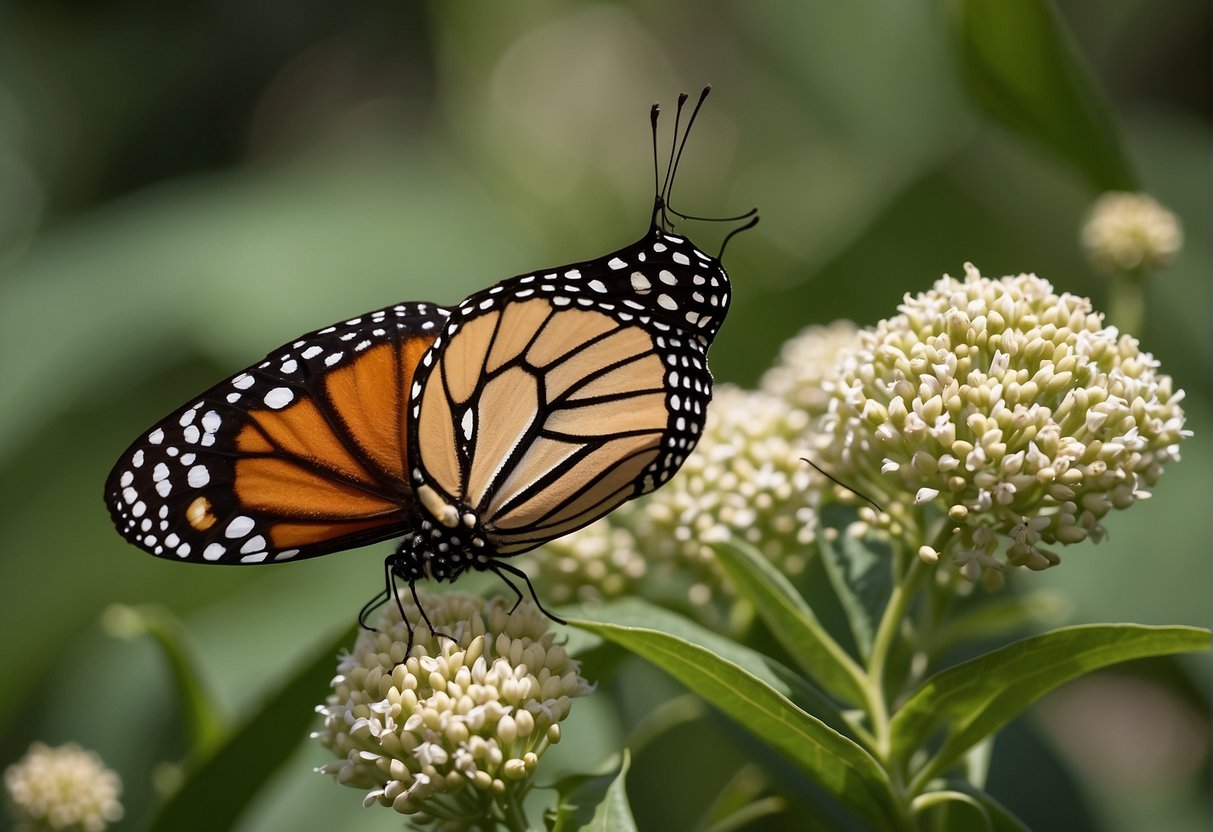
The monarch butterfly and milkweed plant have a unique and interdependent relationship. The monarch butterfly relies heavily on milkweed for its survival, as it is the only plant that the butterfly will lay its eggs on and that the caterpillars will feed on.
Egg Laying on Milkweed
Female monarch butterflies lay their eggs exclusively on milkweed plants. The eggs are laid individually on the underside of milkweed leaves, usually one egg per leaf. The eggs are small and white, and hatch within 3-5 days.
Caterpillar Dependency on Milkweed
Once the eggs hatch, the caterpillars emerge and begin feeding on the milkweed leaves. The caterpillars are entirely dependent on milkweed for their survival, as it is the only plant that they will eat. The caterpillars go through several molts as they grow, and they will consume a large amount of milkweed during this time.
Chrysalis Formation and Metamorphosis
After the caterpillars have fully grown, they will form a chrysalis on the milkweed plant. The chrysalis is where the caterpillar undergoes metamorphosis and transforms into an adult butterfly. The chrysalis is typically green or brown in color and hangs from the milkweed plant. After about 10-14 days, the adult butterfly emerges from the chrysalis and begins the cycle anew.
In conclusion, the monarch butterfly and milkweed plant have a close and necessary relationship that is essential to the butterfly’s lifecycle. Without milkweed, the monarch butterfly would not be able to survive and continue its lifecycle.
Milkweed’s Role in Monarch Defense
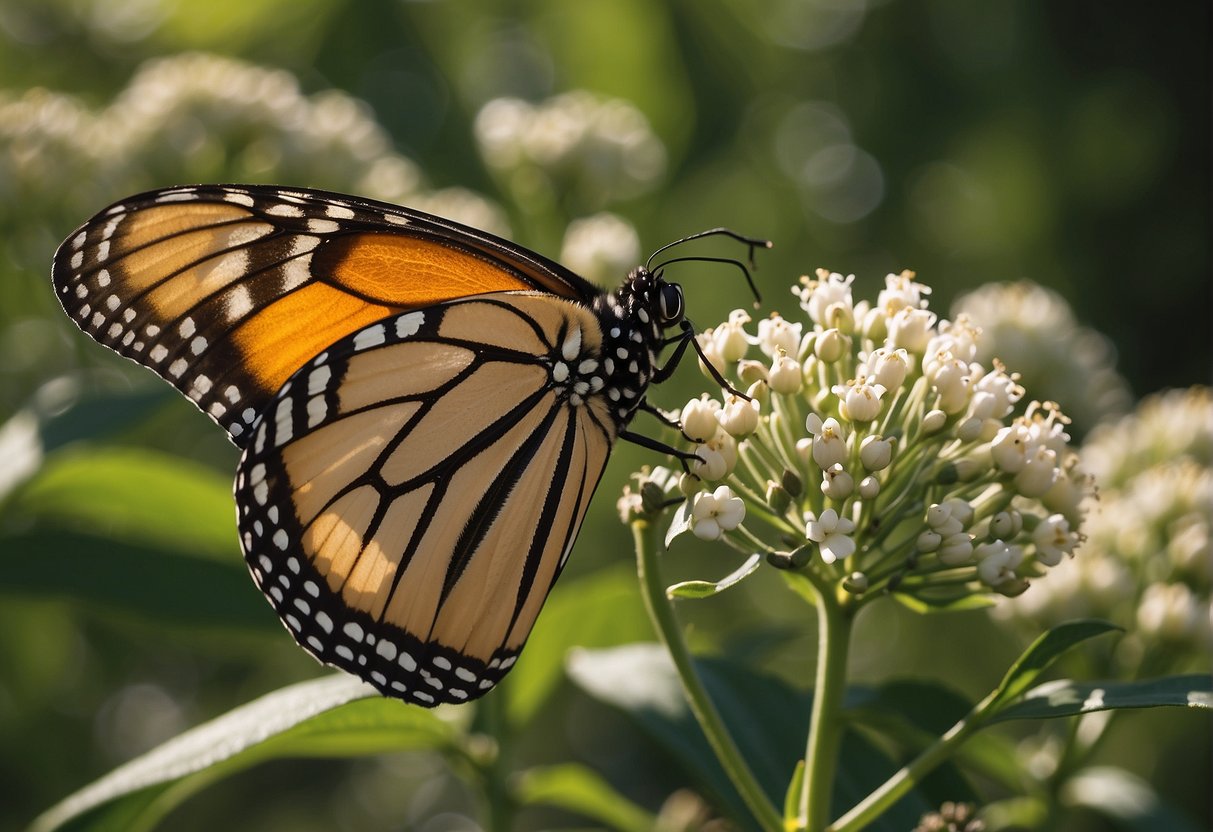
As you may know, the monarch butterfly and the milkweed plant have a unique relationship where the plant serves as the primary food source for the butterfly during its larval stage. However, the relationship between these two species goes beyond just providing food. Milkweed also plays a crucial role in the defense mechanism of the monarch butterfly.
Toxicity as a Defense Mechanism
Milkweed contains cardiac glycosides, which are toxic compounds that can cause harm to predators who consume the plant or the monarch butterfly. These toxins are stored in the butterfly’s body and are used as a defense mechanism against predators. When a predator attempts to eat the butterfly, the toxins are released, causing the predator to become sick or even die.
Predator Deterrence
In addition to the toxicity of the milkweed plant, its physical characteristics also serve as a deterrent to predators. Milkweed has a thick, sticky sap that can trap insects and other small animals, making it difficult for predators to approach the plant. The plant’s leaves also have a rough texture, making it uncomfortable for predators to walk on or climb.
Overall, the milkweed plant plays a crucial role in the defense mechanism of the monarch butterfly. Its toxicity and physical characteristics serve as a deterrent to predators, helping to ensure the survival of the butterfly species.
Migration and Habitat
Monarch Migration Patterns
Monarch butterflies are known for their long-distance migration patterns. They travel from their breeding grounds in North America to their overwintering sites in Mexico, covering thousands of miles in the process. The migration typically begins in late summer or early fall, when the days start to get shorter and the temperatures begin to drop.
During the migration, monarchs rely on a variety of cues to guide them to their destination. They use the position of the sun, the Earth’s magnetic field, and even the smell of milkweed to navigate. Monarchs also fly at high altitudes, taking advantage of the strong winds to conserve energy.
Milkweed Availability and Monarch Habitats
Milkweed is essential to the survival of monarch butterflies, as it is the only plant on which they lay their eggs and the primary food source for their caterpillars. As a result, the availability of milkweed is a crucial factor in determining monarch populations.
Monarchs require a specific type of milkweed, and the availability of this plant can vary depending on the location and time of year. In the spring and summer, milkweed is abundant in North America, providing ample habitat for monarchs to breed and feed. However, during the winter months, when monarchs overwinter in Mexico, milkweed is scarce, and the butterflies must rely on stored fat reserves to survive.
Conservation efforts to protect and increase milkweed populations are critical for the survival of monarch butterflies. By planting milkweed in gardens and other habitats, individuals can help provide essential habitat for monarchs and support their long-distance migration.
Conservation Efforts
Conservation efforts are crucial to ensure the survival of the monarch butterfly and the milkweed plant. Here are some ways in which you can help conserve these species.
Impact of Human Activities
Human activities, such as deforestation and the use of pesticides, have contributed to the decline of monarch butterfly populations. To help mitigate this impact, you can support organizations that work to protect monarch habitats and promote the planting of milkweed.
Planting and Protecting Milkweed
Planting native milkweed is one of the most effective ways to help conserve monarch butterflies. By providing a habitat for monarchs to lay their eggs and for caterpillars to feed on milkweed leaves, you can help ensure the survival of this species. Additionally, protecting existing milkweed habitats from development or other threats is also important.
To help you get started, here are some tips for planting milkweed:
- Choose a location that receives plenty of sunlight and has well-draining soil.
- Plant milkweed seeds in the spring or fall.
- Water the seeds regularly until they germinate and establish themselves.
- Consider planting a variety of milkweed species to provide a diverse habitat for monarchs.
By taking these steps, you can help protect the monarch butterfly and the milkweed plant for future generations to enjoy.
Milkweed Varieties and Monarchs
Monarch butterflies have a unique relationship with milkweed plants. Milkweed is the only plant that monarchs lay their eggs on, and it is also the primary food source for monarch caterpillars. There are several varieties of milkweed, but not all varieties are equally beneficial for monarchs. In this section, we will explore the relationship between milkweed varieties and monarchs.
Common Milkweed and Monarch Preference
Common milkweed (Asclepias syriaca) is the most well-known milkweed species and is often the first choice for monarchs. The plant is native to North America and can be found in a variety of habitats, including fields, meadows, and roadsides. Common milkweed is a tall plant that can grow up to six feet tall and has large, broad leaves. The flowers are pink to purple and grow in clusters at the top of the plant.
Monarchs prefer common milkweed over other milkweed species because it contains high levels of cardenolides, which are toxic to most predators. Monarchs are able to store these toxins in their bodies, making them unpalatable to birds and other predators.
Non-Native Milkweed Impact
Non-native milkweed species, such as tropical milkweed (Asclepias curassavica) and swamp milkweed (Asclepias incarnata), have become popular options for gardeners looking to attract monarchs. However, there is growing concern that the use of non-native milkweed may be harming monarch populations.
Tropical milkweed, in particular, has been linked to the spread of a protozoan parasite called Ophryocystis elektroscirrha (OE). OE can be harmful to monarchs, causing deformities and reducing their lifespan. Tropical milkweed is also known to continue blooming late into the fall, which can disrupt monarch migration patterns.
Swamp milkweed, on the other hand, is a native species that is beneficial for monarchs. It prefers wetter soils and can tolerate partial shade, making it a great option for gardens with less sun exposure. Swamp milkweed has smaller, more delicate flowers than common milkweed, but it still contains high levels of cardenolides.
In conclusion, while there are several varieties of milkweed, not all are equally beneficial for monarchs. Common milkweed is the preferred choice for monarchs due to its high levels of cardenolides, while non-native milkweed species like tropical milkweed may be harmful to monarch populations. Swamp milkweed, a native species, is a great option for gardens and can provide the necessary resources for monarchs without the potential negative impacts of non-native milkweed.
The Science of Monarch-Milkweed Interactions
As you observe the beautiful orange and black monarch butterfly fluttering around, have you ever wondered about its relationship with the milkweed plant? Scientists have been studying this fascinating interaction for years, and their research has shed light on the complex dynamics between these two organisms.
Research on Monarch-Milkweed Dynamics
Research has shown that monarch butterflies rely on milkweed plants for their survival. Female monarchs lay their eggs on milkweed leaves, and the larvae that hatch from these eggs feed exclusively on the milkweed plant. This close relationship between the monarch and milkweed has led scientists to refer to milkweed as the “host plant” for monarchs.
However, the relationship between monarchs and milkweed is not one-sided. Milkweed plants have evolved a variety of defense mechanisms to protect themselves from being eaten by monarch larvae. One of these mechanisms is the production of toxic chemicals called cardenolides, which can be harmful or even fatal to monarch larvae if ingested in large quantities.
Scientific Understanding of Toxicity and Defense
Despite the toxicity of milkweed, monarchs have evolved their own defense mechanisms to counteract its effects. For example, monarch larvae are able to sequester cardenolides in their bodies, making them less toxic and even unpalatable to predators.
Scientists have also discovered that monarchs are able to detect the presence of cardenolides in milkweed plants, and will avoid laying their eggs on plants with high levels of these toxins. This suggests that monarchs have a sophisticated understanding of the chemical composition of their host plants, and are able to make decisions based on this knowledge.
In conclusion, the relationship between monarch butterflies and milkweed plants is a complex and fascinating one, with both organisms relying on each other for survival. Through years of research, scientists have gained a deeper understanding of the biology and ecology of these organisms, and their knowledge continues to inform our understanding of the natural world.
Frequently Asked Questions
How do monarch butterflies benefit from milkweed plants?
Monarch butterflies benefit from milkweed plants in several ways. Firstly, they lay their eggs on milkweed leaves, which provide a source of food for the developing caterpillars. Secondly, the toxins in milkweed leaves make the caterpillars and adult butterflies unpalatable to predators. Finally, the nectar from milkweed flowers provides a valuable food source for adult monarchs during their long migrations.
What impact do monarch butterflies have on milkweed populations?
Monarch butterflies do not have a significant impact on milkweed populations. While they may consume some of the leaves and flowers, they also help to pollinate the plants, which can lead to increased seed production. Additionally, the presence of monarch butterflies can attract attention to the importance of milkweed plants and their conservation.
Is the interaction between monarch butterflies and milkweed plants mutualistic?
Yes, the interaction between monarch butterflies and milkweed plants is considered mutualistic. The milkweed provides a source of food and shelter for the monarchs, while the monarchs help to pollinate the plants and spread their seeds.
Why is milkweed considered essential for monarch butterfly reproduction?
Milkweed is essential for monarch butterfly reproduction because it is the only plant that the monarchs lay their eggs on. The toxins in the milkweed leaves also help to protect the developing caterpillars from predators. Without milkweed, the monarch population would decline rapidly.
What are the consequences of milkweed scarcity for monarch butterflies?
The consequences of milkweed scarcity for monarch butterflies are severe. Without milkweed, the monarchs are unable to reproduce and their population declines rapidly. This can have a ripple effect on the ecosystem, as monarch butterflies play an important role in pollination and as a food source for other animals.
How does the chemical composition of milkweed affect monarch caterpillars?
The chemical composition of milkweed can be toxic to many animals, but monarch caterpillars have evolved to be able to tolerate and even sequester these toxins. The toxins in the milkweed leaves help to protect the caterpillars from predators, and may also play a role in their bright warning colors as adults. However, too much exposure to the toxins can be harmful to the caterpillars, and they must carefully regulate their intake.

