
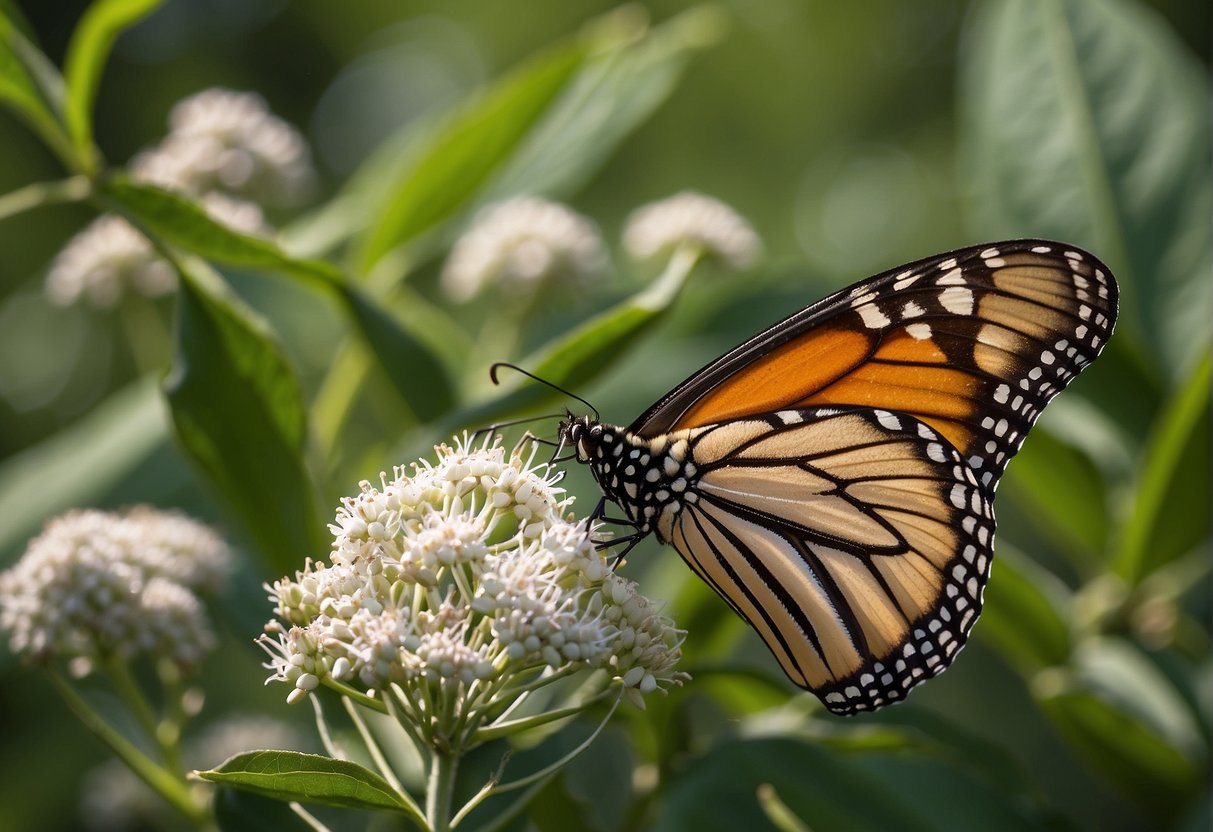
What is the Relationship Between Milkweed and Monarch Butterfly?
Ever seen a monarch butterfly flutter by with its dazzling orange and black wings? Well, hold onto your hats, because there’s a secret behind those wings you might not know about! Monarch butterflies and milkweed share a special bond. Yep, you heard that right! Milkweed, a super important plant, is like a lifeline for these fluttery friends. We’re diving into the nitty-gritty of how milkweed is a game-changer for the survival of monarch butterflies. Why’s this duo so crucial, you ask? Keep reading, and you’ll find out exactly why this relationship is a big deal.
Monarch Butterflies and Milkweed: An Overview
Monarch butterflies are one of the most recognizable butterfly species in the world. They are known for their striking colors and unique migration patterns. Milkweed, on the other hand, is a common plant that is found throughout North America. While these two entities may seem unrelated, they actually have a special relationship that is crucial to the survival of monarch butterflies. In fact, without milkweed, monarch butterflies would not be able to survive. Let’s take a closer look at why milkweed is so important to monarch butterflies.
Key Takeaways
- Milkweed is essential to the survival of monarch butterflies.
- Monarch butterflies lay their eggs on milkweed plants.
- The chemicals in milkweed make monarch butterflies poisonous to predators.
Monarch Butterflies and Milkweed: An Overview
If you are interested in monarch butterflies, you may have heard about the important relationship between these insects and milkweed plants. In this section, we will provide you with an overview of the biology of monarch butterflies and the characteristics of milkweed plants.
Biology of Monarch Butterflies
Monarch butterflies (Danaus plexippus) are a species of butterfly that are known for their striking orange and black wings. These butterflies are found throughout North America, and they are known for their incredible annual migration. Monarch butterflies are able to travel thousands of miles each year, flying from their breeding grounds in the northern United States and Canada to their wintering grounds in Mexico.
Monarch butterflies are also known for their unique life cycle. These butterflies lay their eggs exclusively on milkweed plants, and the larvae that hatch from these eggs feed exclusively on milkweed leaves. As the larvae grow, they molt several times before forming a chrysalis. Inside the chrysalis, the caterpillar undergoes metamorphosis and emerges as an adult butterfly.
Milkweed Characteristics
Milkweed (genus Asclepias) is a group of plants that is known for its unique characteristics. There are over 100 species of milkweed plants, and they are found throughout North America. Milkweed plants are known for their milky sap, which contains toxic compounds that help to protect the plant from herbivores.
Milkweed plants are also an important source of food for monarch butterfly larvae. The leaves of milkweed plants contain compounds that are toxic to many insects, but monarch butterfly larvae are able to tolerate these compounds. In fact, these compounds help to make monarch butterfly larvae toxic to predators, which helps to protect them from predation.
In conclusion, the relationship between monarch butterflies and milkweed plants is an important example of coevolution. Monarch butterflies rely on milkweed plants for their survival, and milkweed plants have evolved unique characteristics that help to protect them from herbivores while also providing an important food source for monarch butterfly larvae.
Lifecycle and Reproduction
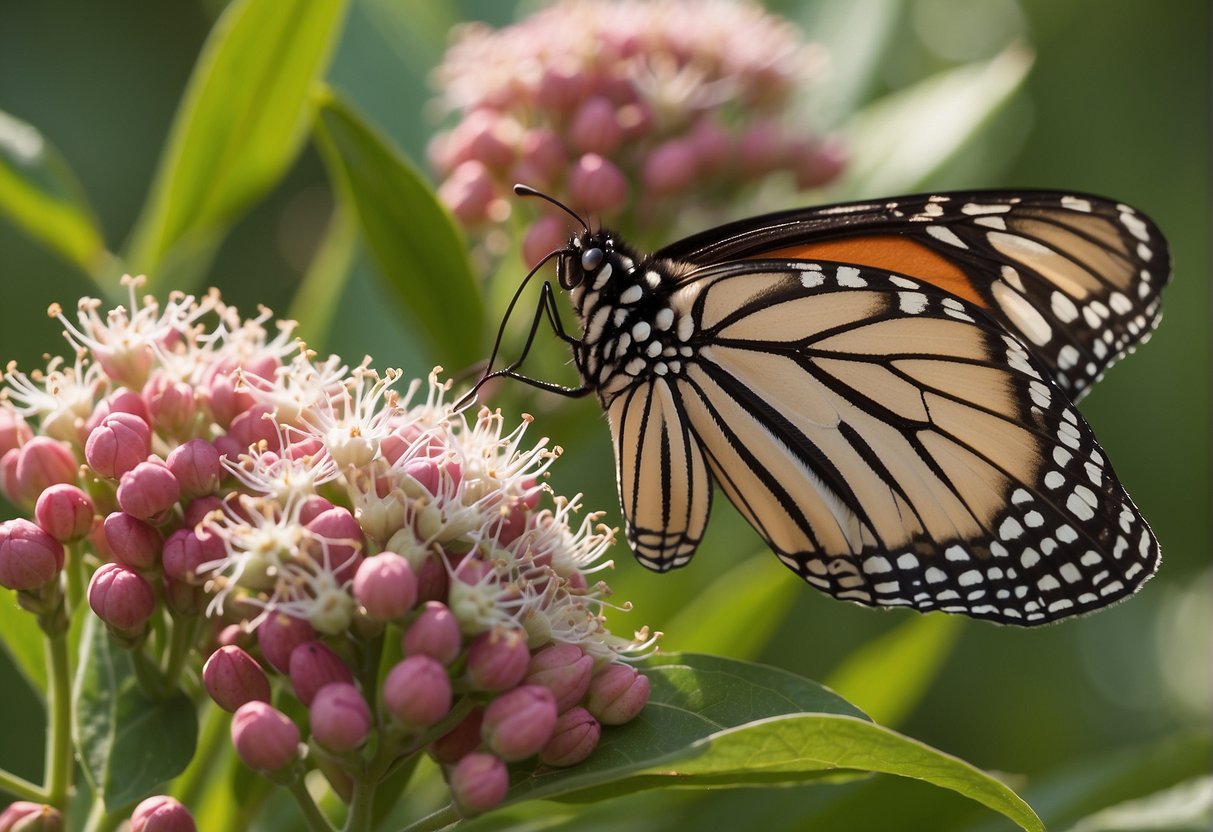
Monarch Life Cycle
The lifecycle of the monarch butterfly is a fascinating process that involves four distinct stages: egg, caterpillar (larva), pupa, and adult butterfly. The entire cycle lasts about one month.
The monarch butterfly begins its life as a tiny egg, which is laid on the underside of a milkweed leaf. The egg hatches into a caterpillar, which feeds exclusively on milkweed leaves. Over the course of about two weeks, the caterpillar molts (sheds its skin) several times as it grows larger.
After the caterpillar reaches its full size, it forms a chrysalis (pupa) around itself. Inside the chrysalis, the caterpillar undergoes a remarkable transformation, breaking down into a soupy substance before reassembling itself into a butterfly.
Finally, the adult butterfly emerges from the chrysalis, dries its wings, and takes flight. The adult butterfly feeds on nectar from flowers, and in doing so, helps to pollinate the plants.
Milkweed and Monarch Reproduction
Milkweed is essential to the monarch butterfly’s reproductive cycle. Female monarchs lay their eggs exclusively on milkweed plants, because the leaves provide the necessary nutrients for the caterpillars to grow.
In addition to providing food for the caterpillars, milkweed also plays a crucial role in the monarch’s reproductive success. The chemicals in milkweed leaves help to make the adult butterflies toxic to predators, which protects them from being eaten.
Furthermore, the scent of milkweed plants helps to attract monarch butterflies to potential mating partners. Male monarchs will often patrol a patch of milkweed, waiting for a female to arrive. Once a female arrives, the male will attempt to mate with her.
Overall, the relationship between milkweed and monarch butterflies is a fascinating example of coevolution. The monarch butterfly has evolved to depend on milkweed for its survival, while milkweed has evolved to benefit from the presence of monarchs.
Migration and Habitats

Monarch Migration Patterns
Monarch butterflies are known for their incredible migration patterns that span thousands of miles. Every year, millions of monarchs travel from their summer breeding grounds in Canada and the United States to overwintering sites in Mexico. The journey takes several generations of butterflies to complete, and each generation plays a specific role in the migration.
In the fall, the final generation of monarchs emerges from their chrysalises and begins the long journey south. They use a combination of environmental cues and instinct to navigate, including the position of the sun and the Earth’s magnetic field. Once they reach their overwintering sites, the butterflies cluster together in trees to conserve heat and energy.
In the spring, the monarchs begin their journey northward once again, laying eggs along the way to start the next generation.
Habitat Preferences and Milkweed
Milkweed is a crucial component of the monarch butterfly’s habitat. Monarchs lay their eggs exclusively on milkweed plants, and the caterpillars feed on the leaves. Without milkweed, the monarch population would not be able to survive.
Monarchs have specific preferences when it comes to milkweed species and habitat. They prefer to lay their eggs on young, healthy plants that are not too tall or too short. They also prefer plants that are in full sun and have access to water.
Unfortunately, milkweed has been declining in North America due to habitat loss and pesticide use. This has had a significant impact on the monarch population, which has declined by over 80% in recent decades. Efforts are underway to restore milkweed habitat and protect the monarch butterfly, but more work is needed to ensure their survival.
Ecological Interactions
Predators and Defense Mechanisms
As a plant, milkweed has several predators such as aphids, beetles, and caterpillars. To protect itself, milkweed has developed several defense mechanisms. The most well-known defense mechanism is the production of toxins known as cardiac glycosides. These toxins are harmful to most animals, but not to monarch butterfly caterpillars. In fact, monarch butterfly caterpillars rely on these toxins for their survival.
Symbiosis: Milkweed and Monarch Butterflies
Milkweed and monarch butterflies have a symbiotic relationship. Monarch butterfly caterpillars feed exclusively on milkweed leaves, and milkweed provides a safe haven for monarch butterflies to lay their eggs. The cardiac glycosides in milkweed leaves make monarch butterfly caterpillars toxic to their predators, which helps protect them from harm.
The relationship between milkweed and monarch butterflies is an example of coevolution. As monarch butterflies evolved to feed on milkweed, they developed a resistance to the cardiac glycosides in milkweed leaves. Over time, milkweed also evolved to produce more cardiac glycosides, which made it more toxic to other animals but still safe for monarch butterfly caterpillars.
In conclusion, the relationship between milkweed and monarch butterflies is a fascinating example of ecological interactions. Milkweed provides a safe haven and food source for monarch butterflies, while monarch butterflies help protect milkweed from its predators. This symbiotic relationship has evolved over time through coevolution, resulting in a mutually beneficial arrangement for both species.
Conservation and Threats
Decline of Monarch Populations
Monarch butterfly populations have been declining over the years. According to the Xerces Society for Invertebrate Conservation, the eastern population of monarchs has declined by over 80% since the mid-1990s. The western population has also declined, but not as drastically. This decline is due to several factors, including habitat loss, insecticides, and eradication efforts.
Threats to Milkweed
Milkweed is the primary food source for monarch butterfly larvae. However, milkweed populations have also been declining due to habitat loss, herbicides, and climate change. In addition, the use of genetically modified crops that are resistant to herbicides has led to the eradication of milkweed in agricultural areas.
To address these threats, conservation efforts are underway to protect both monarch butterflies and milkweed. These efforts include the planting of milkweed in gardens and along roadsides, the creation of monarch butterfly habitats, and the reduction of pesticide use. By working together, we can help to conserve these important species and their habitats for future generations.
Human Influence and Management
Gardening with Milkweed
Planting milkweed in your garden is a great way to support monarch butterfly populations. Native milkweed species are the best choice for planting, as they are well adapted to the local climate and soil conditions. Some popular native milkweed species include common milkweed, butterfly weed, and swamp milkweed.
When planting milkweed in your garden, it’s important to choose a location that receives plenty of sunlight and has well-draining soil. You can start milkweed from seed or purchase established plants from a local nursery. Be sure to keep an eye out for milkweed pests, such as aphids and milkweed bugs, and take steps to control them if necessary.
Conservation Efforts
Conservation efforts are underway to protect and restore monarch butterfly habitats. One such effort is the Monarch Joint Venture, which is a partnership of federal and state agencies, non-governmental organizations, and academic programs that work together to conserve monarchs and their habitats.
Another important conservation effort is the planting of milkweed and other nectar-rich plants along monarch butterfly migration routes. This can be done in both rural and urban areas, and can help provide important resources for monarchs during their long journey.
In addition to planting milkweed, it’s important to avoid the use of pesticides and herbicides in areas where monarchs are present. These chemicals can be harmful to both monarchs and their food sources, and can contribute to population declines.
By taking these steps, you can help support monarch butterfly populations and ensure that these beautiful insects continue to thrive for generations to come.
Cultural and Educational Impact
Monarchs in Culture and Education
The relationship between milkweed and monarch butterflies has been a topic of interest in both culture and education. In many cultures, the monarch butterfly is seen as a symbol of hope, transformation, and perseverance. The beautiful orange and black butterfly has been featured in various art forms, including paintings, sculptures, and literature. In education, monarch butterflies have been used as a tool to teach students about the importance of pollinators and the role they play in our ecosystem.
In 2017, Anurag Agrawal, a biologist at Cornell University, published a book titled “Monarchs and Milkweed: A Migrating Butterfly, a Poisonous Plant, and Their Remarkable Story of Coevolution.” The book explores the relationship between monarchs and milkweed and how it has evolved over time. The book won the National Outdoor Book Award and was a finalist for the Forbes.com “Best Biology Books of 2017” list.
Scientific Research and Discoveries
Scientific research has also played a significant role in understanding the relationship between milkweed and monarch butterflies. In recent years, researchers have discovered that monarch butterflies use milkweed as their primary food source and that the plants contain toxins that help protect the butterflies from predators.
In 2017, the book “Monarchs and Milkweed” also won the Prose Award for Popular Science and was a finalist for the Association of American Publishers’ “Excellence in Science Books” award. The book has helped to bring attention to the importance of milkweed in the survival of monarch butterflies and has contributed to scientific discoveries in the field.
Additionally, the AAAS/Subaru SB&F Prizes for Excellence in Science Books recognized the book as a finalist in the category of “Young Adult Science Books” in 2018. The book has helped to educate people of all ages about the complex relationship between milkweed and monarch butterflies and has inspired further research and discoveries in the field of biology.
Frequently Asked Questions
How do monarch butterflies benefit from milkweed plants?
Monarch butterflies rely on milkweed plants for their survival. The leaves of milkweed plants contain toxins that are poisonous to most animals, but monarchs have evolved to tolerate and even sequester these toxins. This makes monarchs toxic to predators, which helps protect them from being eaten.
What makes milkweed essential for monarch butterfly reproduction?
Milkweed is essential for monarch butterfly reproduction because it is the only plant that monarchs lay their eggs on. The female butterfly will lay her eggs on the underside of a milkweed leaf. Once the eggs hatch, the caterpillars will feed exclusively on the milkweed leaves until they are ready to form a chrysalis and metamorphose into an adult butterfly.
Why is milkweed considered crucial for monarch butterfly larvae?
Milkweed is crucial for monarch butterfly larvae because it is the only food source that they will eat. The toxins in the milkweed leaves that are poisonous to most animals actually help protect the monarch caterpillars from predators. Without milkweed, monarch larvae would not be able to survive to adulthood.
Can milkweed toxicity affect monarch butterflies?
Milkweed toxicity can affect monarch butterflies, but only if they consume too much of it. Monarchs have evolved to tolerate and sequester the toxins in milkweed leaves, but if they consume too much, it can make them sick or even kill them. However, this is rare in the wild, as monarchs have learned to regulate their milkweed consumption.
What are the consequences of planting non-native milkweed for monarch populations?
Planting non-native milkweed can have negative consequences for monarch populations. Non-native milkweed species may not be as well adapted to the local climate, which can make them less nutritious or less attractive to monarchs. In addition, non-native milkweed may not synchronize with the natural timing of monarch migration and reproduction, which can disrupt the monarch life cycle.
How does milkweed influence the migration patterns of monarch butterflies?
Milkweed plays a critical role in the migration patterns of monarch butterflies. Monarchs rely on milkweed as a food source during their long journey from their summer breeding grounds in the northern United States and Canada to their wintering grounds in Mexico. The availability and timing of milkweed along their migration route can influence the success of the entire monarch population.

