
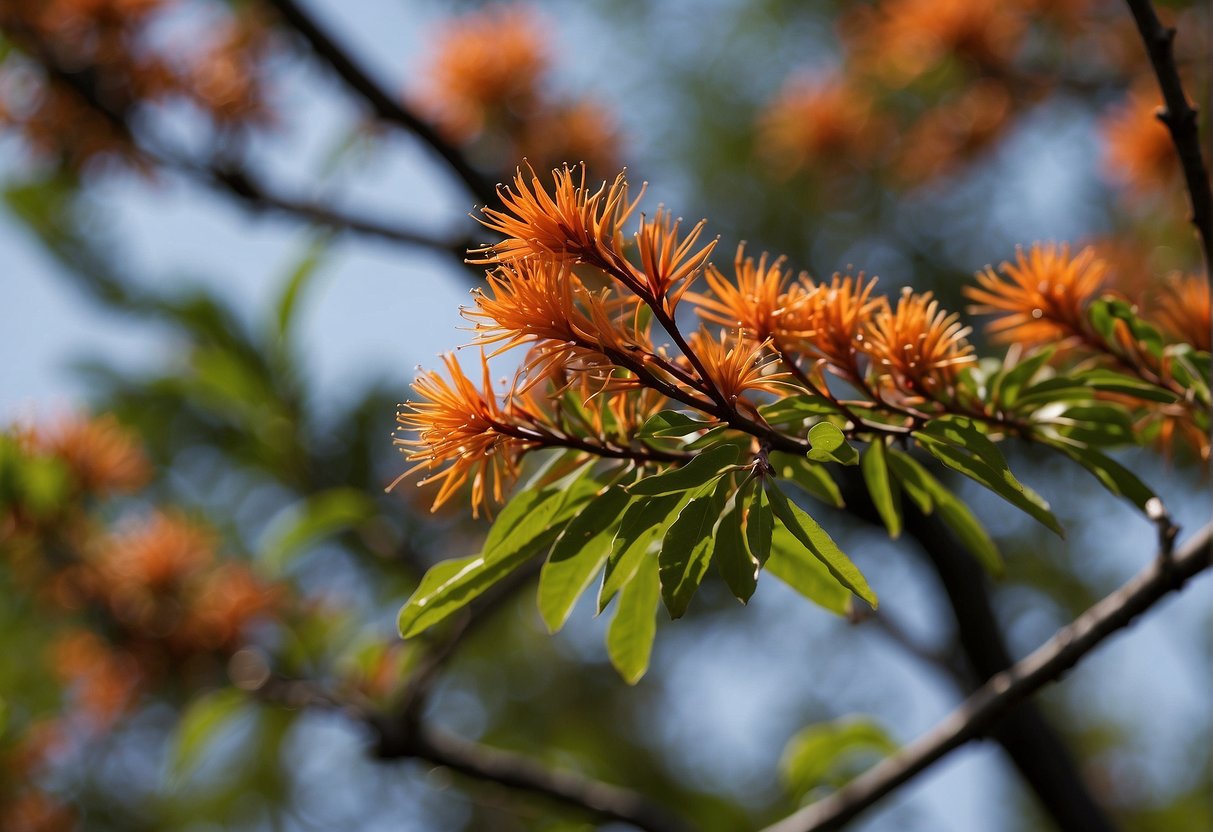
How to Trim Firebush: A Step-by-Step Guide
Pruning firebush, or Hamelia patens, is a critical activity for gardeners looking to keep their gardens flourishing and lively. This bush is favored for its vivid red-orange blooms that draw in hummingbirds and butterflies alike. But, neglecting to prune it correctly can lead to it becoming unkempt and misshapen. In this piece, you’ll discover the right techniques for pruning firebush both effectively and efficiently.
Understanding firebush is the first step to successful pruning. Firebush is a tropical shrub that can grow up to 15 feet tall and wide. It thrives in warm climates and prefers full sun to partial shade. Its leaves are dark green and glossy, and its flowers bloom in clusters from summer to fall. Knowing the growth habits and characteristics of firebush will help you determine the best time and method for pruning.
Pruning basics are essential to any gardening task, including trimming firebush. The goal of pruning is to remove dead, damaged, or diseased branches and promote new growth. It also helps to shape the plant and improve its overall health and appearance. Before you start trimming, make sure you have the right tools, including pruning shears, loppers, and saws. It is also crucial to follow safety guidelines and wear protective gear.
Understanding Firebush
Botanical Profile
Firebush (Hamelia patens) is a woody shrub that belongs to the Rubiaceae family. It is a semi-woody perennial or herbaceous perennial that is native to South America, Mexico, and Central America. Firebush is a tropical plant that thrives in full sun to partial shade and prefers well-drained soil.
Ideal Growing Conditions
Firebush is drought-tolerant and can be grown in South Florida, Northern Florida, and other tropical areas. It can be planted in the garden or in a pot with compost. To ensure optimal growth, it is important to provide firebush with the right growing conditions.
Planting and Initial Care
When planting firebush, make sure to choose a location that receives full sun to partial shade. Dig a hole that is twice as wide and deep as the root ball. Place the plant in the hole and fill it with soil. Water the plant thoroughly and add a layer of compost around the base.
Firebush requires regular watering until it is established. Once established, it is drought-tolerant and can survive with little water. Prune firebush in late winter or early spring to remove dead or damaged branches and encourage new growth.
In conclusion, understanding the botanical profile, ideal growing conditions, and initial care of firebush is important for its successful growth. By providing firebush with the right growing conditions and care, you can enjoy its beautiful blooms and foliage in your home garden.
Pruning Basics
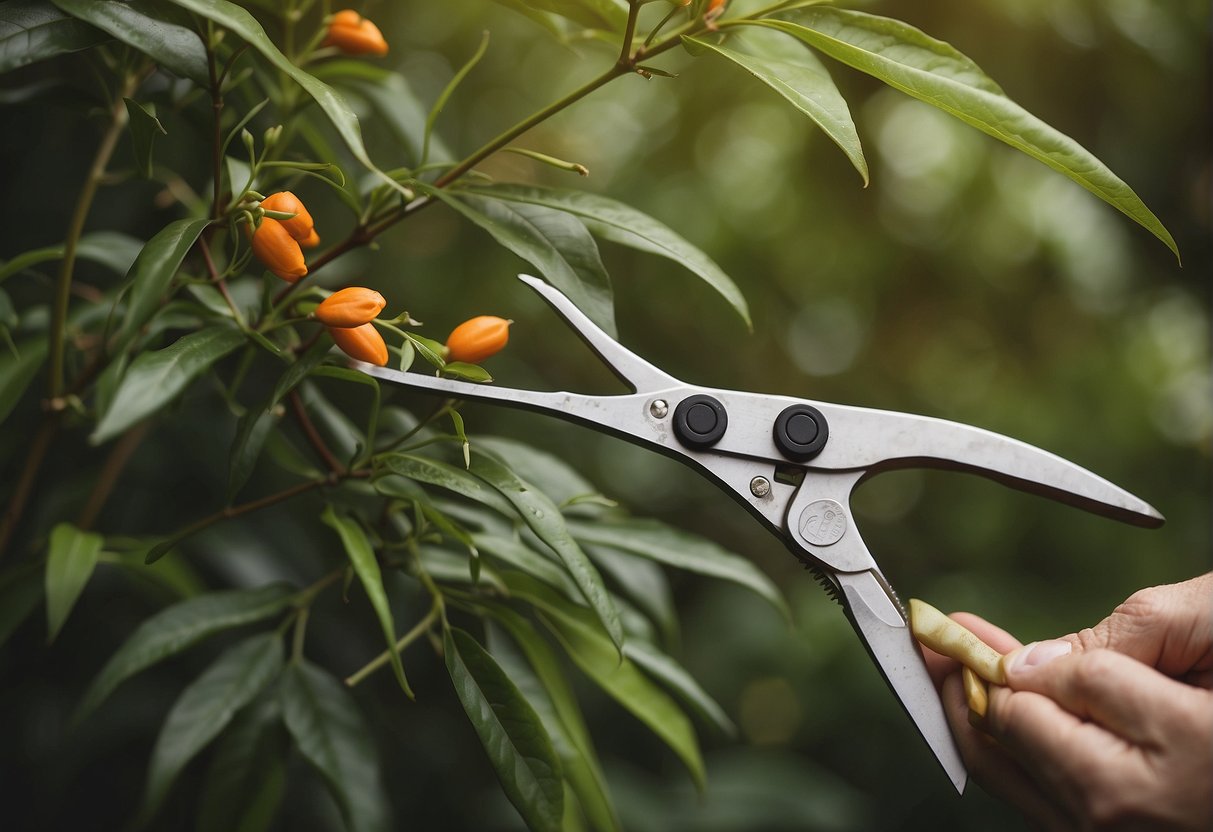
Pruning is an essential task for maintaining the health and shape of your firebush. It involves the removal of dead, damaged, or diseased branches, as well as shaping the plant to encourage new growth and blooming. In this section, we’ll cover the basics of pruning firebush, including the benefits, when to prune, and the tools and techniques you’ll need.
Benefits of Pruning
Pruning your firebush has several benefits, including:
- Promoting healthy growth: By removing dead or diseased branches, you allow the plant to focus its energy on healthy growth.
- Encouraging blooming: Pruning can help stimulate new growth and increase the number of blooms on your firebush.
- Maintaining shape: Regular pruning can help keep your firebush looking neat and tidy.
When to Prune
The best time to prune your firebush is in late winter or early spring while the plant is dormant. This is when the plant is least likely to be damaged by pruning, and it gives the plant plenty of time to grow and bloom during the summer and fall.
Tools and Techniques
To prune your firebush, you’ll need a few keen-edged tools, such as hand trimmers or pruning shears. Before you begin, make sure your tools are clean and disinfected with an alcohol or bleach solution to prevent the spread of disease.
When pruning, start by removing any dead or damaged branches, cutting them back to healthy growth nodes. Then, shape the plant by trimming back any branches that are growing too long or out of shape. Be careful not to remove too much growth at once, as this can stress the plant and inhibit blooming.
In summary, pruning your firebush is an important task for maintaining the health and appearance of your plant. By following the guidelines outlined in this section, you can ensure your firebush stays healthy and blooming for years to come.
Practical Trimming Steps
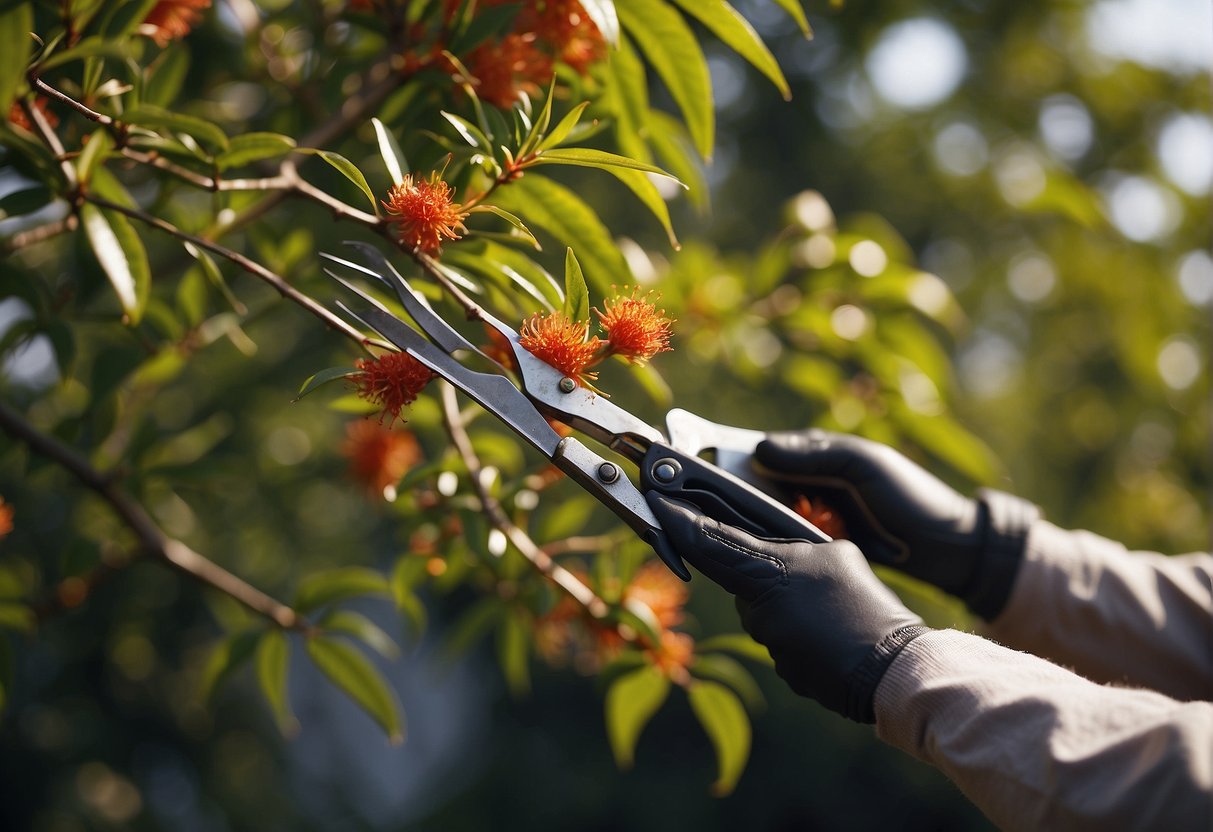
Trimming your firebush regularly is important to maintain its shape, height, and overall health. Here are some practical trimming steps to help you keep your firebush looking its best.
Determining the Shape
Before you start trimming, it’s important to determine the shape you want your firebush to have. This will depend on your personal preference and the location of the plant. If you’re using the firebush as a hedge, you may want to keep it trimmed into a neat and uniform shape. If it’s a standalone plant, you may want to give it a more natural shape.
Cutting Techniques
When trimming your firebush, it’s important to use the right cutting techniques. Light trimming can be done at any time of the year, but if you’re doing a more significant pruning, it’s best to do it in late winter or early spring before new growth appears. Use sharp pruning shears to make clean cuts, and cut just above a growth node to encourage new growth.
For rejuvenation pruning, where you cut the plant back to its base, you can do this every few years to keep the plant healthy and promote new growth. This technique is best done in late winter or early spring.
Post-Trimming Care
After trimming your firebush, it’s important to give it proper care to ensure its continued health. Water the plant thoroughly after trimming, and continue to water regularly to keep the soil moist. If you’re using fertilizer, wait a few weeks after trimming to apply it. This will give the plant time to recover from the trimming.
In summary, trimming your firebush is an important part of its care. By following these practical trimming steps, you can maintain the shape and health of your firebush for years to come.
Addressing Common Issues
If you’re growing firebush in your garden, you may encounter some common issues that can affect the health of your plant. In this section, we’ll discuss how to manage pests, prevent diseases, and address environmental stress factors to keep your firebush looking healthy and vibrant.
Pest Management
Firebush can be susceptible to a variety of pests, including mites, aphids, and scale. These pests can cause damage to the leaves and stems of the plant, leading to stunted growth and reduced vigor.
To manage pest infestations, it’s important to regularly inspect your plants for signs of damage or the presence of pests. If you notice any issues, you can use a variety of methods to control the infestation. These may include:
- Handpicking: Remove pests by hand and dispose of them properly.
- Insecticidal soap: Use a soap-based spray to kill pests on contact.
- Neem oil: Apply a neem oil spray to control a variety of pests.
Disease Prevention
Firebush can also be prone to a variety of diseases, including fungal infections and frost injury. These issues can cause the leaves and stems of the plant to wilt or turn brown, leading to reduced health and vigor.
To prevent diseases, it’s important to keep your plants healthy and well-maintained. This may include:
- Proper watering: Avoid overwatering or underwatering your plants, as both can lead to stress and disease.
- Fertilization: Use a balanced fertilizer to provide your plants with the nutrients they need to thrive.
- Pruning: Regularly prune your plants to remove dead or diseased branches and promote healthy growth.
Environmental Stress Factors
Firebush is a drought-tolerant plant, but it can still be affected by environmental stress factors such as salt spray and neglect. These issues can cause the leaves of the plant to turn yellow or brown, leading to reduced health and vigor.
To address environmental stress factors, it’s important to provide your plants with the care they need to thrive. This may include:
- Proper watering: Water your plants regularly to prevent drought stress.
- Mulching: Apply a layer of mulch around the base of your plants to help retain moisture and prevent salt spray.
- Pruning: Regularly prune your plants to remove dead or damaged branches and promote healthy growth.
By following these tips and addressing common issues, you can keep your firebush plants healthy and vibrant for years to come.
Encouraging Wildlife
If you have firebush in your garden, you are in luck because it is a great plant for attracting wildlife. Here are some tips for encouraging pollinators, birds, and other wildlife to your garden.
Attracting Pollinators
Firebush produces blooms that are highly attractive to pollinators such as bees and butterflies. To encourage these beneficial insects to visit your garden, make sure to plant firebush in a sunny location where it can receive plenty of light. Also, avoid using pesticides and other chemicals that can harm pollinators.
Providing Food Sources
Firebush produces orange-red tubular flowers that are a great source of nectar for hummingbirds and other birds. In addition, the plant produces berries that are a favorite food of many bird species. To encourage birds to visit your garden, make sure to provide a variety of food sources such as bird feeders and fruit trees.
To summarize, firebush is an excellent plant for encouraging wildlife in your garden. By providing a variety of food sources and planting firebush in a sunny location, you can attract pollinators, birds, and other wildlife to your garden. So, if you want to create a garden that is full of life and activity, be sure to include firebush in your landscaping plans.
Additional Gardening Tips
If you’re looking to add some variety to your garden, companion planting is a great way to do so. Firebush can be paired with other plants that thrive in similar conditions, such as tomatoes or other heat-loving plants. This can help improve soil health and attract beneficial insects to your garden.
Another way to propagate firebush is through cuttings. Take a cutting from a healthy plant and dip it in rooting hormone before planting it in a pot filled with well-draining soil. Keep the soil moist and place the pot in a warm, bright location. In a few weeks, your cutting should begin to root and grow.
When it comes to composting, firebush can be a great addition to your pile. The plant’s leaves and stems are rich in nitrogen, which can help balance the carbon-rich materials in your compost. This can lead to a healthier compost pile and better soil for your garden.
If you’re interested in learning more about gardening, consider signing up for a gardening know-how newsletter or downloading an ebook on the subject. These resources can provide valuable information on topics such as soil health, plant care, and pest control.
In summary, companion planting, propagation through cuttings, composting, and utilizing gardening resources such as newsletters and ebooks can all be helpful tips when growing firebush or any other plant in your garden. With a little knowledge and care, your garden can thrive and provide you with beautiful, healthy plants.
Firebush Varieties and Relatives
If you’re looking to add some color and vibrancy to your garden, firebush (Hamelia patens var. glabra) is an excellent choice. This evergreen shrub is also known as scarlet bush or hummingbird bush, and it’s easy to see why – its bright red-orange flowers attract hummingbirds and other pollinators.
Popular Firebush Varieties
There are several popular varieties of firebush that you can find at nurseries or garden centers. These include:
- ‘Compacta’: This variety is more compact than the standard firebush, making it a good choice for smaller gardens or containers.
- ‘Lime Sizzler’: This cultivar has variegated leaves with green, yellow, and red colors. It also produces orange-red flowers.
- ‘Goliath’: As its name suggests, this variety is larger than the standard firebush and produces more flowers.
Similar Plants
If you’re looking for other plants that are similar to firebush, there are a few options to consider:
- Burning bush (Euonymus alatus): This deciduous shrub has bright red foliage in the fall, making it a great choice for adding autumn color to your garden.
- Firecracker plant (Russelia equisetiformis): This plant produces red tubular flowers that resemble fireworks, and it’s also a favorite of hummingbirds.
- Coral honeysuckle (Lonicera sempervirens): This vine produces red-orange tubular flowers that are similar in shape to firebush flowers. It’s also a host plant for the hummingbird moth.
No matter which variety or similar plant you choose, adding some color and pollinator-friendly plants to your garden is always a good idea.
Frequently Asked Questions
When is the best time of year to prune firebush plants?
The best time to prune firebush is in late winter or early spring, before new growth emerges. This will allow the plant to recover quickly and produce new growth during the growing season. Avoid pruning in the fall, as this can stimulate new growth that may not have time to harden off before winter.
What is the proper technique for trimming firebush in winter?
When pruning firebush in winter, use sharp, clean pruning shears to make clean cuts. Cut back any dead or damaged branches to healthy wood, and remove any crossing or rubbing branches. To promote a fuller, bushier plant, cut back the tips of each branch by one-third to one-half.
How should you cut back a large burning bush effectively?
If your firebush has grown too large, it can be pruned back hard in late winter or early spring. Cut the entire plant back to within 6 to 12 inches of the ground, leaving a few healthy buds on each stem. This will encourage new growth and help to rejuvenate the plant.
Can you prune a burning bush to maintain a smaller size?
Yes, you can prune a burning bush to maintain a smaller size. To keep the plant compact and bushy, prune back the tips of each branch by one-third to one-half in late winter or early spring. This will encourage new growth and help to maintain a smaller, more manageable plant.
What are the steps for pruning a burning bush into a tree shape?
To prune a burning bush into a tree shape, select a single, straight stem as the trunk and remove any side branches up to the desired height of the tree. Allow the top of the trunk to grow and develop a canopy of branches. Prune back any crossing or rubbing branches, and remove any dead or damaged wood as needed.
How do you manage an overgrown firebush through pruning?
If your firebush has become overgrown, it can be pruned back hard in late winter or early spring. Cut the entire plant back to within 6 to 12 inches of the ground, leaving a few healthy buds on each stem. This will encourage new growth and help to rejuvenate the plant. In subsequent years, prune the plant back by one-third to one-half each year to maintain its size and shape.

