

How Milkweed and Monarch Butterfly Benefit Each Other: Commensalism Explained
Should you have the chance to observe a monarch butterfly dancing around a patch of milkweed, it might spark curiosity about how these two entities coexist. This interaction is best explained by commensalism, a form of symbiotic relationship in which one organism gains benefits without either aiding or harming the other. Here, the monarch butterflies enjoy advantages from milkweed plants without impacting the wellbeing of the plants.
Monarch butterflies and milkweed have a unique relationship that has evolved over time. Milkweed plants provide monarchs with a crucial food source in the form of nectar and leaves, as well as a place to lay their eggs. In turn, monarchs help pollinate the milkweed plants and protect them from herbivores by secreting a toxin that makes them unpalatable.
One of the most notable benefits for monarchs is the protection milkweed provides during their migration and overwintering periods. By clustering together on milkweed plants, monarchs can conserve energy and stay warm during the winter months. However, environmental challenges such as habitat loss and climate change threaten both monarchs and milkweed. Conservation efforts are underway to protect these important species and their unique relationship.
Key Takeaways
- Monarch butterflies and milkweed have a commensal relationship where the butterflies benefit from the plants without harming them.
- Milkweed provides monarchs with a food source, a place to lay eggs, and protection during migration and overwintering.
- Conservation efforts are needed to protect both monarchs and milkweed from environmental challenges.
Understanding Commensalism
Defining the Relationship
Commensalism is a type of symbiotic relationship between two organisms where one organism benefits without harming or benefiting the other organism. In this relationship, one organism is called the commensal, which benefits from the relationship, while the other organism is called the host, which is neither benefited nor harmed.
Commensalism is a type of relationship that is often seen in nature, where one organism uses another organism for its own benefit. The commensal organism is usually smaller in size than the host organism and often relies on the host organism for protection, transportation, or food.
Examples in Nature
One example of commensalism is the relationship between milkweed and monarch butterflies. Monarch butterflies lay their eggs on milkweed plants, and the caterpillars feed on the leaves of the plant. While the caterpillars benefit from the food source, the milkweed plant is not harmed by the caterpillars’ feeding. In fact, the milkweed plant benefits from the relationship because the monarch butterfly’s eggs help pollinate the plant.
Another example of commensalism is the relationship between cattle egrets and grazing cattle. Cattle egrets follow the grazing cattle and feed on the insects that are disturbed by the cattle’s movement. The cattle egrets benefit from the food source, while the cattle are not affected by the presence of the birds.
Commensalism is an important relationship in nature because it allows organisms to coevolve and adapt to their environment. It is a fascinating example of how different organisms can work together to survive and thrive in their ecosystem.
Monarch Butterflies and Milkweed
Biological Connection
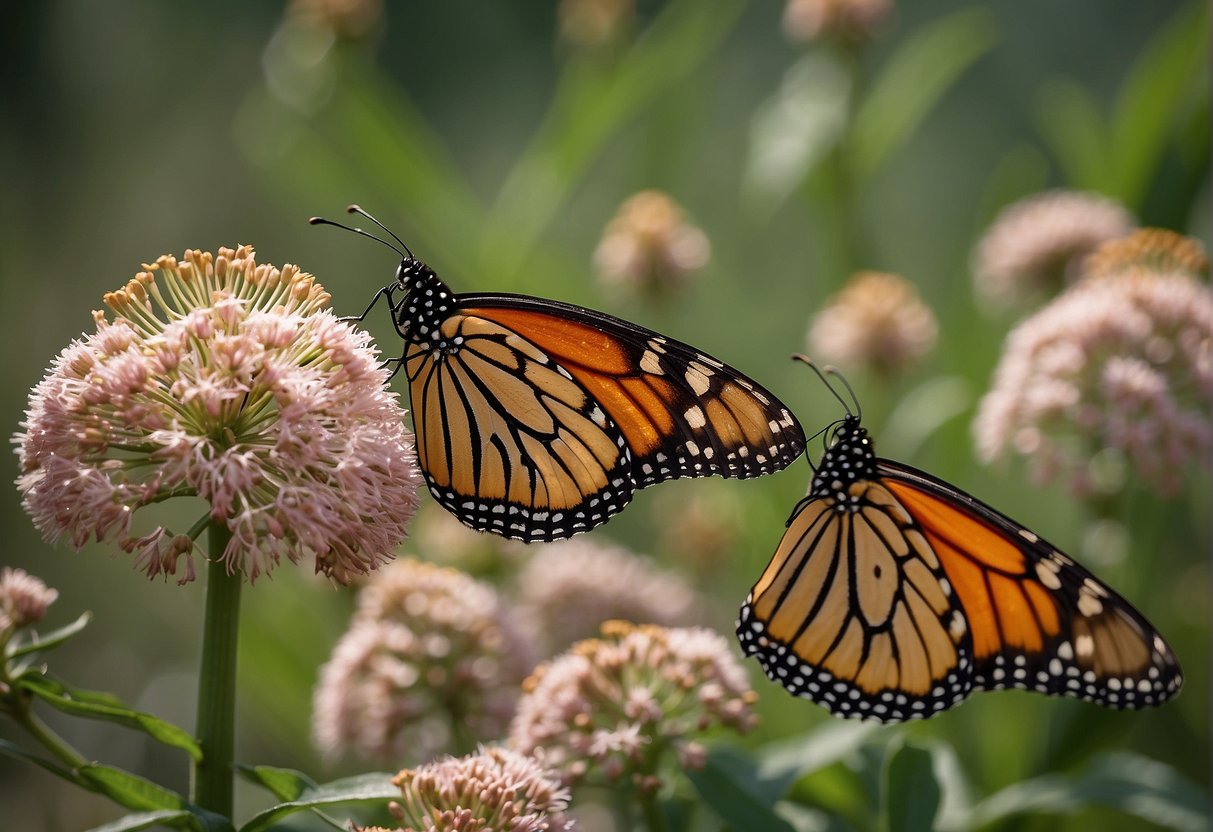
Monarch butterflies and milkweed plants have a unique relationship known as commensalism. This means that one organism benefits from the interaction while the other is neither harmed nor helped. Monarch butterflies rely on milkweed plants as their sole host plant for reproduction, while milkweed plants benefit from the pollination services provided by monarch butterflies.
Milkweed as a Host Plant
Milkweed plants are the only host plant for monarch butterflies, as they provide the necessary nutrients and chemicals for the survival and growth of monarch caterpillars. Monarch butterflies lay their eggs on the underside of milkweed leaves, and the hatched caterpillars feed on the leaves. The milkweed plant produces toxic chemicals called cardenolides, which are ingested by the caterpillars and stored in their bodies, making them unpalatable to predators.
Monarch Butterflies’ Life Cycle
The life cycle of monarch butterflies is closely tied to the milkweed plant. After hatching from the egg, the caterpillar goes through several molts and eventually forms a chrysalis. Inside the chrysalis, the caterpillar undergoes metamorphosis and transforms into an adult butterfly. The adult butterfly then emerges from the chrysalis and feeds on nectar from various flowers, including milkweed flowers.
In conclusion, the relationship between monarch butterflies and milkweed plants is a fascinating example of commensalism in nature. The milkweed plant provides a crucial host plant for the survival and growth of monarch caterpillars, while monarch butterflies provide pollination services for the milkweed plant. This biological connection highlights the importance of biodiversity and the interdependence of different species in ecosystems.
Benefits for Monarchs

Monarchs benefit greatly from their commensalism with milkweed plants. Here are some of the ways in which milkweed helps monarchs:
Toxic Defense Mechanism
Milkweed plants contain toxic compounds known as cardiac glycosides, which are harmful to most predators. When monarch caterpillars feed on milkweed leaves, they store these toxins in their bodies, making them unpalatable to predators such as birds. This toxic defense mechanism helps protect monarchs throughout their life cycle, from the larval stage to the adult stage.
Nourishment from Nectar
In addition to providing a toxic defense mechanism, milkweed plants also provide a source of nourishment for monarchs in the form of nectar. Monarch adults feed on the nectar produced by milkweed flowers, which provides them with the energy they need for their long migratory journeys. This nectar also helps sustain monarch populations during the breeding season.
Overall, the commensalism between milkweed plants and monarch butterflies is mutually beneficial. Milkweed plants provide monarchs with a toxic defense mechanism and a source of nourishment, while monarchs help pollinate milkweed plants. This symbiotic relationship helps ensure the survival of both species.
Milkweed Characteristics
Milkweed is a genus of herbaceous perennial plants that belong to the family Apocynaceae. The milkweed species are known for their unique and complex relationships with insects, especially the monarch butterfly. In this section, we will explore the characteristics of milkweed that make it an important host plant for the monarch butterfly.
Toxicity and Predators
One of the most distinctive features of milkweed is its toxicity. Milkweed contains a toxic substance called cardiac glycoside, which can be harmful to most animals, including humans. However, the monarch butterfly has evolved to be able to tolerate this toxin and even use it to its advantage. When the monarch caterpillar feeds on milkweed leaves, it stores the toxin in its body, making it unpalatable to predators such as birds.
Milkweed Species Diversity
There are over 100 species of milkweed, with the most common being the common milkweed (Asclepias syriaca), swamp milkweed (Asclepias incarnata), and tropical milkweed (Asclepias curassavica). Native milkweed species are the best choice for planting in gardens, as they are adapted to the local climate and support local wildlife. However, tropical milkweed, which is not native to North America, is often used in gardens due to its bright colors and long blooming period.
Overall, milkweed is a unique and important plant for the monarch butterfly. Its toxicity and diversity of species make it an ideal host plant, providing a safe and nutritious environment for the monarch caterpillar to grow and develop.
Migration and Overwintering
Monarch Migration Patterns
Monarch butterflies are known for their incredible migration patterns. Every year, millions of monarchs travel from their breeding grounds in Canada and the United States to overwintering sites in Mexico. The journey can be as long as 3,000 miles and can take several generations of monarchs to complete.
During the fall, monarchs begin their migration southward, following the changing seasons and the availability of milkweed, their primary food source. As the temperatures drop, monarchs begin to cluster together in large groups, seeking warmth and shelter. These clusters can contain thousands of butterflies, and they can be seen hanging from trees and other structures.
Overwintering Sites
Monarchs overwinter in a few select sites in Mexico, where the climate is mild and the vegetation provides shelter and food. The most famous of these sites is the Monarch Butterfly Biosphere Reserve in Michoacán, Mexico. This reserve covers over 56,000 acres and is home to millions of monarchs during the winter months.
Overwintering is a critical time for monarchs, as they conserve energy and prepare for the long journey back north in the spring. During this time, monarchs rely on stored fat reserves to survive, and they do not feed on milkweed or other plants. The overwintering sites are carefully managed to ensure that the monarchs are not disturbed or harmed during this critical time.
Overall, the migration and overwintering of monarch butterflies is a remarkable example of commensalism, where the monarchs rely on milkweed for food and shelter, while the milkweed benefits from the pollination services provided by the monarchs. By understanding the migration and overwintering patterns of monarchs, we can better protect these important species and their habitats.
Conservation Efforts
Protecting Monarch Habitats
Conservation efforts are essential to protect the monarch butterfly’s habitat and prevent further decline of this endangered species. One of the most important steps is to conserve and restore the milkweed plant, which is the only plant that monarchs lay their eggs on and that their caterpillars feed on. Milkweed has been lost due to habitat loss, and this has contributed to the decline of monarch populations.
In order to protect monarch habitats, it is important to preserve and restore natural areas that contain milkweed. This can include creating and maintaining butterfly gardens, nature reserves, and protected areas. Additionally, reducing pesticide use and restoring native plant communities can help to provide suitable habitat for monarchs.
The Role of Gardeners and Planting Milkweed
Gardeners can play a critical role in conserving monarch habitats by planting milkweed in their gardens. By providing milkweed, gardeners can create suitable habitat for monarchs and help to support their populations. Additionally, planting other native species can provide food and shelter for monarchs and other native species.
There are many different types of milkweed that can be planted in gardens, including common milkweed, swamp milkweed, and butterfly weed. Planting a variety of milkweed species can help to provide a diverse habitat for monarchs and other pollinators.
Overall, conservation efforts are essential to protect the monarch butterfly and prevent further decline of this endangered species. By preserving and restoring milkweed habitats and planting milkweed in gardens, we can help to support monarch populations and ensure the survival of this important native species.
Environmental Challenges
Climate Change Impact
Climate change is one of the most significant environmental challenges that the milkweed and monarch butterfly commensalism face. The rising temperatures and unpredictable weather patterns can affect the monarch butterfly’s breeding and migration patterns. The warmer temperatures can cause the milkweed plants to bloom earlier or later than usual, which can disrupt the monarch butterfly’s lifecycle. Additionally, the changing weather patterns can cause droughts, floods, and storms, which can destroy the milkweed plants and the monarch butterfly’s habitat.
Threats from Agriculture and Urbanization
Agriculture and urbanization are also major threats to the milkweed and monarch butterfly commensalism. The expansion of agriculture and urbanization has led to habitat loss, which has reduced the availability of milkweed plants. The use of insecticides in agriculture has also contributed to the decline of the monarch butterfly population. The insecticides can kill the monarch butterfly larvae, which feed on the milkweed plants. Moreover, the toxicity of the insecticides can also affect the adult monarch butterflies, which can lead to their death.
To address these environmental challenges, it is essential to increase public awareness about the importance of milkweed and monarch butterfly commensalism. It is also crucial to promote sustainable agricultural practices that minimize the use of insecticides and protect the monarch butterfly’s habitat. Additionally, efforts to mitigate climate change, such as reducing greenhouse gas emissions, can help to preserve the milkweed and monarch butterfly commensalism.
Frequently Asked Questions
What are the benefits of milkweed for monarch butterflies?
Milkweed is the only plant that monarch butterflies lay their eggs on, and it serves as the primary food source for their larvae. Milkweed also contains toxic compounds that help protect monarchs from predators. In addition, milkweed provides a habitat for other beneficial insects and pollinators.
How does the presence of monarch butterflies impact milkweed populations?
The presence of monarch butterflies can actually benefit milkweed populations. Monarch larvae feed on the leaves of milkweed plants, which stimulates the growth of new leaves and stems. In addition, monarch butterflies can help to pollinate milkweed flowers, which can lead to increased seed production.
Can monarch caterpillars feed on all types of milkweed?
Monarch caterpillars can feed on many different species of milkweed, but some species are more suitable than others. Some species of milkweed contain higher levels of toxic compounds, which can be harmful to monarch caterpillars in large amounts.
What makes certain milkweed varieties more suitable for monarch butterflies?
Certain milkweed varieties are more suitable for monarch butterflies because they contain lower levels of toxic compounds and provide a more nutritious food source for monarch larvae. Some varieties, such as common milkweed, also have a longer blooming period, which can provide a more consistent food source for adult monarchs.
Why is it important to protect milkweed habitats for monarch conservation?
Protecting milkweed habitats is crucial for the conservation of monarch butterflies. Without milkweed, monarchs would not have a place to lay their eggs or a food source for their larvae. The loss of milkweed habitats due to habitat destruction and pesticide use has contributed to the decline of monarch populations in recent years.
How do the toxins in milkweed plants affect monarch butterfly survival?
The toxins in milkweed plants can actually benefit monarch butterfly survival by making them less palatable to predators. However, if monarch larvae consume too much of these toxins, it can be harmful or even lethal. Monarch larvae have evolved adaptations to help them detoxify these compounds and avoid consuming toxic levels.

