
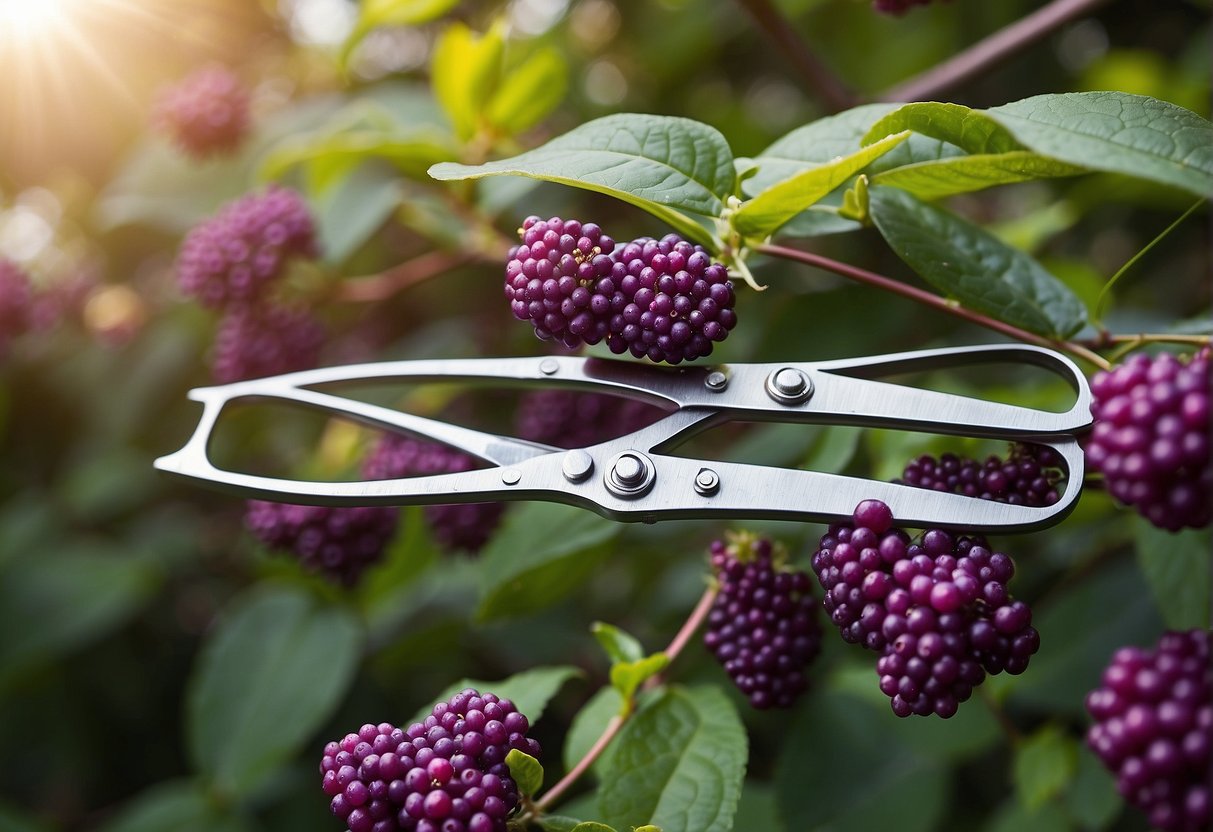
When to Trim Beautyberry: A Guide to Pruning Beautyberry Bushes
Maintaining your garden adequately involves many essential tasks, among which pruning stands out as a fundamental activity. This is particularly true for the beautyberry plant, where timely pruning is vital for its development and general well-being. By pruning your beautyberry, you’re not just shaping it but also encouraging blooming and protecting it from diseases, along with other advantages. Nevertheless, for those who are just beginning their gardening journey, determining the appropriate time to prune your beautyberry might pose a challenge.
Understanding when to trim beautyberry is crucial to ensure that the plant remains healthy and thriving. Pruning at the wrong time can lead to stunted growth, reduced flowering, and even death in extreme cases. The best time to prune beautyberry is during the late winter or early spring when the plant is still dormant. This timing allows for new growth to emerge in the spring, leading to a healthier and more vibrant plant. In this article, we’ll take a closer look at when to trim beautyberry, how to do it, and what to do after pruning.
Key Takeaways
- Pruning beautyberry is essential for its growth and overall health.
- Late winter or early spring is the best time to prune beautyberry.
- Proper pruning techniques and post-pruning care are crucial for maintaining a healthy beautyberry plant.
Understanding Beautyberry
Species Overview
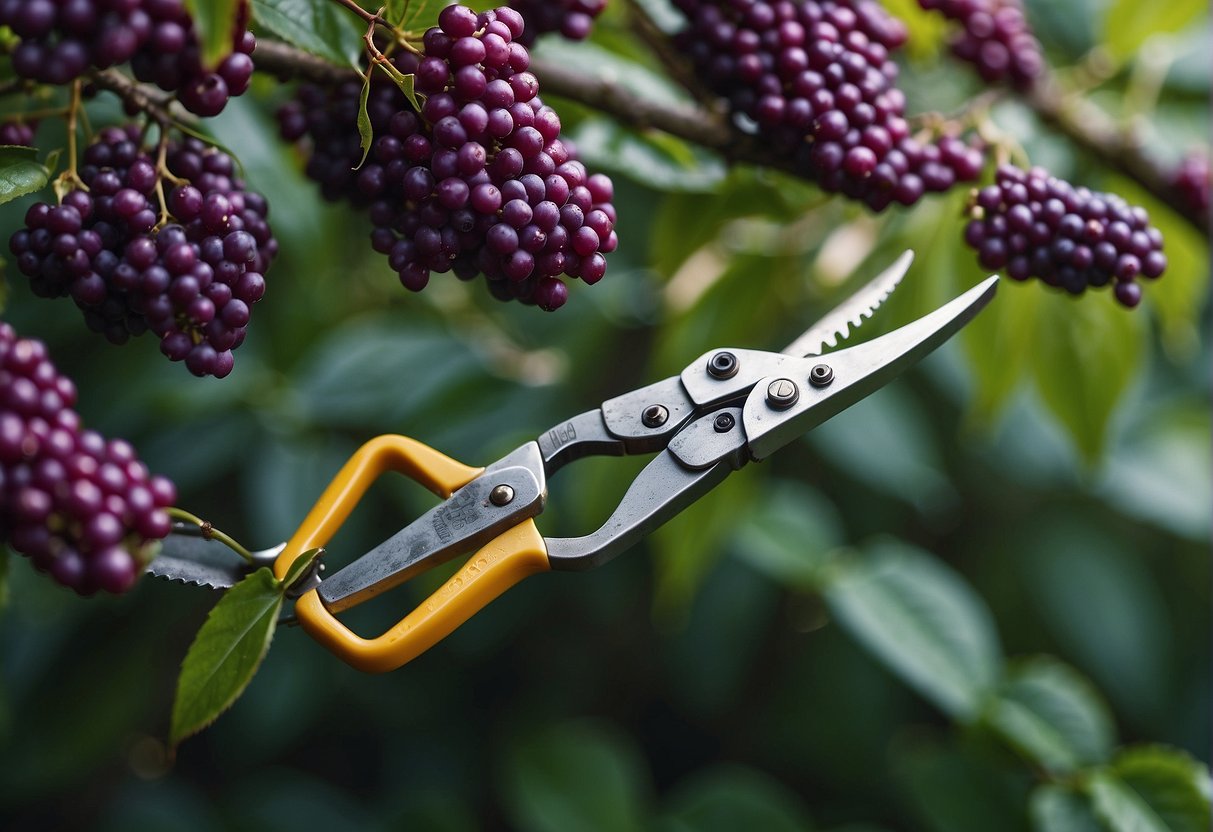
Beautyberry, also known as Callicarpa, is a genus of shrubs that are native to North America. The most common species of beautyberry is Callicarpa americana, which is found in zones 6 through 10. This shrub is known for its bright purple berries that grow in clusters along the branches.
Beautyberry is a deciduous shrub that can grow up to 6 feet tall and wide. It thrives in full sun and well-drained soil, but can also grow in partial shade. The leaves of the beautyberry are simple and opposite, and the flowers are small and pink or white.
Optimal Growing Conditions
Beautyberry grows best in well-drained soil that is rich in organic matter. The soil type should be loamy or sandy, and the pH should be slightly acidic to neutral (between 5.5 and 7.0). Good drainage is essential to prevent root rot, and the shrub should not be planted in areas with poor drainage.
Beautyberry prefers full sun, but can also grow in partial shade. In areas with hot summers, it may benefit from some afternoon shade to prevent leaf scorch. The shrub is cold hardy and can tolerate temperatures down to -10°F, making it a great choice for gardeners in colder climates.
When planting beautyberry, it is important to use native soil and avoid adding too much fertilizer. The shrub is adapted to the nutrient levels found in its native soil, and excessive fertilizer can cause the plant to grow too quickly and become weak and prone to disease.
Overall, beautyberry is a low-maintenance shrub that is well-suited to a wide range of growing conditions. With proper care, it can provide year-round interest in the garden, from its delicate flowers in the spring to its vibrant berries in the fall.
Pruning Essentials
When it comes to pruning your beautyberry, there are a few essential things to keep in mind. By following these guidelines, you can ensure that your plant stays healthy and looks its best.
Best Time to Prune
The best time to prune your beautyberry is in late winter or early spring, before new growth begins. This is the time when the plant is dormant and will not be harmed by pruning. Pruning in the summer or fall can stimulate new growth, which can be vulnerable to damage in cold weather.
Pruning Techniques
When pruning your beautyberry, it is important to make clean cuts to avoid damaging the plant. Use pruning shears for smaller branches and loppers for larger ones. Cut just above a node or bud to encourage new growth.
To shape your beautyberry, prune back any branches that are growing out of bounds. You can also remove any dead or diseased branches to keep the plant healthy.
Tools for Pruning
Having the right tools for pruning is essential. Use pruning shears for smaller branches and loppers for larger ones. Make sure your tools are sharp and clean to avoid damaging the plant.
When using pruning shears or loppers, make sure to make clean cuts to avoid damaging the plant. Clean cuts will heal more quickly and reduce the risk of disease.
By following these pruning essentials, you can keep your beautyberry looking its best. With the right tools and techniques, you can shape your plant and keep it healthy for years to come.
Post-Pruning Care
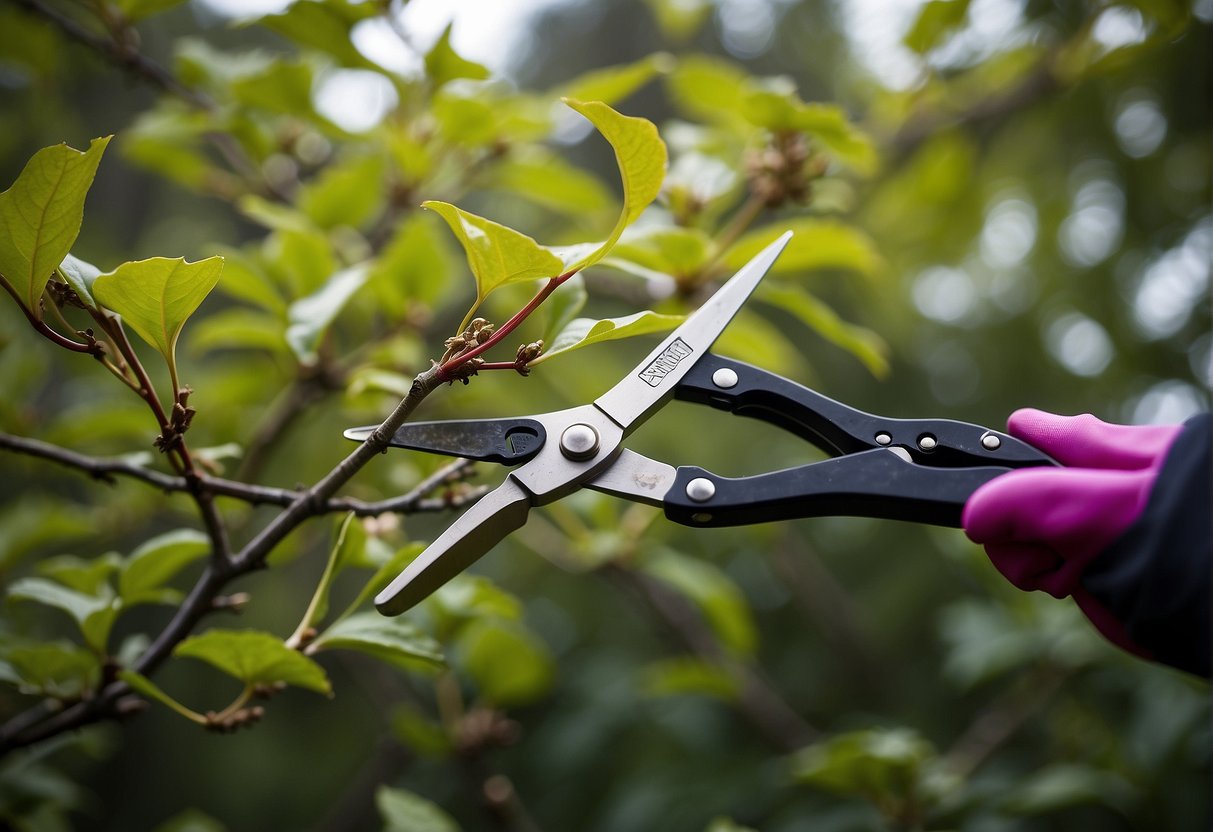
After pruning your beautyberry, it is important to provide proper care to ensure the plant recovers well and continues to thrive. Here are some tips on post-pruning care for your beautyberry.
Watering and Fertilization
Watering is crucial after pruning your beautyberry. Make sure to water the plant deeply and regularly to prevent stress and promote new growth. You should water your beautyberry at least once a week, and more frequently during hot and dry weather conditions.
Fertilization can also help your beautyberry recover from pruning. You can use a balanced fertilizer that contains equal amounts of nitrogen, phosphorus, and potassium. Apply the fertilizer to the soil around the plant and water thoroughly. Avoid over-fertilizing, as this can lead to excessive growth that may be susceptible to diseases.
Mulching and Weed Control
Mulching can help retain moisture in the soil and suppress weed growth around your beautyberry. Apply a layer of organic mulch, such as shredded leaves or bark, around the base of the plant. This will also add nutrients to the soil as the mulch decomposes over time.
Weed control is important to prevent competition for nutrients and water with your beautyberry. Remove any weeds that grow around the plant, either by hand or using a hoe. You can also use a pre-emergent herbicide to prevent weed seeds from germinating.
By following these post-pruning care tips, you can help your beautyberry recover quickly and continue to thrive. Remember to provide adequate water and fertilizer, as well as mulch and weed control, to keep your beautyberry healthy and beautiful.
Propagation and Planting
Beautyberry is easy to propagate and can be done through seed germination or stem cuttings. Here are some tips on how to propagate and plant beautyberry.
Seed Germination
Beautyberry seeds can be collected from the mature fruit in the fall. The seeds are small and should be cleaned before planting. You can start the seeds indoors in late winter or early spring. Sow the seeds in a well-draining soil mix and cover them with a thin layer of soil. Keep the soil moist and warm, and the seeds should germinate in about 2-3 weeks. Once the seedlings have grown large enough, they can be transplanted outdoors.
Cuttings and Rooting
Another way to propagate beautyberry is through stem cuttings. Take cuttings from the plant in the spring or early summer. Choose a healthy stem with at least two nodes. Remove the leaves from the bottom half of the stem and dip it in rooting hormone. Plant the stem in a well-draining soil mix and keep it moist. The cutting should root in about 4-6 weeks. Once the cutting has rooted, it can be transplanted outdoors.
Propagation of beautyberry is easy and can be done through seed germination or stem cuttings. Choose the method that works best for you and enjoy growing this beautiful plant.
Maintenance and Health
When it comes to maintaining the health of your beautyberry shrub, there are a few key things to keep in mind. Regular pruning is one of the most important things you can do to keep your shrub healthy and looking its best.
Pest and Disease Management
One of the most common problems with beautyberry shrubs is pest infestations. Insects such as aphids, spider mites, and whiteflies can all cause damage to the leaves and stems of your plant. To prevent these pests from taking hold, it’s important to keep your shrub healthy and well-maintained.
Regular pruning can also help to prevent the spread of diseases. If you notice any signs of disease, such as yellowing leaves or black spots on the stems, it’s important to act quickly to prevent the spread of the disease.
Rejuvenation Pruning
Rejuvenation pruning is a technique that can help to keep your beautyberry shrub looking its best. This involves cutting back the shrub to just a few inches above the ground, which will encourage new growth.
Dead or damaged branches should also be removed as soon as possible. This will help to prevent the spread of disease and will also improve air circulation and light penetration, which are both important for the health of your shrub.
Overall, regular pruning and maintenance are key to keeping your beautyberry shrub healthy and looking its best. By following these simple tips, you can help to prevent pest infestations, diseases, and other problems, and ensure that your shrub continues to thrive for years to come.
Beautyberry Aesthetics
Beautyberry (Callicarpa spp.) is a deciduous shrub that’s native to North America and Asia. The plant is prized for its showy clusters of pink, white, or purple berries that form in late summer and fall. If you’re looking to maintain the plant’s neat, rounded shape, it’s important to know when to trim it.
Flowering and Berries
Beautyberry blooms on new wood, which means it produces flowers on new growth that emerges in the spring. If you want to enjoy the plant’s flowers, it’s best to prune it in late winter or early spring before new growth appears. This will encourage the plant to produce new wood and more flowers.
The berries on beautyberry plants are also produced on new wood. If you want to have a bountiful crop of berries in the fall, it’s best to prune the plant in late winter or early spring. This will encourage new growth and more berries.
Landscape Uses
Beautyberry is a versatile plant that can be used in a variety of landscape settings. It’s great for borders and mass plantings, and its fall color can add interest to woodland areas. The plant’s green leaves provide a lovely backdrop for the showy berries.
When pruning beautyberry, it’s important to maintain its natural shape. Avoid shearing the plant into a formal hedge, as this can ruin its natural form. Instead, selectively prune branches to maintain a neat, rounded shape.
In summary, pruning beautyberry in late winter or early spring will encourage new growth and more flowers and berries. The plant’s natural form should be maintained when pruning to ensure its aesthetic appeal in the landscape.
Frequently Asked Questions
What is the best time of year to prune beautyberry bushes?
The best time to prune beautyberry bushes is in late winter or early spring, before new growth begins. This will allow you to remove any dead, damaged, or diseased wood, as well as shape the plant as desired. Avoid pruning too late in the growing season, as this may reduce the number of flowers and berries the plant produces.
How should beautyberry be cared for during winter?
Beautyberry is generally hardy and can tolerate cold temperatures, but it may benefit from some winter protection in colder climates. Mulching around the base of the plant can help insulate the roots, and covering the plant with burlap or other protective material can help prevent damage from snow and ice.
What are common issues with American beautyberry and how can they be addressed?
Common issues with American beautyberry include powdery mildew, leaf spot, and stem cankers. These can be addressed by removing any affected plant material and improving air circulation around the plant. In severe cases, fungicides may be necessary.
What are the guidelines for pruning a Pearl Glam Beautyberry?
Pearl Glam Beautyberry should be pruned in late winter or early spring, before new growth begins. Remove any dead, damaged, or diseased wood, as well as any branches that are crossing or rubbing against each other. Shape the plant as desired, but avoid pruning too heavily, as this may reduce the number of flowers and berries the plant produces.
When is the ideal time to transplant a beautyberry plant?
The ideal time to transplant a beautyberry plant is in late winter or early spring, before new growth begins. This will allow the plant to establish itself before the hot summer months. Be sure to water the plant well before and after transplanting, and avoid disturbing the roots as much as possible.
What are the proper pruning techniques for Callicarpa species?
The proper pruning techniques for Callicarpa species are similar to those for other beautyberry bushes. Prune in late winter or early spring, removing any dead, damaged, or diseased wood, as well as any crossing or rubbing branches. Shape the plant as desired, but avoid pruning too heavily, as this may reduce the number of flowers and berries the plant produces.

