
What Butterfly Lays Eggs on Milkweed: A Guide to Identifying the Species
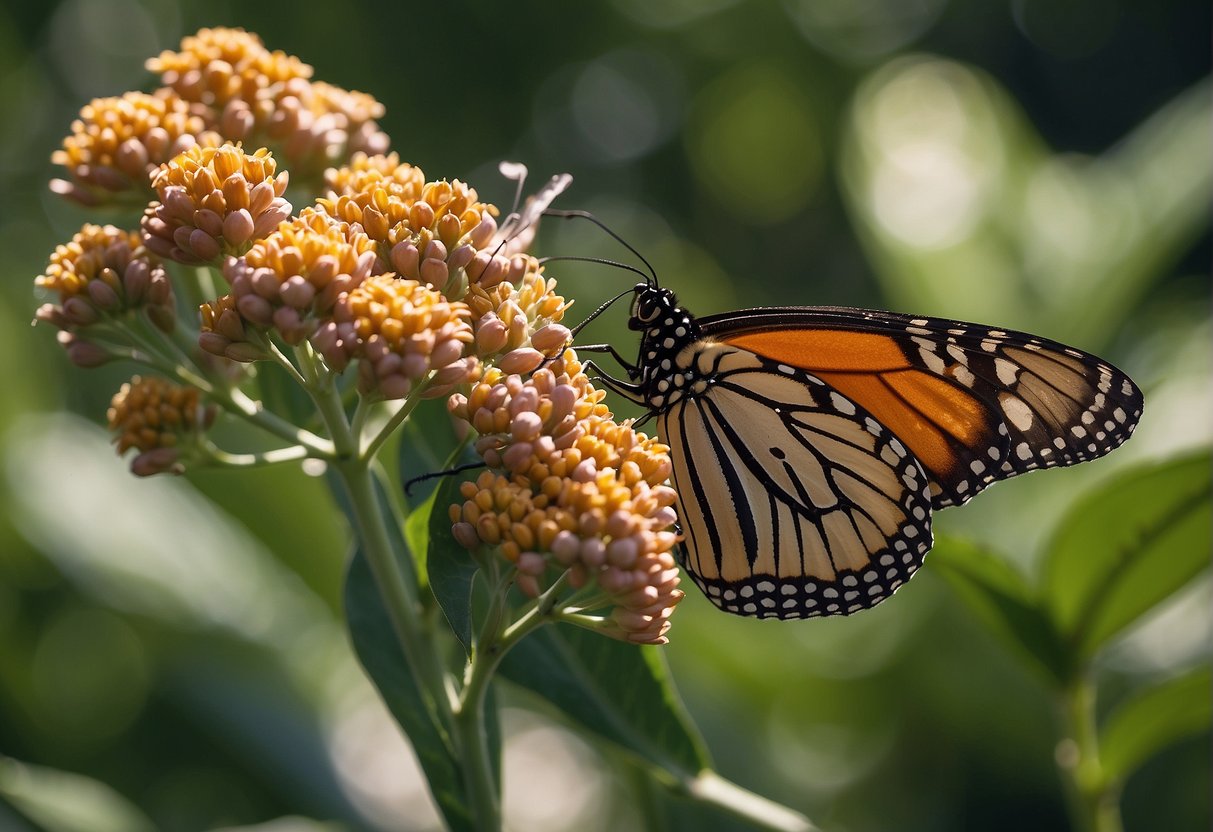
Should you be keen on acquiring knowledge concerning butterflies, it might pique your curiosity to know which type deposits its eggs on milkweed. The monarch butterfly is the species you’re looking for. Renowned for its striking orange and black wings in addition to its remarkable migratory behavior, the monarch butterfly also distinguishes itself through its special connection with the milkweed plant.
Monarch butterflies lay their eggs exclusively on milkweed plants, which serve as a host plant for their larvae. When the eggs hatch, the larvae feed on the milkweed leaves and grow rapidly. Over the course of several weeks, they undergo several molts before entering the pupal stage and eventually emerging as adult butterflies. This intricate life cycle is closely tied to the milkweed plant, making it an important species to protect and conserve.
Key Takeaways
- The monarch butterfly lays its eggs exclusively on milkweed plants.
- Milkweed serves as a host plant for monarch larvae, which feed on the leaves and undergo several molts before emerging as adult butterflies.
- Protecting and conserving milkweed is crucial for the survival of monarch butterflies.
Monarch Butterfly Overview
As you may already know, Monarch butterflies (Danaus plexippus) are one of the most recognizable and beloved butterfly species in North and South America. Their vibrant orange and black coloration, with white spots and veins, make them easy to identify. The female monarch butterfly is typically larger than the male, with a wingspan of up to 4 inches.
One of the most unique aspects of the Monarch butterfly is its migration pattern. These butterflies travel thousands of miles each year, from as far north as Canada to as far south as central Mexico. Along the way, they navigate through the Rocky Mountains and other mountain ranges in North America.
The Monarch butterfly’s preferred habitat is open fields and meadows, where they can find their primary food source: milkweed. In fact, the female monarch butterfly lays its eggs exclusively on milkweed plants. The leaves of the milkweed plant contain toxic chemicals that protect the monarch caterpillars from predators.
Overall, the Monarch butterfly is an important and fascinating species that is cherished by many. Its distinctive appearance and impressive migration make it a favorite among butterfly enthusiasts and nature lovers alike.
Milkweed as a Host Plant
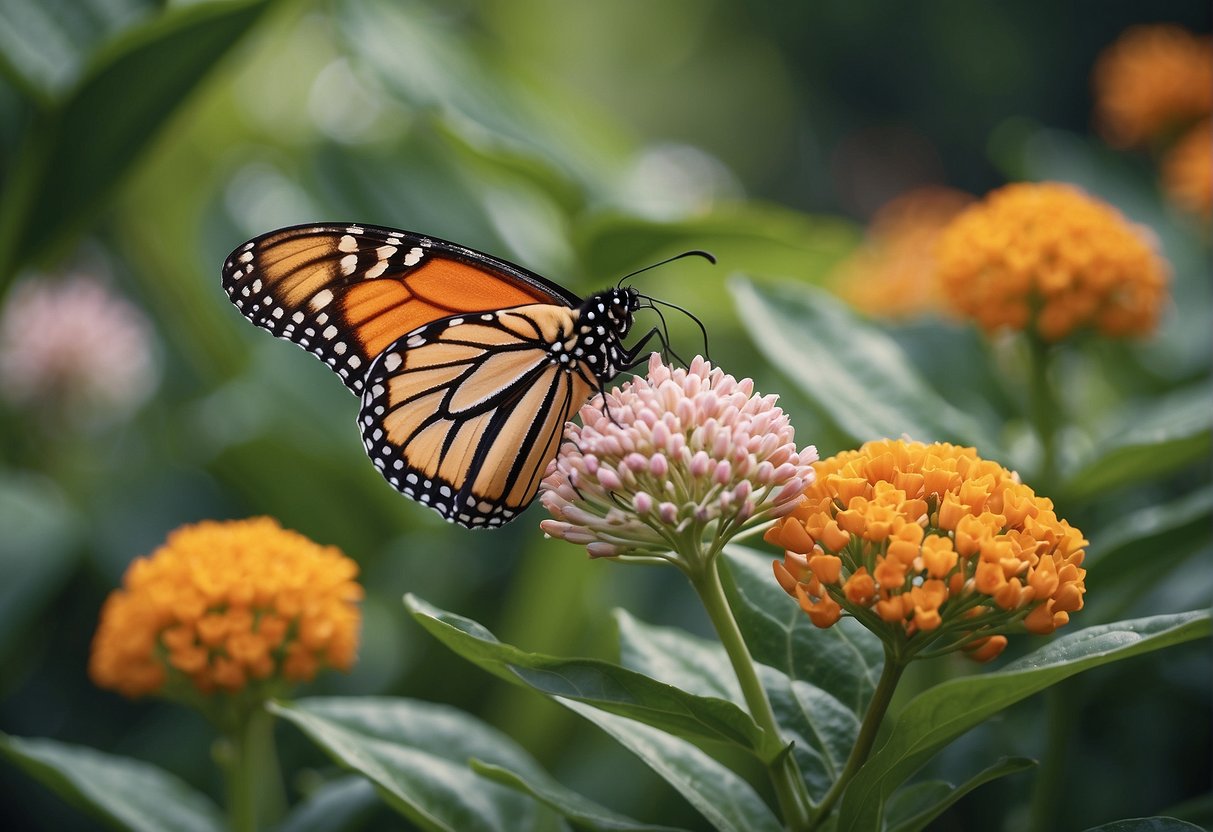
If you are interested in attracting butterflies to your garden, you should consider planting milkweed. Milkweed is a native plant that serves as an important host plant for many butterfly species. In this section, we will discuss the importance of milkweed, the different varieties of milkweed, and how to plant and grow milkweed.
Importance of Milkweed
Milkweed is a vital plant for the survival of many butterfly species. It is the only plant that monarch butterflies lay their eggs on, and it provides food for their caterpillars. Other butterfly species, such as the queen butterfly and the painted lady butterfly, also use milkweed as a host plant. Milkweed is important because it contains toxins that protect the caterpillars from predators.
Milkweed Varieties
There are many varieties of milkweed that you can plant in your garden. Some of the most common varieties include common milkweed, swamp milkweed, and butterfly weed. Common milkweed is a tall plant that grows in partial shade and produces large clusters of pink flowers. Swamp milkweed grows in wet habitats and produces clusters of pink or white flowers. Butterfly weed is a shorter plant that produces clusters of bright orange flowers.
Planting and Growing Milkweed
If you want to attract butterflies to your garden, you should consider planting milkweed. Milkweed seeds can be planted in the fall or spring, and they should be planted in well-drained soil in a sunny location. Milkweed seedlings should be transplanted to their permanent location when they are 4-6 inches tall. Milkweed plants should be spaced 12-18 inches apart, and they should be watered regularly until they are established. Once established, milkweed plants require little maintenance and can grow in ridges, meadows, and other habitats.
In conclusion, if you want to attract butterflies to your garden, you should plant milkweed. Milkweed is an important host plant for many butterfly species, and it is easy to grow. By planting milkweed, you can create a habitat that supports the survival of these beautiful creatures.
Monarch Butterfly Life Cycle
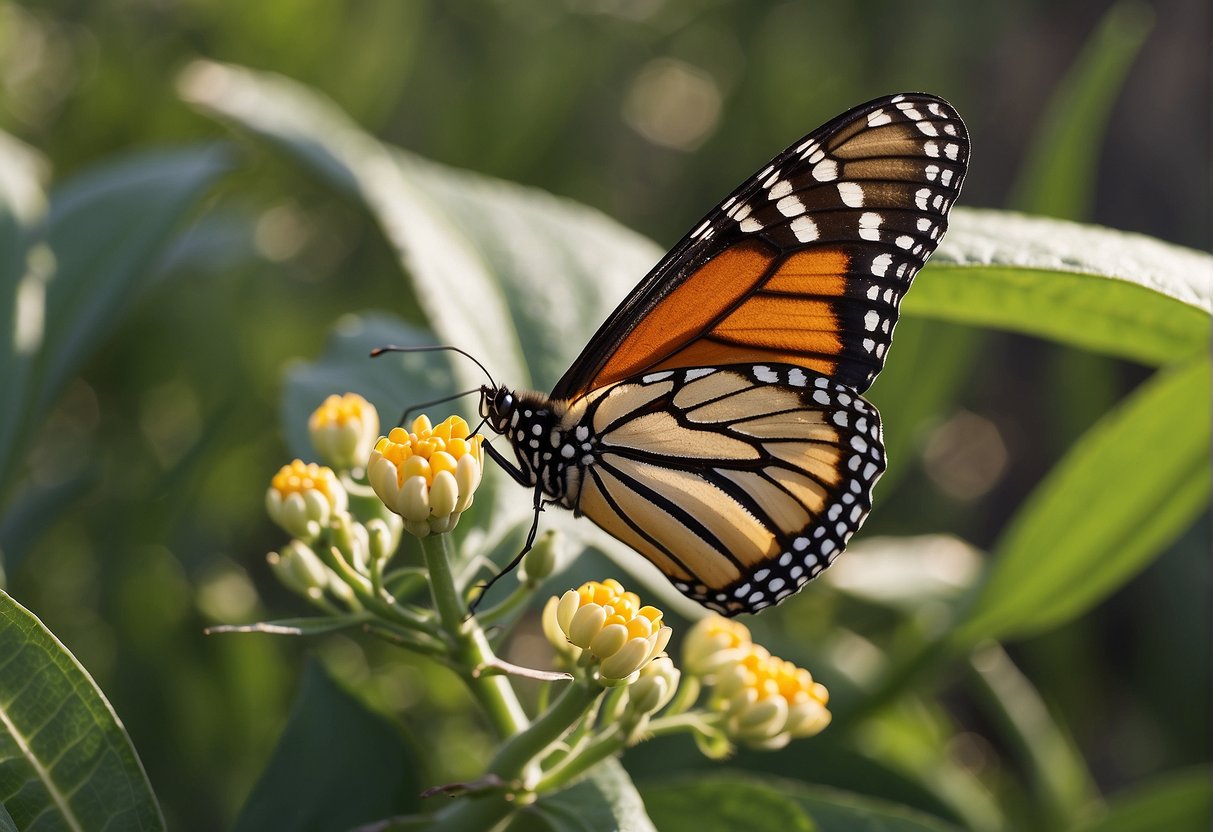
The Monarch butterfly is one of the most well-known and recognizable butterflies in North America. Their life cycle is fascinating and unique, with distinct stages that are essential to their survival.
Egg Stage
The Monarch butterfly begins its life as a tiny, round egg laid on the underside of a milkweed leaf. The egg is small, about the size of a pinhead, and is usually laid in groups of 20 to 30. The egg stage lasts for about 4 days, and during this time, the egg grows and develops until it is ready to hatch.
Caterpillar Development
Once the egg hatches, the Monarch caterpillar emerges, hungry and ready to eat. The caterpillar feeds exclusively on milkweed leaves, which contain toxins that make them unpalatable to most predators. The caterpillar grows rapidly, shedding its skin several times, until it reaches its full size of about 2 inches in length. This stage lasts for about 2 weeks.
Chrysalis Formation
After the caterpillar has finished feeding and has reached its full size, it begins to pupate. The caterpillar attaches itself to a stem or leaf of a milkweed plant and forms a chrysalis. The chrysalis is green and blends in with the surrounding foliage, providing camouflage and protection. Inside the chrysalis, the caterpillar undergoes metamorphosis, transforming into a butterfly.
Adult Butterfly
After about 10 days, the butterfly emerges from the chrysalis, wet and crumpled. The butterfly pumps fluid into its wings, which expand and harden over the next few hours. Once the wings are fully formed, the butterfly takes its first flight. The adult butterfly feeds on nectar from flowers and mates, beginning the cycle anew.
Overall, the Monarch butterfly life cycle is a fascinating and intricate process that is essential to the survival of this iconic species. By understanding the stages of development, we can appreciate the beauty and complexity of these amazing creatures.
Breeding and Reproduction
Mating Behavior
The monarch butterfly breeding season begins in late summer and continues through fall. During this time, the male butterflies patrol the summer breeding grounds in search of a mate. Once a male finds a female, he will approach her and begin the mating process.
The mating process of monarch butterflies is a unique and fascinating sight. The male butterfly will attach himself to the female’s abdomen using his claspers. The pair will then fly together, spiraling upwards to a height of 10-20 feet. Once they reach the top, they will separate and the male will release his sperm.
Egg-Laying Habits
After mating, the female monarch butterfly will begin to search for milkweed plants on which to lay her eggs. Milkweed is the only plant that monarch butterflies will lay their eggs on, as it is the only plant that the caterpillars can eat.
Once the female has found a suitable milkweed plant, she will lay a single egg on the underside of a leaf. She will continue to lay eggs on different milkweed plants until she has laid around 400-500 eggs.
The eggs of the monarch butterfly are small and white, and are about the size of a pinhead. They take around 3-5 days to hatch, depending on the temperature. Once the eggs hatch, the caterpillars will begin to feed on the milkweed leaves, and will continue to do so until they are ready to pupate.
In conclusion, the monarch butterfly has a unique and fascinating breeding and reproduction process. From the mating behavior of the male butterflies to the egg-laying habits of the female monarchs, the entire process is a wonder of nature.
Monarch Predators and Threats
Natural Predators
Monarch butterflies face a range of natural predators throughout their life cycle. The eggs, larvae, pupae, and adult butterflies are all vulnerable to predation. Some of the common predators of monarch butterflies include birds, spiders, wasps, and ants. These predators can significantly reduce the number of monarch butterflies in an area.
Environmental Threats
Apart from natural predators, monarch butterflies are also facing a range of environmental threats. These threats include climate change, habitat loss, and the use of pesticides and herbicides. Climate change can disrupt the monarch butterfly’s migration patterns, and habitat loss can limit the availability of milkweed plants, which are essential for the survival of monarchs.
The use of pesticides and herbicides can also have a significant impact on monarch butterflies. These chemicals can kill milkweed plants, which are the only plants that monarch butterflies lay their eggs on. Additionally, pesticides and herbicides can also harm the monarch butterfly directly by exposing them to toxins. The decline in milkweed plants due to the use of pesticides and herbicides has been identified as one of the main reasons for the decline in the monarch butterfly population.
It is essential to take steps to protect the monarch butterfly population from these threats. This can include limiting the use of pesticides and herbicides, planting milkweed plants, and creating protected habitats for monarch butterflies. By taking action to protect monarch butterflies, we can help ensure that this beautiful species continues to thrive for generations to come.
Monarch Migration Patterns
Monarch butterflies are known for their long-distance migration, which is one of the most remarkable natural phenomena. The migration cycle of monarch butterflies is an annual event that is closely tied to the availability of milkweed, the only plant on which monarchs lay their eggs.
Annual Migration Cycle
The monarch butterfly’s annual migration cycle begins in the late summer and fall when the butterflies start their journey from southern Canada and the United States. During this time, the monarchs mate and lay eggs on milkweed plants. The new generation of monarchs emerges and continues the journey southward.
As winter approaches, the monarchs reach their overwintering sites in central Mexico, where they cluster together in the mountains to stay warm. In the spring, the monarchs mate again and begin their journey back northward, laying eggs on milkweed plants along the way. The cycle then repeats itself as the new generation of monarchs continues the journey northward.
Geographical Routes
Monarch butterflies have two main geographical routes that they take during their migration cycle. The eastern population of monarchs migrates from southern Canada and the eastern United States to central Mexico, while the western population of monarchs migrates from western North America to southern California.
The eastern population of monarchs travels up to 3,000 miles to reach their overwintering sites in central Mexico. The western population of monarchs travels up to 2,000 miles to reach their overwintering sites in southern California.
In conclusion, the monarch butterfly’s migration pattern is a fascinating natural event that is closely tied to the availability of milkweed. Understanding the migration patterns of monarch butterflies is important for their conservation, as their population has been declining in recent years.
Conservation and Protection
Conservation efforts are crucial to protect the monarch butterfly and its habitat. The monarch butterfly relies heavily on milkweed plants for survival, as it is the only plant on which they lay their eggs. However, the loss of milkweed plants due to agricultural and urban development has led to a significant decline in the monarch butterfly population.
Habitat Preservation
To protect the monarch butterfly, it is important to preserve its habitat. This can be achieved through the creation of monarch butterfly reserves and the planting of milkweed plants in natural areas and gardens. By preserving and restoring habitats, we can ensure that the monarch butterfly has a place to breed and feed.
Public Awareness and Education
Public awareness and education are also important in protecting the monarch butterfly. By educating the public about the importance of milkweed plants and the role they play in the monarch butterfly’s life cycle, we can encourage people to plant milkweed in their gardens and natural areas. Additionally, educating the public about the impact of climate change on the monarch butterfly’s migration patterns can help raise awareness and promote action to reduce carbon emissions.
Overall, protecting the monarch butterfly and its habitat requires a concerted effort from individuals, communities, and governments. By working together, we can ensure that this iconic pollinator species continues to thrive for generations to come.
Observing Monarch Butterflies
If you want to observe Monarch butterflies, you need to know where to look for their eggs. Monarchs lay their eggs on the underside of milkweed leaves, so you need to look carefully to find them.
Identifying Monarch Eggs
Monarch eggs are small, about the size of a pinhead, and are usually laid in groups of 20-30. They are white or cream-colored, and have ridges that run from top to bottom. They are easy to miss, but if you look closely, you can see them with a magnifying glass.
Watching Caterpillars Grow
Once you’ve found Monarch eggs, you can watch the caterpillars grow. The caterpillars are black and white striped, with black dots on their bodies. They eat the milkweed leaves they were born on, and grow quickly.
As they grow, they shed their skin several times, and you can see the old skins on the milkweed leaves. After a few weeks, the caterpillars will be fully grown and will form a chrysalis.
Observing Monarch butterflies is a rewarding experience. They are beautiful insects, with bright colors that catch the light as they flutter by. By knowing where to look for their eggs and watching the caterpillars grow, you can gain a deeper appreciation for these amazing creatures.
Gardening for Monarchs
If you want to attract monarch butterflies to your garden, you need to create a butterfly-friendly habitat. Monarchs lay their eggs on milkweed plants, which are also the primary food source for their caterpillars. Here are some tips on how to create a monarch-friendly garden.
Creating a Butterfly Garden
To create a butterfly garden, you need to provide a habitat that will attract butterflies. Butterflies need nectar for energy and milkweed for laying their eggs. You can plant a variety of nectar plants that bloom at different times of the year to provide a constant source of food for adult butterflies. Some good nectar plants include coneflowers, black-eyed susans, and butterfly bushes.
In addition to nectar plants, you should also plant milkweed. Monarchs will only lay their eggs on milkweed, so it is essential to have this plant in your garden. There are many different types of milkweed, but it is important to choose a native variety that is well-suited to your region.
Choosing the Right Milkweed
When choosing milkweed, it is important to select a variety that is native to your area. Native milkweed is better adapted to your climate and soil conditions, and it is also more likely to attract monarchs. Some popular varieties of native milkweed include common milkweed, swamp milkweed, and butterfly weed.
You can start milkweed from seeds or seedlings, but it is important to plant it in a sunny location with well-draining soil. Milkweed can be slow to establish, but once it takes hold, it will provide a valuable source of food and habitat for monarchs.
In conclusion, creating a monarch-friendly garden is a great way to support these beautiful butterflies. By planting a variety of nectar plants and native milkweed, you can provide a habitat that will attract monarchs and support their life cycle.
Frequently Asked Questions
Which butterflies, other than monarchs, lay eggs on milkweed?
While monarch butterflies are the most well-known milkweed specialists, there are several other butterfly species that also use milkweed as a host plant for their eggs. Some of these species include the queen butterfly, the soldier butterfly, and the gray hairstreak butterfly.
How can you identify monarch butterfly eggs on milkweed?
Monarch butterfly eggs are small, about the size of a pinhead, and are usually laid singly on the underside of milkweed leaves. The eggs are white or cream-colored and have several vertical ridges that run from top to bottom. If you look closely, you may also be able to see a tiny black dot on the top of the egg, which is the developing caterpillar’s head.
What are the common pests found on swamp milkweed?
Swamp milkweed is susceptible to several pests, including aphids, milkweed bugs, and spider mites. These pests can cause damage to the plant and reduce its ability to support butterfly populations. If you notice signs of pest infestation, it’s important to take action quickly to prevent further damage.
During which months are monarch butterflies known to lay eggs on milkweed?
Monarch butterflies typically lay their eggs on milkweed plants during the summer months, from June through August. However, the exact timing can vary depending on the climate and location. In warmer regions, monarchs may start laying eggs as early as April, while in cooler regions, they may continue to lay eggs into September.
Why might butterflies not lay eggs on a particular milkweed plant?
There are several reasons why butterflies may not lay eggs on a particular milkweed plant. One common reason is that the plant may be too old or damaged to support healthy caterpillar growth. Additionally, the plant may be located in an area that is too shady or too exposed to sunlight, or it may be located too close to other plants that are competing for resources.
Do queen butterflies also use milkweed as a host plant for their eggs?
Yes, queen butterflies also use milkweed as a host plant for their eggs. However, unlike monarchs, queen butterflies are not as specialized in their choice of host plant and will lay their eggs on a variety of different milkweed species.

