
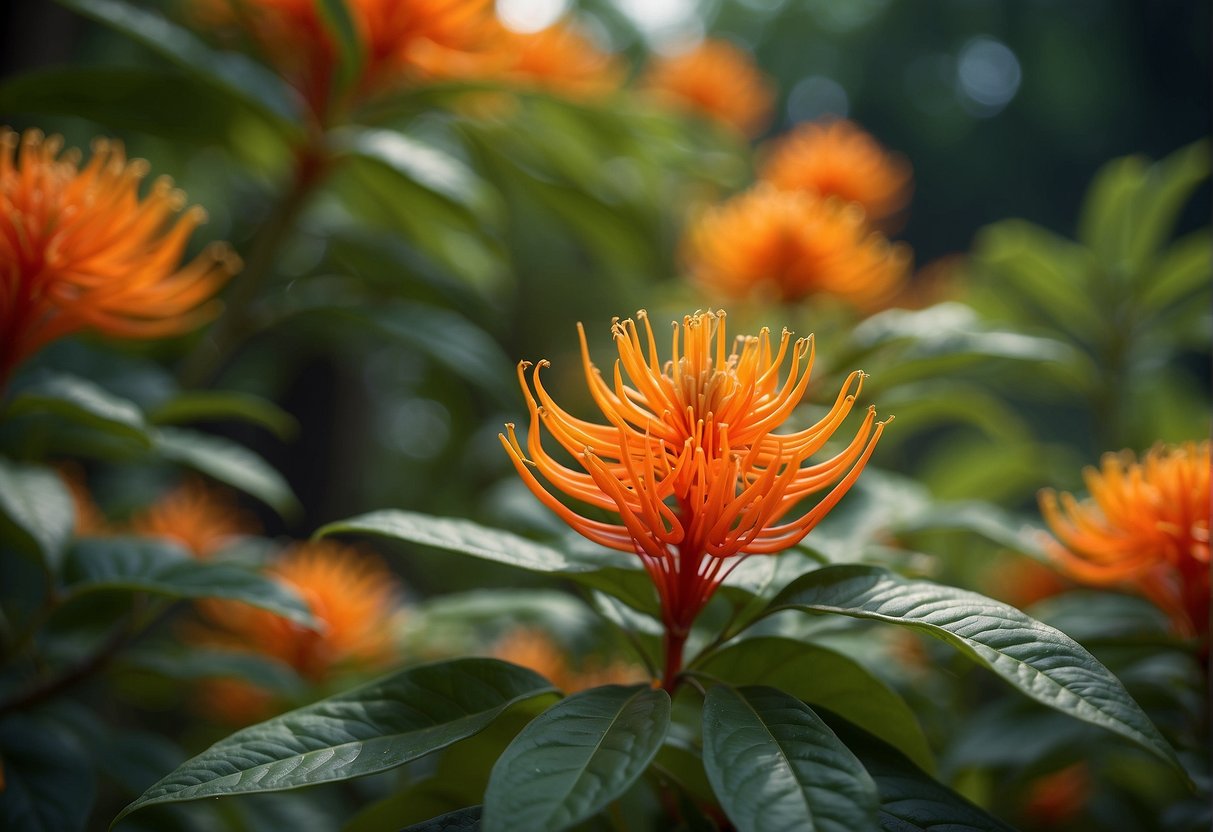
How Tall Does a Firebush Grow: A Comprehensive Guide
Should you be in search of a lively, low-maintenance bush to incorporate into your garden or outdoor design, consider the firebush (Hamelia patens) as a prime choice. Famous for its vivid red-orange flowers, this tropical species is renowned for drawing both butterflies and hummingbirds. However, the question arises: what is the growth height of a firebush? We’ll delve deeper into the attributes of this well-liked flora.
Firebush Basics
The firebush is a member of the coffee family and is native to many parts of the Americas, including Florida, Mexico, and the Caribbean. It’s a fast-growing shrub that can reach heights of 6 to 15 feet, depending on the growing conditions and the cultivar. The plant has dark green leaves and produces clusters of tubular flowers that can range in color from orange-red to scarlet.
Plant Characteristics
In addition to its height, the firebush has a number of other characteristics that make it a popular choice for gardens and landscapes. For one, it’s a low-maintenance plant that doesn’t require a lot of attention to thrive. It’s also drought-tolerant and can handle a range of soil types, although it does best in well-draining soil. Finally, the firebush is a great choice for attracting wildlife to your garden, as it’s a favorite of butterflies and hummingbirds.
Key Takeaways
- The firebush is a fast-growing shrub that can reach heights of 6 to 15 feet.
- It’s a low-maintenance plant that’s drought-tolerant and can handle a range of soil types.
- The firebush is a great choice for attracting wildlife to your garden, as it’s a favorite of butterflies and hummingbirds.
Firebush Basics
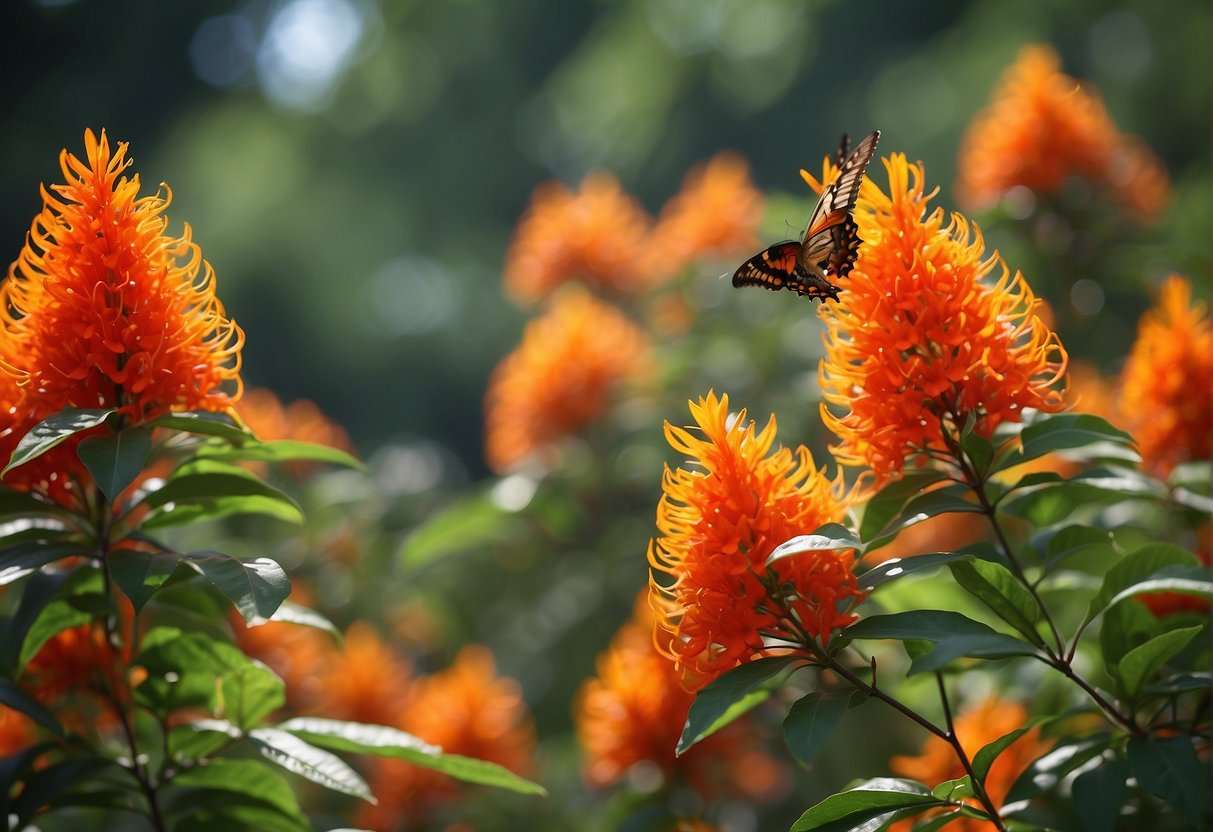
If you are interested in gardening, you may have heard of the firebush (Hamelia patens), a popular plant known for its vibrant red-orange flowers. Here are some basic facts about this plant.
Scientific Classification
The firebush belongs to the Rubiaceae family, which includes over 13,000 species of flowering plants. Its scientific name is Hamelia patens. The genus Hamelia is named after French botanist Henri Louis Duhamel du Monceau, who lived in the 18th century.
Native Habitat
The firebush is native to South America, but it can also be found in Florida and other parts of the southern United States. It is a popular choice for gardeners because of its attractive flowers and its ability to attract hummingbirds and butterflies.
In its native habitat, the firebush can grow up to 20 feet tall. However, in cultivation, it usually reaches a height of 6 to 8 feet. It prefers full sun and well-drained soil, and it is relatively easy to care for.
Overall, the firebush is a beautiful and versatile plant that can add color and interest to your garden. Whether you live in Florida or elsewhere in the southern United States, you may want to consider adding this plant to your collection.
Plant Characteristics
Appearance
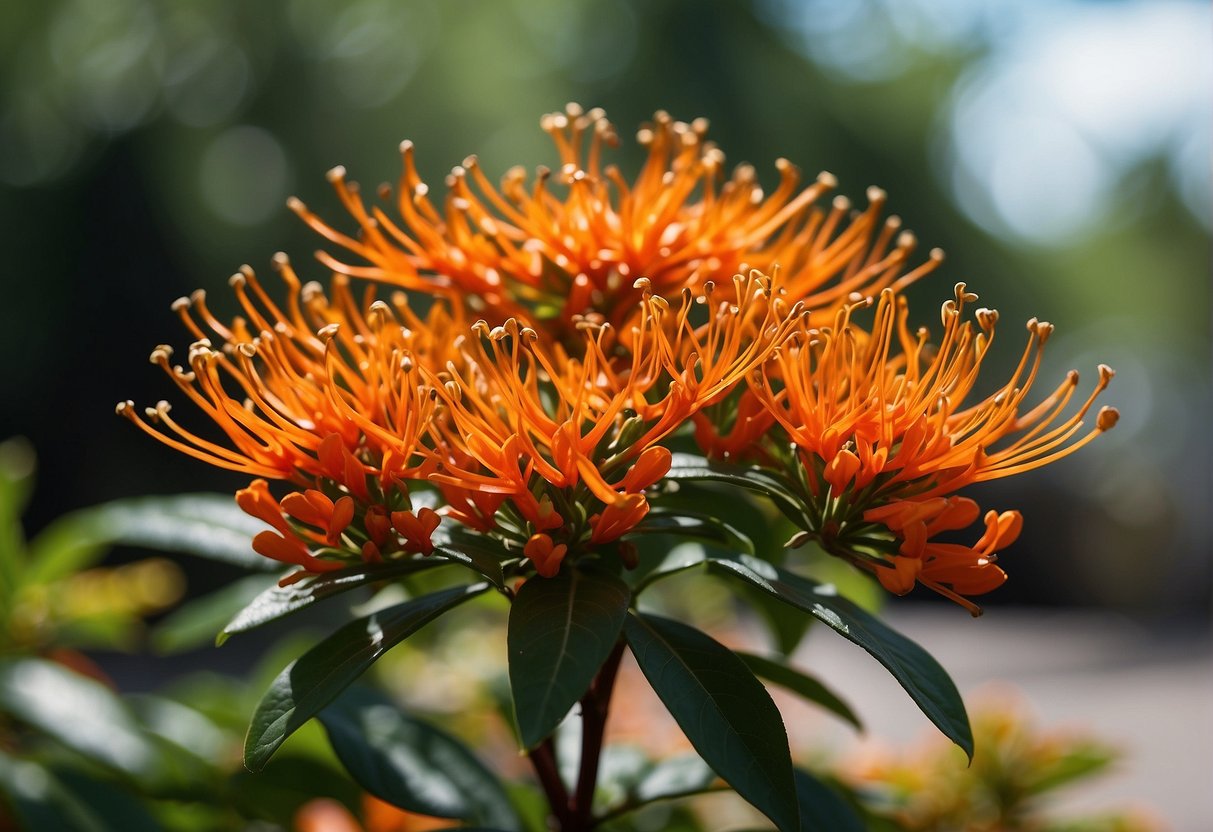
The firebush, also known as Hamelia patens, is a woody shrub that is evergreen in warm climates. The leaves of the firebush are lance-shaped and grow up to 6 inches long. They are a dark green color and have a glossy texture. The flowers of the firebush bloom in the summer and are red or orange tubular blooms that attract hummingbirds and butterflies. The firebush also produces berries that are small and black in color.
Growth Habit
The firebush grows as a multi-stemmed shrub and can reach heights of up to 15 feet tall. It grows well in full sun to partial shade and prefers well-drained soil. The firebush is drought-tolerant and can survive in a range of soil types.
Mature Size
The mature size of the firebush depends on the growing conditions and pruning practices. In ideal conditions, the firebush can reach heights of up to 15 feet tall and 10 feet wide. With regular pruning, the firebush can be maintained at a smaller size and shape.
Overall, the firebush is a beautiful and low-maintenance shrub that can add color and interest to any landscape. Its red or orange tubular blooms and small black berries make it a favorite of hummingbirds and butterflies. With its ability to grow in a range of soil types and tolerate drought, the firebush is a great choice for gardeners looking for a low-maintenance shrub that will add color and interest to their landscape.
Cultivation Requirements
If you are planning to grow firebush, it is important to understand its cultivation requirements. Firebush is a tropical plant that requires specific conditions to thrive. In this section, we will discuss the light exposure, soil preferences, and watering needs that are necessary for the healthy growth of firebush.
Light Exposure
Firebush requires full sun to partial shade to grow properly. It can tolerate full sun, but it should be planted in a location where it can receive some shade during the hottest part of the day. If you are planting firebush indoors, you should place it near a window that receives at least 6 hours of sunlight per day.
Soil Preferences
Firebush prefers well-drained soil that is rich in organic matter. It can tolerate sandy soil, but it should be supplemented with compost or other organic matter to improve its fertility. If you are planting firebush in a container, make sure that the container has drainage holes to prevent waterlogging.
Watering Needs
Firebush requires regular watering to thrive, especially during the first few months after planting. It can tolerate drought conditions, but it should be watered deeply once a week during dry spells. If you are planting firebush in a container, make sure that the soil is moist but not waterlogged. Overwatering can lead to root rot and other problems.
In summary, firebush requires full sun to partial shade, well-drained soil that is rich in organic matter, and regular watering. By providing these cultivation requirements, you can ensure that your firebush grows healthy and strong.
Plant Care and Maintenance
Firebush is a low-maintenance plant that requires minimal care. However, proper maintenance is essential to ensure that the plant grows to its full potential. Here are some guidelines to help you take care of your firebush:
Pruning Guidelines
Pruning is an essential part of firebush maintenance. It helps to keep the plant in shape, promote healthy growth, and prevent the spread of diseases. You should prune your firebush regularly, especially during the growing season.
To prune your firebush, use a sharp pair of pruning shears to remove any dead or diseased branches. You should also remove any branches that are crossing or rubbing against each other. Cut the branches just above a leaf node to encourage new growth.
Fertilization Practices
Firebush is a low-maintenance plant that does not require frequent fertilization. However, you should fertilize your firebush once a year to promote healthy growth. Use a balanced fertilizer with an NPK ratio of 10-10-10.
Apply the fertilizer in early spring before the growing season begins. Spread the fertilizer evenly around the base of the plant, and water thoroughly.
Disease and Pest Management
Firebush is susceptible to various diseases and pests, including root rot, mites, aphids, and scale. To prevent these issues, you should keep your firebush healthy and well-maintained.
Avoid overwatering your firebush, as this can lead to root rot. If you notice any signs of disease or pest infestation, such as yellowing leaves or webbing, take action immediately.
You can treat most diseases and pests with insecticidal soap or neem oil. Follow the instructions on the product label carefully, and apply the treatment as directed.
In conclusion, firebush is a low-maintenance plant that requires minimal care. By following these guidelines for pruning, fertilization, and disease and pest management, you can ensure that your firebush grows to its full potential.
Propagation Methods
Firebush can be propagated through both seeds and cuttings. Here are the two main methods of propagation:
Seed Propagation
Firebush is an annual plant that can be grown from seed. Sow the seeds in a mixture of peat moss and perlite, and keep the soil moist until the seeds germinate. It is best to start the seeds indoors about 6 to 8 weeks before the last frost date in your area. Once the seedlings have grown to a height of about 2 inches, they can be transplanted outdoors.
Cuttings Propagation
Firebush can also be propagated through stem cuttings. Take a 6-inch cutting from a healthy plant, and dip the cut end in rooting hormone. Plant the cutting in a mixture of peat moss and perlite, and keep the soil moist until the cutting roots. Once the cutting has rooted, it can be transplanted outdoors.
When propagating firebush through cuttings, it is important to note that the plant is a perennial and will grow back year after year. Cuttings should be taken in the spring, just before new growth appears. This will give the cutting the best chance of rooting and growing into a healthy plant.
In conclusion, firebush can be propagated through both seeds and cuttings. Seed propagation is best for starting new plants, while cuttings propagation is best for propagating existing plants. By following these simple steps, you can easily propagate firebush and enjoy its beautiful blooms year after year.
Landscape Utilization
The Firebush is a versatile shrub that can be utilized in a variety of ways in your landscape. This section will explore some of the ornamental and ecological benefits of this plant.
Ornamental Use
The Firebush is a popular choice for hedges, ground covers, and specimen plants in South Florida landscapes. Its compact and dwarf varieties make it an excellent choice for smaller gardens or as a border plant. The Firebush shrub is also a native plant, making it an excellent choice for those looking to incorporate more indigenous plant species into their landscape.
The Firebush is known for its vibrant red-orange flowers, which attract pollinators such as butterflies, hummingbirds, and bees. These flowers bloom year-round, adding a splash of color to your landscape. Additionally, the Firebush is a fast-growing plant, making it an excellent choice for those looking to quickly establish a screen or hedge.
Ecological Benefits
In addition to its ornamental value, the Firebush also provides ecological benefits to your landscape. The plant’s flowers attract a variety of pollinators, including birds and butterflies, which can help increase biodiversity in your garden. The Firebush also provides habitat for a variety of wildlife, including birds and butterflies, making it an excellent choice for those looking to create a more wildlife-friendly landscape.
Overall, the Firebush is a versatile and attractive plant that can provide both ornamental and ecological benefits to your landscape. Whether you’re looking to create a hedge, ground cover, or specimen plant, the Firebush is an excellent choice for those looking to incorporate a native plant species into their landscape.
Seasonal Behaviors
When it comes to the firebush, its seasonal behaviors are an important consideration for gardeners and landscapers alike. Understanding the flowering and fruiting periods of this plant can help you plan your garden and care for your plants effectively.
Flowering Period
The firebush typically blooms from late spring to early summer, producing vibrant red-orange flowers that attract hummingbirds and butterflies. During this time, you can expect the plant to grow rapidly and put on a showy display of color. As the summer progresses, the blooms may become less abundant, but the plant will continue to produce flowers intermittently until the first frost.
Fruiting Period
After the flowering period, the firebush will begin to produce fruit. The fruits are small, round berries that start out green and turn red as they ripen. They are not typically consumed by humans, but they are a favorite food source for many bird species. The fruiting period typically lasts from late summer to fall.
It’s important to note that the firebush is a tropical plant, and it may not survive in colder climates. If you live in an area with harsh winters, you may need to take special precautions to protect your plants during the colder months. Additionally, the plant may go dormant during the winter, so you should not expect to see any significant growth during this time.
Overall, the firebush is a beautiful and versatile plant that can add color and interest to any garden. By understanding its seasonal behaviors, you can ensure that your plants thrive and produce the best possible display of blooms and fruit.
Regional Considerations
When considering the growth of firebush, it is important to take regional factors into account. The suitability of firebush in different climates and the availability of local cultivars and varieties can greatly impact the height of the plant.
Suitability in Different Climates
Firebush is native to tropical and subtropical regions of America, including Mexico and South America. In these areas, the plant can grow up to 15 feet tall. However, in northern climates, where temperatures may drop below freezing, firebush may only grow up to 3-4 feet tall.
In Florida, firebush is a popular landscaping plant due to its vibrant red flowers and ability to attract butterflies and hummingbirds. However, it is important to note that firebush may not be suitable for all areas of Florida. In areas with colder temperatures, firebush may not survive the winter.
Local Cultivars and Varieties
There are several cultivars and varieties of firebush, including Hamelia patens var. glabra and compacta. These local varieties may have different growth patterns and heights.
For example, Hamelia patens var. glabra is a compact variety that only grows up to 3-4 feet tall. This makes it a great choice for smaller gardens or as a container plant. On the other hand, the compacta variety can grow up to 8 feet tall, making it a better choice for larger landscapes.
When selecting a cultivar or variety of firebush, it is important to consider the specific needs of your region and the intended use of the plant. By selecting the right variety, you can ensure that your firebush will grow to its full potential.
Additional Information
History and Nomenclature
Firebush, also known as Scarlet Bush or Hummingbird Bush, is a popular plant among gardeners due to its vibrant red flowers and ability to attract hummingbirds and butterflies. The plant is native to Florida, Mexico, and the Caribbean, and has been used for centuries by indigenous people for its medicinal properties. The scientific name for Firebush is Hamelia patens, and it belongs to the Rubiaceae family.
Commercial Availability
Firebush is widely available in nurseries and garden centers, both as a potted plant and as seeds. It is a relatively easy plant to grow, as it can tolerate a wide range of soil types and light conditions. Firebush can grow up to 15 feet tall in its natural habitat, but there are also dwarf varieties available that are more suitable for smaller gardens or containers.
If you are looking to add some color and wildlife to your garden, Firebush is a great choice. Its bright red flowers will add a pop of color to any landscape, and its ability to attract hummingbirds and butterflies will make your garden come alive. Whether you are an experienced gardener or just starting out, Firebush is a plant that is sure to impress.
Special Considerations
When growing a firebush, there are a few special considerations to keep in mind to ensure that it grows to its full potential.
Container Growing
If you are growing your firebush in a pot or container, it is important to choose one that is large enough to accommodate the plant’s root system. A pot that is too small can cause the plant to become root-bound, which can stunt its growth and reduce its overall health.
When planting your firebush in a container, be sure to use a high-quality potting mix that is well-draining and nutrient-rich. This will help to provide the plant with the nutrients it needs to grow and thrive.
Cold Tolerance and Protection
While firebush is generally considered to be a hardy plant, it is important to protect it from freezing temperatures, especially if you live in a colder climate. If temperatures are expected to drop below freezing, it is recommended that you cover your firebush with a blanket or other protective covering to help insulate it from the cold.
In addition to protecting your firebush from freezing temperatures, you should also make sure that it is planted in a location that provides adequate protection from harsh winds and other environmental factors that can damage the plant.
Overall, firebush is a relatively low-maintenance plant that is well-suited for a variety of growing conditions, including full shade, part shade, and mixed borders. With proper care and attention, your firebush can grow to be a beautiful and vibrant addition to your garden, with its striking orange-red flowers and drought-tolerant nature.
Frequently Asked Questions
What is the maximum height a firebush can reach?
The firebush, also known as Hamelia patens, can grow up to 15 feet tall in ideal growing conditions. However, it is more common for them to reach heights of 6 to 8 feet.
How does the growth rate of a dwarf firebush compare to a standard firebush?
Dwarf firebush varieties grow slower and reach a maximum height of 3 to 4 feet. Standard firebush varieties grow faster and can reach up to 15 feet tall.
What are the differences in size between firebush and burning bush?
The burning bush, also known as Euonymus alatus, is a shrub that can grow up to 20 feet tall. The firebush, on the other hand, is a smaller plant that typically reaches heights of 6 to 8 feet.
Can you maintain a firebush at a smaller size through pruning?
Yes, firebush can be pruned to maintain a smaller size. Regular pruning can also encourage bushier growth and more abundant flowering.
What are the ideal growing conditions for a firebush?
Firebush thrives in full sun or partial shade and prefers well-draining soil. It can tolerate a range of soil types and is drought-tolerant once established.
Is the firebush a perennial plant that will regrow each season?
Yes, firebush is a perennial plant that will regrow each season. In colder climates, it may die back to the ground in winter but will regrow in spring.

