

How Many Different Types of Yucca Plants Are There: A Comprehensive Guide
Should you have a penchant for succulents, it’s likely that yucca plants have caught your eye. These plants boast a remarkable variety, spanning more than 40 identified species. Every species of yucca plant is distinguished by its own unique traits, rendering them an intriguing addition to any garden or personal collection. In this piece, we aim to delve into the various types of yucca plants and highlight the aspects that set them apart.
Understanding Yucca Plant Diversity
Yucca plants are native to the Americas, from Canada to South America. They grow in a variety of habitats, from deserts to grasslands to forests. This diversity in environment has led to a wide range of yucca species, each adapted to their specific surroundings. Some yucca plants are tall and tree-like, while others are small and compact. Some have spiky leaves, while others have soft, flexible ones. By exploring the different types of yucca plants, you can gain a deeper appreciation for the vastness of nature.
Cultivation and Environmental Adaptations
If you’re interested in growing yucca plants, it’s important to understand their environmental requirements. Different types of yucca plants have different needs, such as full sun or partial shade, well-draining soil, and specific temperature ranges. By understanding the cultivation requirements of each species, you can create an environment that allows your yucca plants to thrive. With their unique shapes and textures, yucca plants can add a striking visual element to any garden or indoor space.
Key Takeaways
- Yucca plants are incredibly diverse, with over 40 known species.
- Each type of yucca plant has its own unique characteristics, making them a fascinating addition to any garden or collection.
- Understanding the cultivation requirements of different yucca species can help you create an environment that allows them to thrive.
Understanding Yucca Plant Diversity
Yucca plants are a diverse group of succulent shrubs that belong to the genus Yucca, which is part of the Asparagaceae family. There are many different species and types of yucca, each with its own distinctive features.
Species and Types of Yucca
There are over 40 species of yucca, and each species can have multiple varieties. Some of the most popular types of yucca include Yucca filamentosa, Yucca gloriosa, Yucca aloifolia, Yucca baccata, Yucca brevifolia, and Yucca elata.
Yucca filamentosa, also known as Adam’s needle, is a hardy perennial that is native to the southeastern United States. This yucca has blue-green sword-shaped leaves and produces tall spikes of white flowers.
Yucca gloriosa, also known as Spanish dagger, is a large evergreen shrub that is native to the southeastern United States. This yucca has sharp, spiky leaves and produces bell-shaped flowers that can be white or yellow.
Yucca aloifolia, also known as Spanish bayonet, is a large evergreen shrub that is native to the southeastern United States. This yucca has spiky leaves that are lined with sharp spines and produces tall spikes of white flowers.
Yucca baccata, also known as banana yucca, is a hardy perennial that is native to the southwestern United States. This yucca has blue-green sword-shaped leaves and produces large clusters of white flowers.
Yucca brevifolia, also known as Joshua tree, is a large evergreen shrub that is native to the southwestern United States. This yucca has spiky leaves and produces clusters of greenish-white flowers.
Yucca elata, also known as soaptree yucca, is a large evergreen shrub that is native to the southwestern United States and northern Mexico. This yucca has blue-green sword-shaped leaves and produces tall spikes of white flowers.
Distinctive Features of Yuccas
Yuccas are known for their distinctive foliage and flowers. Most yuccas have sword-shaped leaves that grow in rosettes, and many have sharp spines along the edges of the leaves. Yuccas also produce tall spikes of bell-shaped flowers that can be white, yellow, or greenish-white.
Yuccas are hardy plants that are well-suited to dry, arid climates. They are evergreen and can add interest to a garden year-round. With their diverse range of sizes, shapes, and colors, there is a yucca plant for every garden.
Cultivation and Environmental Adaptations
Growing Conditions and Soil Preferences
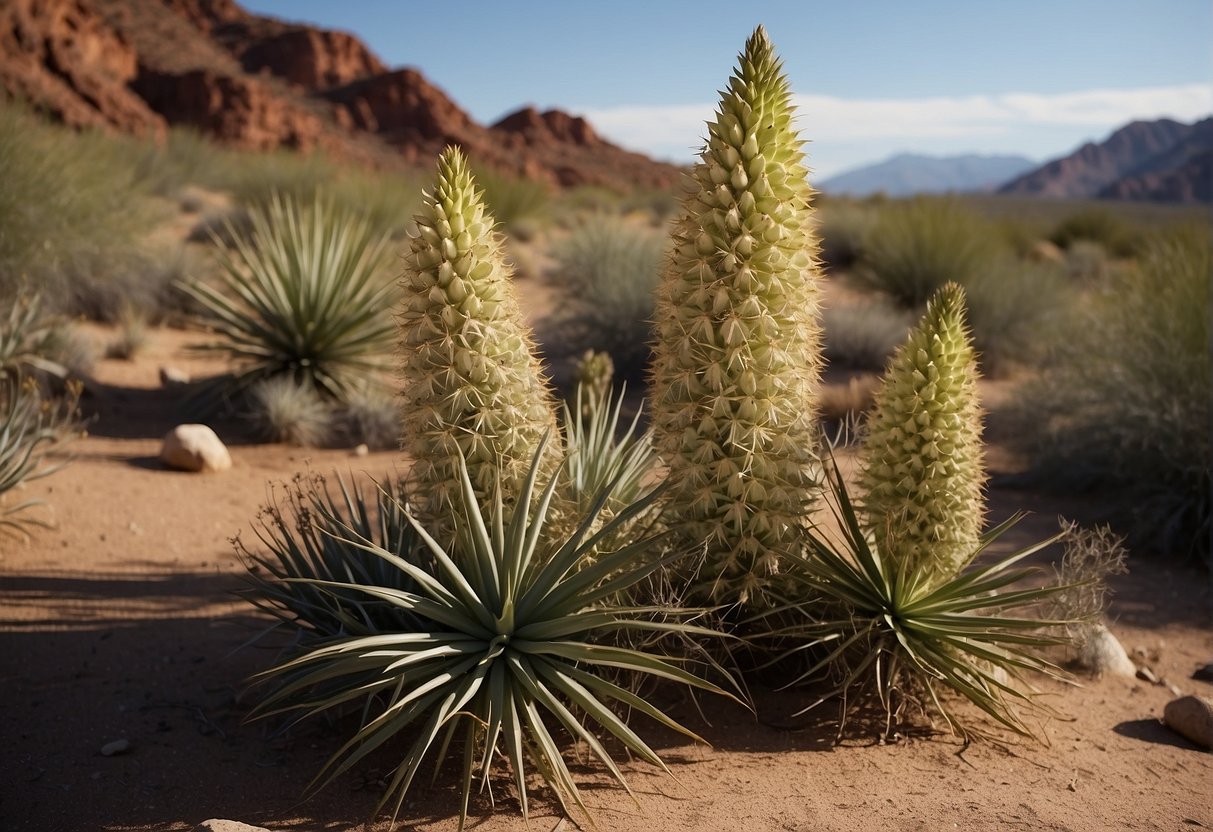
Yucca plants are known for their ability to thrive in dry, arid conditions with poor soil quality. They are commonly found in the southwestern United States, particularly in the Mojave and Chihuahuan deserts. Yucca plants prefer sandy soil and can tolerate hot temperatures and drought conditions. They are also highly adaptable and can grow in a variety of soil types, including clay and rocky soils.
When planting yucca in your garden or container, it is important to choose a location that receives plenty of sunlight and has well-draining soil. Yucca plants do not require frequent watering and can be damaged by overwatering. They are also drought-tolerant and can survive long periods without water.
Yucca in Landscapes and Gardens
Yucca plants are a popular choice for gardeners and landscapers due to their unique appearance and low maintenance requirements. They are often used in Mediterranean-style gardens and can add a dramatic touch to any landscape. Yucca plants can be planted individually or in groups and can be used to create a desert-themed garden.
In addition to their aesthetic appeal, yucca plants also provide a number of practical benefits. They are highly drought-tolerant and can help conserve water in dry climates. They also attract pollinators, such as bees and butterflies, with their white flowers.
Overall, yucca plants are a versatile and hardy addition to any garden or landscape. With their ability to thrive in poor soil conditions and withstand hot, dry climates, they are a great choice for gardeners looking to create a low-maintenance, desert-themed garden.
Frequently Asked Questions
What are the common characteristics for identifying different yucca species?
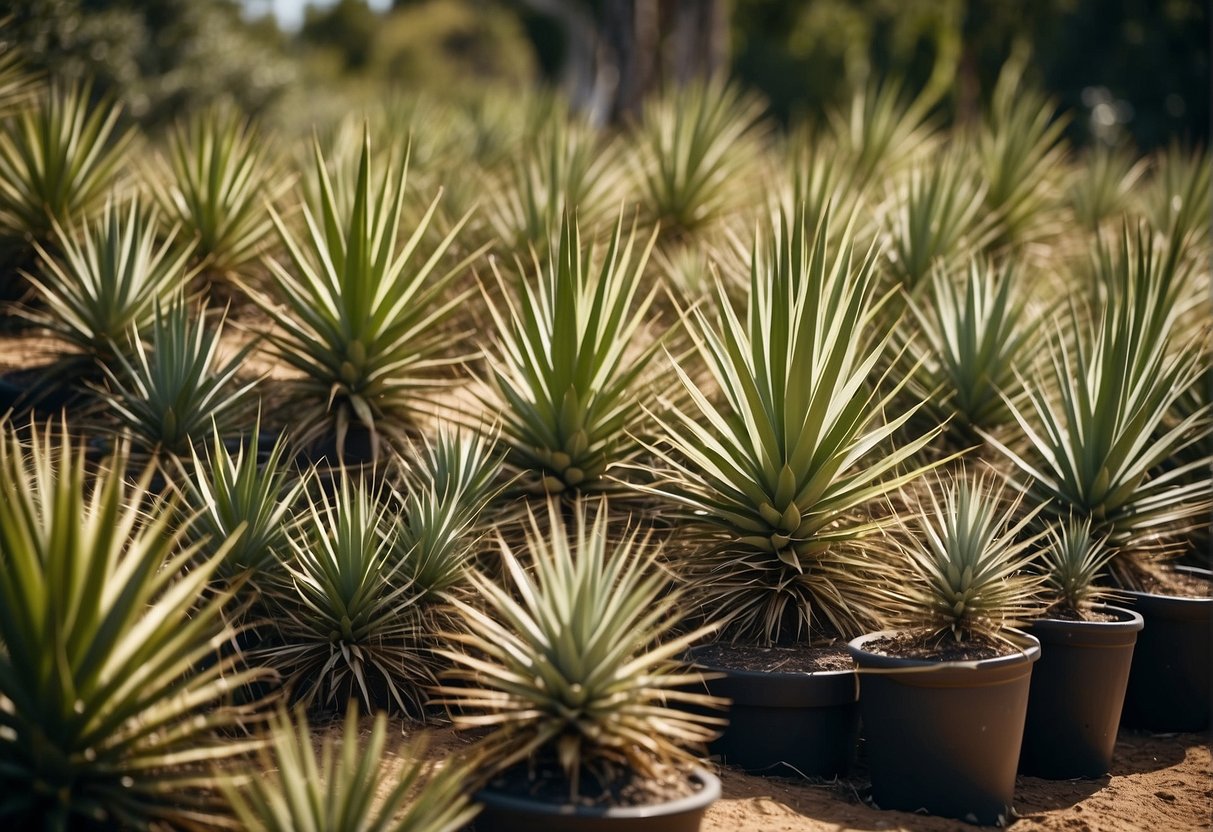
Yucca plants are identified by their rosette-shaped leaves, which are often stiff and pointed. They typically have tall, spiky flower stalks that grow from the center of the plant. The size and shape of the leaves and flower stalks can vary depending on the species.
Can yucca plants be grown both indoors and outdoors, and if so, what types are best for each environment?
Yes, yucca plants can be grown both indoors and outdoors. However, some species are better suited for one environment over the other. Yuccas that are better suited for indoor growing include Yucca elephantipes and Yucca guatemalensis. Yuccas that are better suited for outdoor growing include Yucca filamentosa and Yucca gloriosa.
Are there visual guides that show the various types of yucca plants?
Yes, there are many visual guides available that show the various types of yucca plants. These guides typically include pictures of the plants, as well as information about their characteristics and growing requirements.
What are some yucca species native to Arizona and how do they differ?
Some yucca species native to Arizona include Yucca baccata, Yucca elata, and Yucca schottii. These species differ in their size, shape, and growing requirements. For example, Yucca baccata is a smaller species that is well-suited for growing in rocky, dry soils, while Yucca elata is a larger species that prefers sandy soils.
How can one distinguish between plants that are similar to yuccas?
Plants that are similar to yuccas, such as agaves and aloes, can be distinguished by their leaf shape and size. Yucca plants typically have stiffer, more pointed leaves than agaves and aloes, which tend to have softer, more rounded leaves.
What are the key differences between Yucca gloriosa and Yucca aloifolia?
The key differences between Yucca gloriosa and Yucca aloifolia are their leaf shape and size. Yucca gloriosa has longer, narrower leaves that are less stiff than those of Yucca aloifolia. Additionally, Yucca gloriosa typically grows taller than Yucca aloifolia, with flower stalks that can reach up to 10 feet in height.

