
How Big Do Roots Grow on Yucca Plants: A Comprehensive Guide
If you have an affinity for yucca plants, you might have been curious about the extent to which their roots can expand. Yuccas are celebrated for their resilience and their capacity to flourish in challenging environments, largely thanks to their substantial root systems. In this piece, we’re going to delve into the subject of the roots of yucca plants and address just how large they can become.
Understanding Yucca Plant Roots
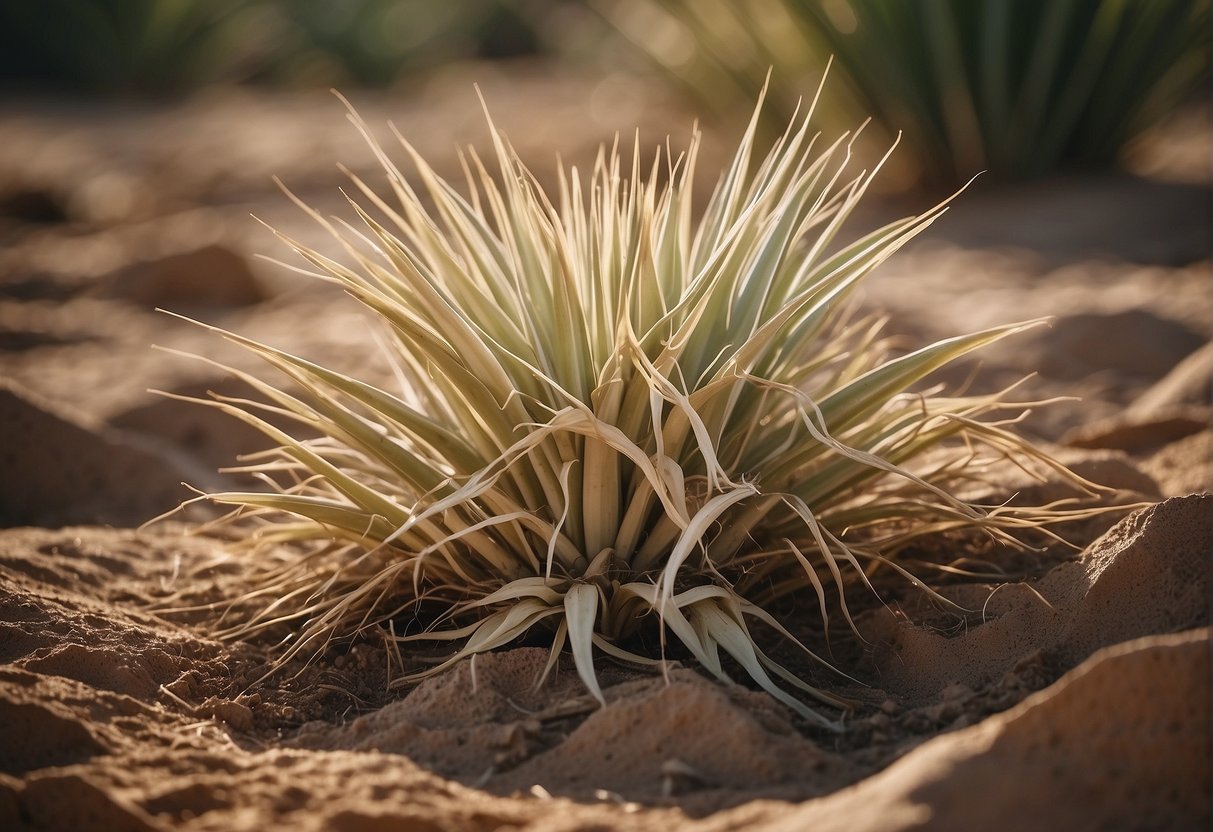
Yuccas are desert plants that have adapted to survive in arid environments. As such, their roots are designed to be efficient at absorbing water and nutrients from the soil. Yucca roots tend to be shallow but wide-spreading, with some species having roots that can extend up to three times the width of the plant. This allows them to collect as much moisture as possible from the surrounding area.
Planting and Caring for Yucca Roots
If you’re planning on planting a yucca, it’s important to understand the needs of its root system. Yuccas prefer well-draining soil that doesn’t retain too much moisture, as this can lead to root rot. When planting, make sure to give your yucca enough space to spread out its roots. When caring for your plant, avoid overwatering and make sure to let the soil dry out between waterings. With proper care, your yucca’s roots will be able to grow to their full potential.
Key Takeaways
- Yucca roots are designed to be efficient at absorbing water and nutrients from the soil.
- Yucca roots tend to be shallow but wide-spreading, with some species having roots that can extend up to three times the width of the plant.
- Proper planting and care, including well-draining soil and avoiding overwatering, will help your yucca’s roots grow to their full potential.
Understanding Yucca Plant Roots
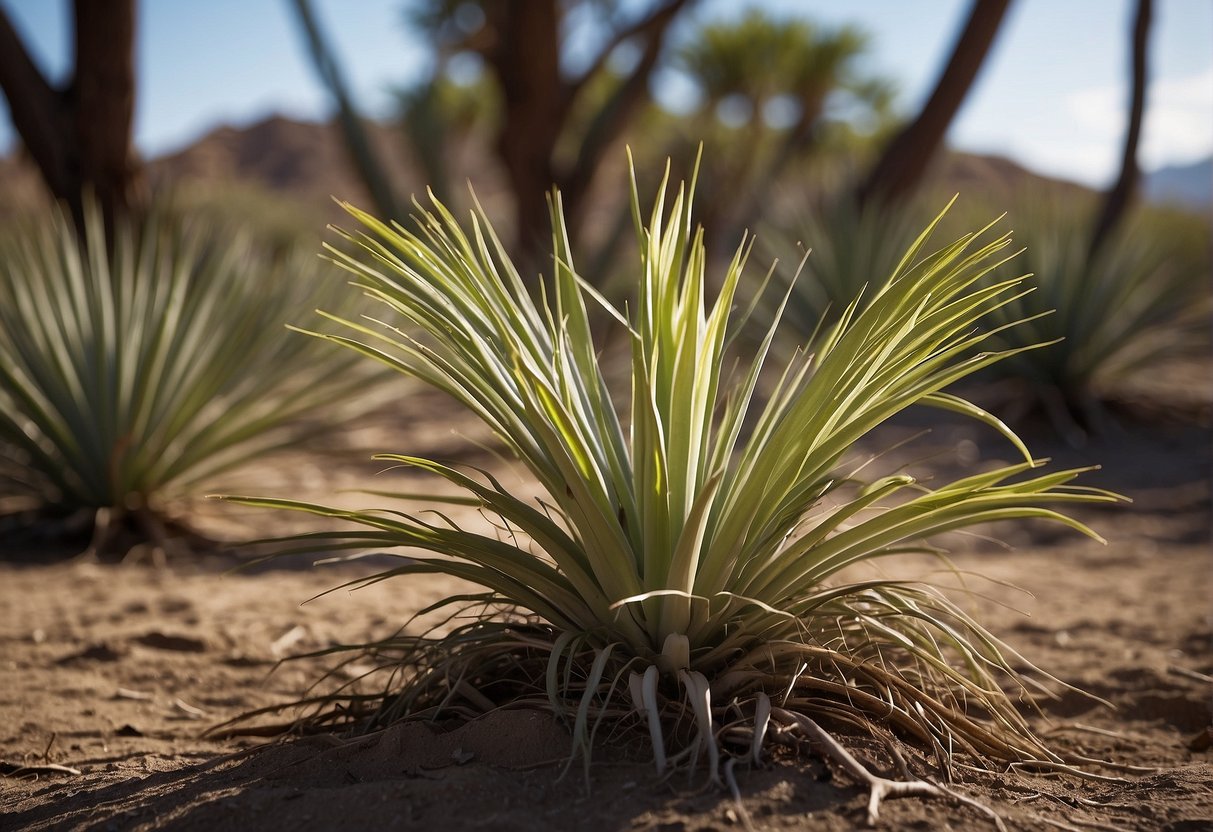
Yucca plants are known for their hardiness and drought-tolerant nature, making them a popular choice for landscaping in arid regions. Understanding the growth patterns and factors affecting root development of yucca plants can help you take better care of these plants and ensure their healthy growth.
Root Growth Patterns
Yucca plants have a fibrous root system that grows horizontally near the surface of the soil. The roots are thin and can spread up to three times the diameter of the plant canopy. The fibrous roots help the plant absorb water and nutrients from the soil efficiently.
In addition to the fibrous roots, yucca plants also have a taproot that grows vertically into the soil. The taproot helps the plant anchor itself firmly into the ground and provides additional support during strong winds.
Factors Affecting Root Development
The growth of yucca plant roots is influenced by several factors, including soil type, water availability, and sunlight exposure.
Soil type plays a crucial role in root development. Yucca plants prefer well-drained soil with a sandy or gravelly texture. Heavy clay soil can hinder root growth and lead to root rot.
Water availability is another critical factor affecting root development. Yucca plants are drought-tolerant and can survive in dry conditions, but they still need regular watering during the growing season to promote healthy root growth.
Sunlight exposure is also important for root development. Yucca plants require full sun to partial shade to thrive. Insufficient sunlight can lead to stunted root growth and poor overall plant health.
In conclusion, understanding the growth patterns and factors affecting root development of yucca plants can help you provide the necessary care for these hardy plants. By ensuring proper soil type, water availability, and sunlight exposure, you can promote healthy root growth and ensure your yucca plants thrive in your landscape.
Planting and Caring for Yucca Roots
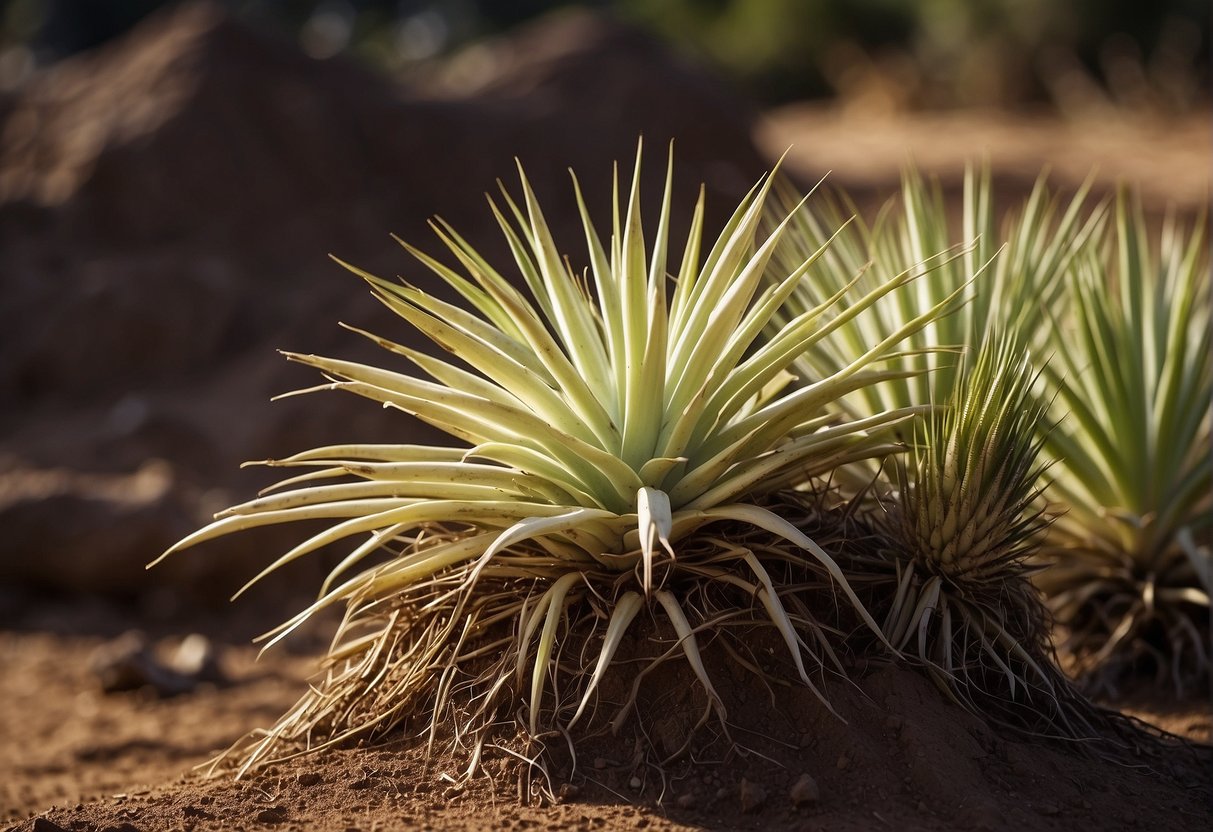
Yucca plants are known for their striking appearance and resilience, making them a popular choice for gardens and indoor spaces. If you’re planning to grow yucca plants, it’s important to understand how to care for their roots properly. Here are some tips for planting and caring for yucca roots.
Optimal Soil Conditions
Yucca plants prefer well-drained soil that is slightly acidic to neutral. When planting yucca roots, make sure the soil is loose and well-aerated to allow for proper drainage. If your soil is too heavy or compacted, consider adding perlite or sand to improve drainage. Yucca plants can also thrive in sandy soils.
Watering and Nutrient Requirements
Yucca plants are drought-tolerant and prefer to be kept on the dry side. Overwatering can lead to root rot and other issues. When watering yucca plants, make sure the soil is completely dry before watering again. Yucca plants also do not require frequent fertilization, but you can add a slow-release fertilizer to the soil during the growing season.
If you’re growing yucca plants in a container, make sure the pot has drainage holes to prevent water from accumulating at the bottom. You can also add a layer of gravel or rocks at the bottom of the pot to improve drainage.
Overall, caring for yucca roots is relatively easy as long as you provide them with the right soil conditions and avoid overwatering. With proper care, yucca plants can thrive and add a unique touch to your indoor or outdoor space.
Propagation and Maintenance
Yucca plants are relatively easy to propagate and maintain. Here are some tips for propagating and maintaining your yucca plant.
Propagating Yucca from Roots
Yucca plants can be propagated from cuttings or by dividing the root ball. The best time to propagate a yucca plant is in the spring or early summer when the plant is actively growing.
To propagate a yucca plant from cuttings, simply cut off a stem or a section of stem from the parent plant. Make sure the cutting is at least 6 inches long and has several leaves. Dip the cut end of the stem in rooting hormone and plant it in a pot filled with well-draining soil. Keep the soil moist and in a warm, bright location until roots appear.
To propagate a yucca plant by dividing the root ball, carefully dig up the plant and separate the roots into smaller sections. Each section should have at least one stem and several healthy roots. Plant each section in a pot filled with well-draining soil and keep the soil moist until the plant becomes established.
Pruning and Managing Root Growth
Yucca plants require very little pruning. However, if your plant becomes too large or unruly, you can trim back the stems or remove any dead or damaged leaves. To prevent excessive root growth, it is important to plant your yucca in a pot that is the appropriate size for the plant. If the pot becomes too small, you may need to transplant or repot the plant into a larger container.
Regular maintenance of your yucca plant includes watering and fertilizing. Yucca plants prefer well-draining soil and do not like to be overwatered. Water your plant only when the top inch of soil is dry to the touch. Fertilize your yucca plant once a month during the growing season with a balanced fertilizer.
Frequently Asked Questions
What is the typical depth and spread of yucca plant roots?
Yucca plant roots are typically shallow and spread out widely. They can extend up to 3 feet deep and 6 feet wide, depending on the species and growing conditions.
Can yucca roots cause structural damage to nearby buildings?
While yucca roots are not known to cause structural damage to buildings, they can grow under and around foundations, which may cause minor cracks in the walls or pavement. It is recommended to plant yucca at a safe distance from buildings and other structures.
What methods are effective for removing yucca roots?
The most effective method for removing yucca roots is to dig them out manually with a shovel or other digging tool. It is important to remove as much of the root system as possible to prevent regrowth. Alternatively, herbicides can be used, but they may harm other plants and should be used with caution.
Is there a risk of yucca roots invading plumbing or other underground utilities?
There is a low risk of yucca roots invading plumbing or other underground utilities, as their roots are shallow and not particularly aggressive. However, it is always a good idea to plant yucca at a safe distance from any underground utilities.
How does the root system of a yucca plant compare to other plants?
Compared to other plants, yucca roots are relatively shallow and spread out widely. They are not particularly aggressive and do not grow very deep. However, they can be difficult to remove due to their fibrous and persistent nature.
What precautions should be taken when planting yucca near a home?
When planting yucca near a home, it is important to choose a location that is at least 3 feet away from any buildings or other structures. This will help prevent any potential damage to the foundation or walls. Additionally, it is a good idea to plant yucca in an area with well-draining soil to prevent water damage.

