
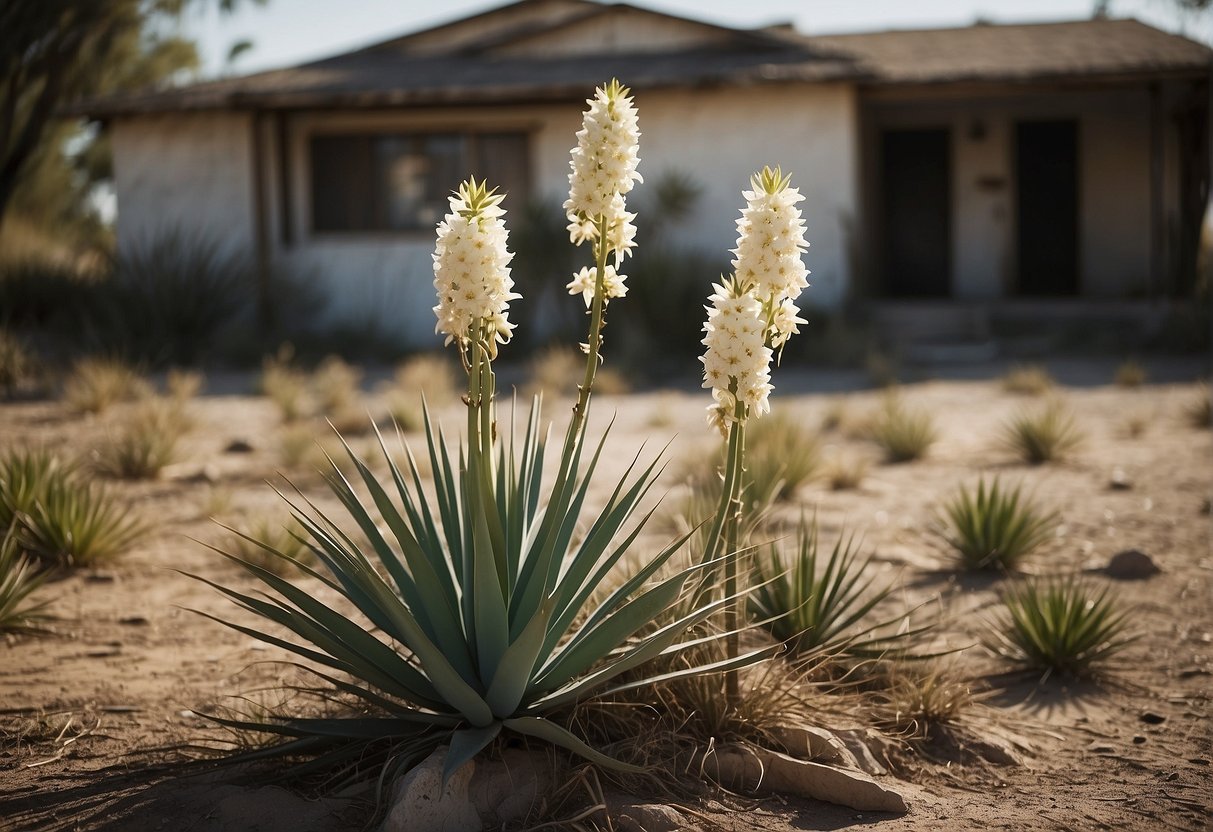
Why Do Yucca Plants Grow at Old Homesites? Explained
Should you have wandered through an ancient dwelling, it’s possible you’ve spotted yucca plants flourishing. These resilient flora manage to prosper in the desolate environments of forsaken settlements, a phenomenon that has intrigued numerous onlookers. But what accounts for the growth of yucca plants at these old sites? This phenomenon can be explained by considering both the historical importance and distinctive traits of yucca plants.
Yucca plants have a long history of use by indigenous peoples in North America, who utilized them for food, medicine, and fiber. When settlers arrived in the area, they too began to use yucca plants for a variety of purposes. As a result, yuccas became a common sight at old homesites, where they were likely cultivated for their many uses. Over time, these plants have adapted to the harsh conditions of abandoned homesteads, making them a hardy survivor in even the toughest of environments.
So why do yucca plants grow at old homesites? The answer lies in their historical significance and their ability to adapt to harsh conditions. Whether you’re a curious observer or an aspiring gardener, understanding the unique characteristics of yucca plants can help you appreciate their place in history and their resilience in the face of adversity.
Key Takeaways
- Yucca plants have a long history of use by indigenous peoples and settlers in North America.
- Yuccas were likely cultivated at old homesites for their many uses.
- Yucca plants are hardy survivors that can adapt to harsh conditions.
Historical Significance of Yucca Plants at Old Homesites

If you’ve ever visited an old homesite, you may have noticed yucca plants growing in the surrounding area. These plants have a rich history and cultural significance that make them a common sight in these locations.
Cultural and Practical Uses
Yucca plants have been used by Native American tribes for centuries. The roots of the plant can be used to make soap, while the leaves can be used to create baskets and other woven items. Additionally, the plant’s fibers have been used to create rope and cordage.
Yucca plants were also used for medicinal purposes. The roots were often boiled and used as a poultice for wounds and other injuries. The plant’s sap was used to treat skin conditions and even as a natural shampoo.
In addition to their practical uses, yucca plants hold cultural significance for many Native American tribes. The plant is often used in traditional ceremonies and is considered a symbol of strength and protection.
As old homesites were often located on land that was once inhabited by Native American tribes, it’s no surprise that yucca plants can be found in these areas. The plants serve as a reminder of the cultural and historical significance of the land, and the important role that Native American tribes played in shaping the region’s history.
In conclusion, yucca plants have a rich history and cultural significance that make them a common sight at old homesites. From their practical uses to their cultural significance, these plants serve as a reminder of the important role that Native American tribes played in shaping the region’s history.
Yucca Plant Characteristics and Identification
Physical Features
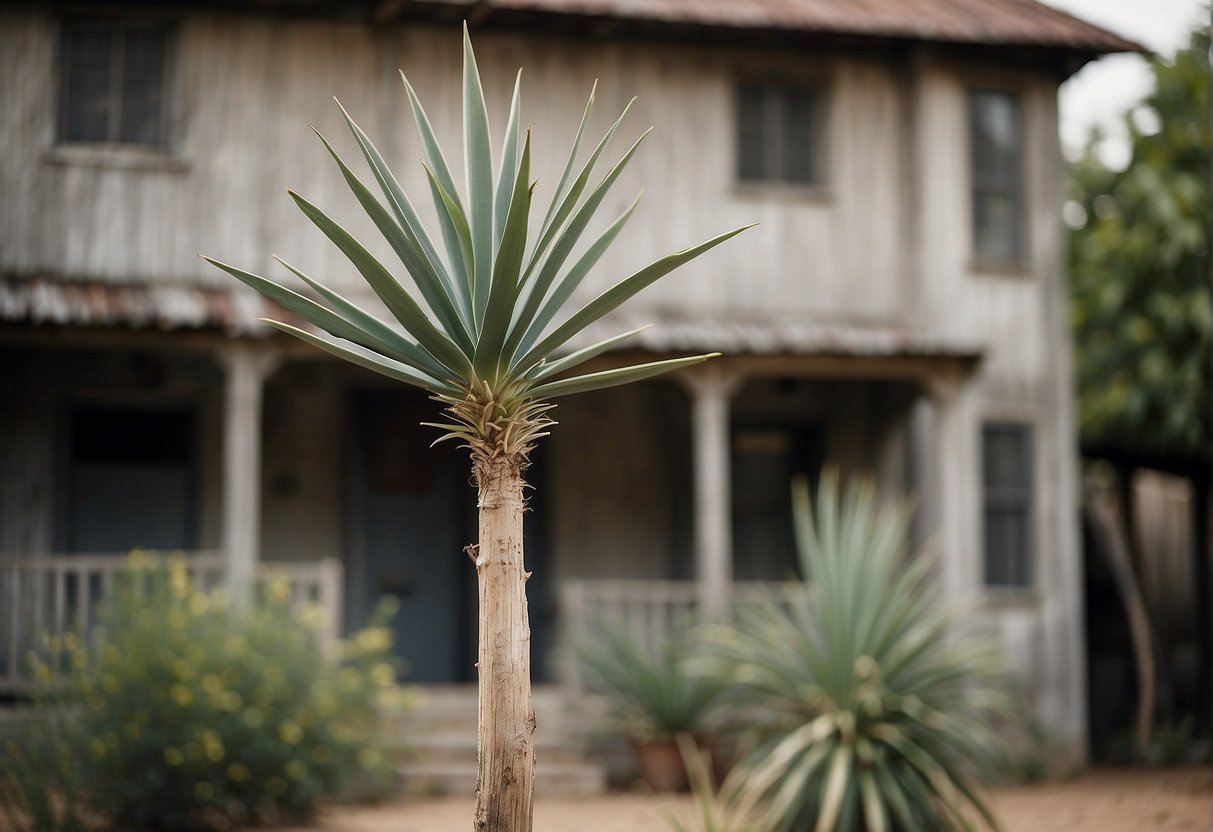
Yucca plants are known for their unique physical features that make them stand out from other plants. They have long, sword-shaped leaves that can range in color from green to white or yellow. The foliage is evergreen, which means that it stays green throughout the year. The leaves of some species have sharp spines, while others are spineless. The plant can grow up to several feet tall, depending on the species.
Species Varieties
There are many different species of yucca plants, each with its own set of characteristics. Some of the most common species include the Spanish bayonet (Yucca aloifolia) and the filamentosa yucca (Yucca filamentosa). The Spanish bayonet has long, sharp leaves with a bluish-green color, while the filamentosa yucca has long, thin leaves with curly white fibers on the edges.
Yucca plants are often found growing at old homesites because they are hardy and can survive in a variety of conditions. They are also easy to identify, thanks to their unique physical features. Whether you are looking for a plant to add to your garden or simply want to learn more about these fascinating plants, yuccas are definitely worth checking out.
Cultivation and Care of Yucca Plants
Yucca plants are hardy perennials that can thrive in a variety of growing conditions. Whether you are growing them indoors or outdoors, there are a few key factors to consider when cultivating and caring for these plants.
Optimal Growing Conditions
When it comes to growing yucca plants, the right conditions can make all the difference. These plants prefer well-draining soil that is rich in nutrients. They also require plenty of sunlight, so be sure to place them in a spot that gets at least six hours of direct sunlight per day.
When it comes to watering, yucca plants are relatively low-maintenance. They can tolerate periods of drought, so it’s important not to overwater them. Allow the soil to dry out completely between waterings, and be sure to avoid getting water on the leaves or stem of the plant.
Maintenance and Propagation
Yucca plants can be propagated from seed or by using offsets, which are small plantlets that grow from the base of the mature plant. To propagate using offsets, simply remove them from the parent plant and plant them in their own container.
When it comes to maintenance, yucca plants are relatively easy to care for. They do not require frequent repotting, and can thrive in a variety of potting soils. Fertilizing is not necessary, but can help promote healthy growth and flowering.
Overall, yucca plant care is relatively straightforward. By providing the right growing conditions and proper care, you can enjoy these beautiful plants in your home or garden for years to come.
Common Challenges in Growing Yuccas
Yuccas are generally low-maintenance plants that are easy to grow, but they can still face challenges that affect their growth and health. Here are some common challenges that you may encounter when growing yuccas:
Pests and Diseases
Yuccas are generally resistant to pests and diseases, but they can still be affected by some common problems. Scale insects are a common pest that can affect yuccas, and they can cause yellowing leaves and stunted growth. Mealybugs and aphids can also infest yuccas, causing similar problems. In addition, yuccas can be susceptible to root rot and fungal diseases if they are overwatered or planted in poorly-draining soil.
Environmental Stress Factors
Yuccas are drought-tolerant plants that can survive in harsh environments, but they can still be affected by certain environmental stress factors. Overwatering can cause root rot and other fungal diseases, while drought can cause the leaves to turn yellow and dry out. Moths and deer can also damage yuccas by feeding on the leaves and stems.
To prevent these challenges, it is important to plant yuccas in well-draining soil and to avoid overwatering them. Yuccas are drought-tolerant plants that can survive in harsh environments, but they still need some water to thrive. In addition, it is important to monitor your yuccas for pests and diseases and to take action if you notice any problems. With proper care and attention, yuccas can thrive in old homesites and other challenging environments.
Frequently Asked Questions
Why are yucca plants commonly found at abandoned homesteads?
Yucca plants are often found at abandoned homesteads due to their ability to thrive in harsh environments. These plants have adapted to survive in areas with low water availability and poor soil quality, making them well-suited for the conditions found at old homesites. Additionally, yucca plants can grow in areas with little to no human disturbance, allowing them to flourish in abandoned areas.
What factors contribute to the prevalence of yucca plants at old homesites?
The prevalence of yucca plants at old homesites is due to several factors. One contributing factor is the lack of human activity and disturbance in these areas. This allows yucca plants to grow undisturbed and take advantage of the available resources. Additionally, yucca plants are often found in areas with poor soil quality, which is common at old homesites due to previous agricultural practices.
How do yucca plants survive in the environments of old homesites?
Yucca plants have several adaptations that allow them to survive in the harsh environments of old homesites. These plants have deep root systems that can access water and nutrients from deep within the soil. Additionally, yucca plants have thick, waxy leaves that help to reduce water loss through transpiration. These adaptations allow yucca plants to survive in areas with low water availability and poor soil quality.
Why might yucca plants be associated with historical or abandoned properties?
Yucca plants may be associated with historical or abandoned properties due to their ability to survive in harsh environments and their cultural significance. These plants have been used for medicinal and practical purposes by Native American cultures for centuries, and may have been present at historical homesteads for these reasons. Additionally, yucca plants are often found in areas with little to no human disturbance, making them common at abandoned properties.
What cultural or historical significance do yucca plants have at old homesites?
Yucca plants have cultural and historical significance at old homesites due to their use by Native American cultures. These plants have been used for medicinal and practical purposes, such as making soap and baskets, for centuries. Additionally, yucca plants have been used in religious and ceremonial practices by some Native American cultures.
How do the growth patterns of yucca plants benefit from the conditions at old homesites?
The growth patterns of yucca plants benefit from the conditions at old homesites, particularly the lack of human disturbance and poor soil quality. Yucca plants have deep root systems that can access water and nutrients from deep within the soil, allowing them to thrive in areas with poor soil quality. Additionally, the lack of human disturbance allows yucca plants to grow undisturbed and take advantage of the available resources. These factors contribute to the unique growth patterns of yucca plants at old homesites.

