
What Chemical Will Kill Yucca Plants: Effective Solutions for Yucca Plant Removal
If you’re struggling with an unwelcome yucca plant and curious about which chemicals will successfully eliminate it, you’re not alone. Yuccas possess a resilience that often complicates their removal. Nonetheless, equipped with proper insight and equipment, you can expel these tenacious plants from your land.
To start, it’s important to understand the nature of yucca plants. They have a deep root system that can make manual removal difficult, and they can also reproduce through seeds and root sprouts. This means that even if you remove the visible plant, it may still come back. Chemical control methods can be an effective way to kill yucca plants and prevent regrowth.
When it comes to choosing a chemical herbicide, there are a few factors to consider. You’ll want to select a product that is specifically formulated for yucca plants, as not all herbicides will be effective. Additionally, you’ll want to follow the product instructions carefully to ensure that you apply it correctly and safely. With the right approach, you can successfully eliminate yucca plants from your property.
Key Takeaways
- Yucca plants have a deep root system and can reproduce through seeds and root sprouts, making manual removal difficult.
- Chemical control methods can be an effective way to kill yucca plants and prevent regrowth.
- When selecting a chemical herbicide, choose a product that is specifically formulated for yucca plants and follow the instructions carefully to ensure safe and effective application.
Understanding Yucca Plants
Yucca plants are a popular choice for landscaping due to their unique appearance and drought-tolerant nature. These ornamental plants are a type of woody perennial that can grow rapidly under the right conditions. In this section, we will explore the characteristics of yucca plants and some common problems that can occur.
Characteristics of Yucca Plants
Yucca plants are known for their sword-shaped leaves and distinctive appearance. These plants can grow up to several feet tall and wide, with some species producing flowers on tall spikes. Yucca plants have a deep root system that helps them survive in hot and dry conditions. They are also able to tolerate a range of soil types, from sandy to clay.
Common Problems with Yuccas
While yucca plants are generally hardy and easy to care for, there are some common problems that can occur. One issue is root rot, which can be caused by overwatering or poor drainage. This can lead to yellowing leaves and stunted growth. Another problem is pests, such as spider mites and mealybugs, which can damage the leaves and flowers of yucca plants.
To keep your yucca plants healthy, it’s important to provide them with well-draining soil and avoid overwatering. Regular pruning can also help to prevent pest infestations and promote healthy growth. With proper care, yucca plants can be a beautiful and low-maintenance addition to any landscape.
Chemical Control Methods
When it comes to killing yucca plants, chemical control methods can be effective. However, it is important to select the right herbicide, use proper application techniques, and take necessary safety precautions.
Selecting the Right Herbicide
Glyphosate and triclopyr are two herbicides that have been found to be effective in killing yucca plants. Glyphosate, commonly known as Roundup, is a non-selective herbicide that targets all plants it comes in contact with. Triclopyr, on the other hand, is a selective herbicide that targets broadleaf plants like yucca.
Remedy Ultra is a herbicide that contains triclopyr and can be used to kill yucca plants. It is important to carefully read the label of any herbicide you plan to use to ensure it is safe and effective for your specific situation.
Application Techniques
Proper application techniques are crucial when using herbicides to kill yucca plants. Non-selective herbicides like glyphosate should be applied directly to the plant, while selective herbicides like triclopyr should be applied to the base of the plant.
A sprayer can be used to apply the herbicide, but it is important to ensure that the herbicide is evenly distributed and does not come in contact with other plants or areas. It is also important to follow the instructions on the label for the correct amount of herbicide to use.
Safety Precautions
When using herbicides to kill yucca plants, it is important to take necessary safety precautions. Protective clothing, such as gloves and long sleeves, should be worn to prevent skin contact with the herbicide. Safety goggles should also be worn to protect the eyes.
It is important to avoid inhaling the herbicide, so a mask or other protective gear may be necessary. It is also important to keep children and pets away from the area while the herbicide is being applied and until it has dried.
Remember, herbicide application should only be done by someone who is knowledgeable and experienced in its use. Following these guidelines will help ensure a safe and effective herbicide application for killing yucca plants.
Manual and Organic Removal Strategies
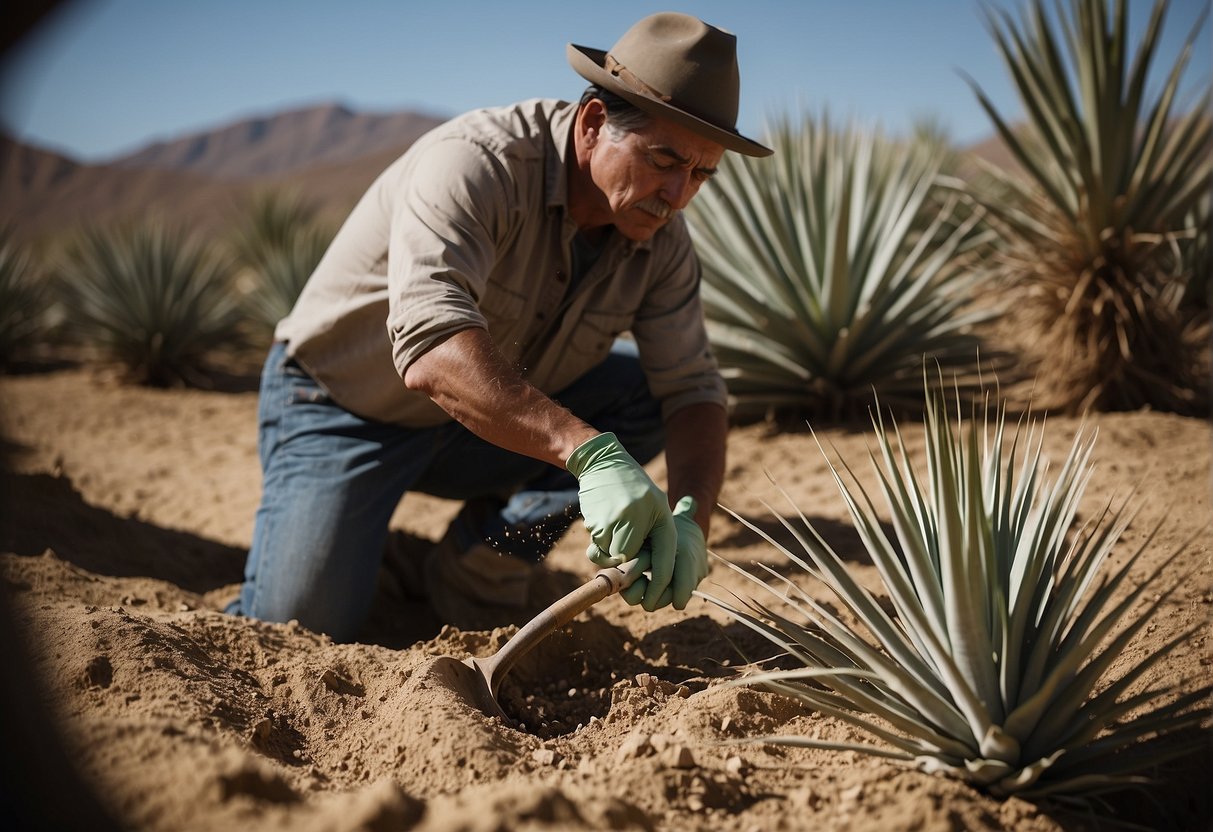
If you’re looking for a more hands-on approach to getting rid of yucca plants, manual and organic removal strategies are worth considering. These methods require a bit more effort and patience, but they can be effective in killing off the plants.
Digging and Physical Removal
One way to manually remove yucca plants is to dig them out of the ground. This method involves using a shovel or pruning shears to cut away at the roots and loosen the plant from the soil. Once the plant is loose, you can use your hands to pull it out of the ground. This method is best for smaller yucca plants with less extensive root systems.
For larger yucca plants, you may need to use a saw or other cutting tool to remove the plant’s stem and stump. This will make it easier to dig out the root system. Be sure to wear gloves and protective clothing when handling the plant, as the leaves can be sharp and potentially harmful.
Natural Remedies and Organic Approaches
If you’re looking for an organic approach to killing yucca plants, there are a few natural remedies you can try. One option is to use vinegar, which is a natural herbicide. Simply spray vinegar directly onto the plant’s leaves and stem, being careful not to get it on any surrounding plants or grass.
Another option is to use salt. This method involves sprinkling salt directly onto the plant’s roots or around the base of the plant. The salt will dehydrate the plant and eventually kill it off.
You can also try using vegetable oil or diesel fuel to suffocate the plant. Simply pour the oil or fuel directly onto the plant’s leaves and stem, being careful not to get it on any surrounding plants or grass. This method may take a bit longer to work, but it can be effective in killing off the plant.
Overall, manual and organic removal strategies can be effective in killing yucca plants. Whether you choose to dig them out of the ground or use natural remedies, be sure to take the necessary precautions and follow proper safety procedures.
Post-Removal Maintenance and Prevention
Now that you have successfully removed the yucca plant, it is important to take proper care of the area to prevent regrowth and maintain your garden’s health. Here are some tips for post-removal maintenance and prevention:
-
Remove any remaining roots: Even after removal, yucca roots can continue to grow and sprout new plants. Make sure to remove any remaining roots to prevent regrowth.
-
Monitor for new growth: Keep an eye on the area where the yucca plant was removed and watch for any new growth. If you see any yucca sprouts, remove them immediately.
-
Improve soil health: Yucca plants thrive in well-draining soil with low nutrients. To discourage regrowth, add organic matter to the soil to improve its health and make it less suitable for yucca growth.
-
Consider xeriscaping: If you live in an arid region, consider xeriscaping your garden. This landscaping technique uses drought-resistant plants and minimal water to create a low-maintenance, water-efficient garden.
-
Prevent pests and diseases: Yucca plants are susceptible to root rot and other diseases. To prevent these issues, make sure to plant in well-draining soil and avoid overwatering. Additionally, keep an eye out for pests such as aphids and spider mites, which can damage the plant and make it more susceptible to disease.
By following these post-removal maintenance and prevention tips, you can keep your garden healthy and prevent regrowth of yucca plants.
Frequently Asked Questions
What herbicide is effective for eliminating yucca plants?
There are several herbicides that are effective in killing yucca plants. Glyphosate-based herbicides such as Roundup, and dicamba-based herbicides are commonly used for yucca control. However, it is important to carefully follow the instructions on the herbicide label for best results.
Can household bleach be used to kill yucca roots?
Household bleach is not an effective solution for killing yucca roots. It may cause damage to the plant but will not kill it. Bleach can also harm other nearby plants and the soil.
Is vinegar an effective solution for removing yucca roots?
Vinegar is not an effective solution for removing yucca roots. While it may cause some damage to the plant, it will not kill it. Vinegar can also harm other nearby plants and the soil.
Does glyphosate (Roundup) work on eradicating yucca plants?
Glyphosate-based herbicides such as Roundup are effective in eradicating yucca plants. However, it is important to carefully follow the instructions on the herbicide label for best results.
How can I permanently remove yucca plants from my property?
To permanently remove yucca plants from your property, you will need to remove the entire root system. This can be done by digging up the plant and all of its roots, or by using an herbicide that is specifically designed for yucca control.
What methods are there for controlling yucca growth in pastures?
Controlling yucca growth in pastures can be challenging. One effective method is to use herbicides that are specifically designed for yucca control. Another method is to graze livestock on the pasture, as they will eat the yucca plants and help to control their growth. It is important to carefully manage the grazing to prevent overgrazing and damage to the pasture.

