
How to Care for Yucca Cane Plants: Tips and Tricks
If you’re in the market for an easy-to-care-for houseplant to brighten up your home’s interior, consider the yucca cane plant as an ideal option. Noted for their impressive looks and resilience in various living conditions, these robust plants do, however, need some attention to remain in good health and display their full beauty. This article will detail essential tips for caring for your yucca cane plant, ensuring it remains a stunning part of your home for many years.
First and foremost, it’s important to understand the basic needs of your yucca plant. These plants are native to hot, dry environments, so they prefer plenty of sunlight and infrequent watering. Overwatering can be especially harmful to yucca plants, as they are susceptible to root rot. Additionally, yuccas should be planted in well-draining soil and given plenty of space to grow. With these factors in mind, let’s dive into some specific care guidelines for your yucca cane plant.
Key Takeaways
- Yucca cane plants are low-maintenance and can add beauty to your indoor space.
- Yuccas require plenty of sunlight and infrequent watering to thrive.
- To care for your yucca plant, make sure it has well-draining soil and plenty of space to grow.
Essential Care Guidelines
Yucca cane plants are easy to grow and require low maintenance, making them an excellent choice for beginners. These plants are native to Mexico and Guatemala and are known for their sword-shaped leaves that can grow up to several feet tall. In this section, we will cover the essential care guidelines for yucca cane plants, including optimal lighting and temperature, watering and soil requirements, feeding and pruning practices, propagation and repotting, pest and disease management, special considerations, and plant characteristics and varieties.
Optimal Lighting and Temperature
Yucca cane plants prefer bright light and can tolerate direct sunlight, but they can also grow in low light conditions. They thrive in temperatures ranging from 60-80°F (15-27°C) and can tolerate temperatures as low as 30°F (-1°C). However, avoid exposing them to extreme heat or cold.
Watering and Soil Requirements
Yucca cane plants require well-draining soil, such as cactus or succulent soil, with good drainage. Avoid overwatering, as excess water can lead to root rot. Water your plant when the top inch of soil is dry to the touch, and make sure the pot has drainage holes to prevent excess water from accumulating.
Feeding and Pruning Practices
Yucca cane plants do not require frequent fertilizing, but you can feed them with a balanced fertilizer once a month during the growing season. Prune your plant as needed to remove dead or yellow leaves and to promote new growth.
Propagation and Repotting
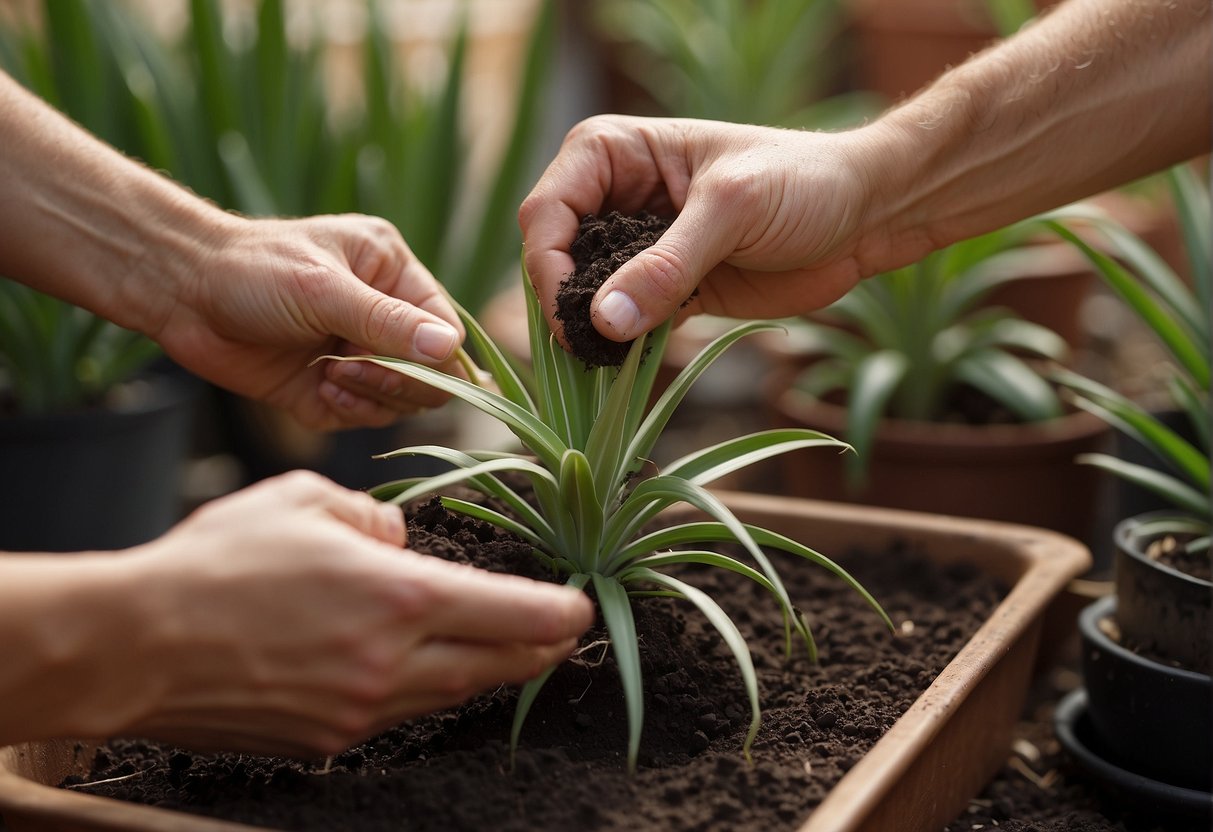
Yucca cane plants can be propagated through pups, which are small offsets that grow at the base of the plant. You can also propagate them through stem cuttings or division. Repot your plant every 2-3 years, or when it outgrows its current container, using fresh potting soil.
Pest and Disease Management
Yucca cane plants are generally pest and disease resistant, but they can be susceptible to mealybugs and scale insects. To prevent these pests, mist your plant regularly and maintain proper humidity levels. If you notice any signs of pests or diseases, treat them promptly with an appropriate fungicide or insecticide.
Special Considerations
Yucca cane plants are toxic to pets and humans if ingested, so keep them out of reach. Some varieties, such as spineless yucca (Yucca elephantipes), are less dangerous than others, such as Spanish bayonet (Yucca aloifolia). If you live in a dry climate, consider using a humidifier to maintain proper humidity levels for your plant.
Plant Characteristics and Varieties
Yucca cane plants come in various sizes, from small shrubs to large trees, and can be evergreen or deciduous. Some popular varieties include Adam’s needle (Yucca filamentosa), banana yucca (Yucca baccata), Joshua tree (Yucca brevifolia), Mojave yucca (Yucca schidigera), and soft tip yucca (Yucca gloriosa).
Conclusion
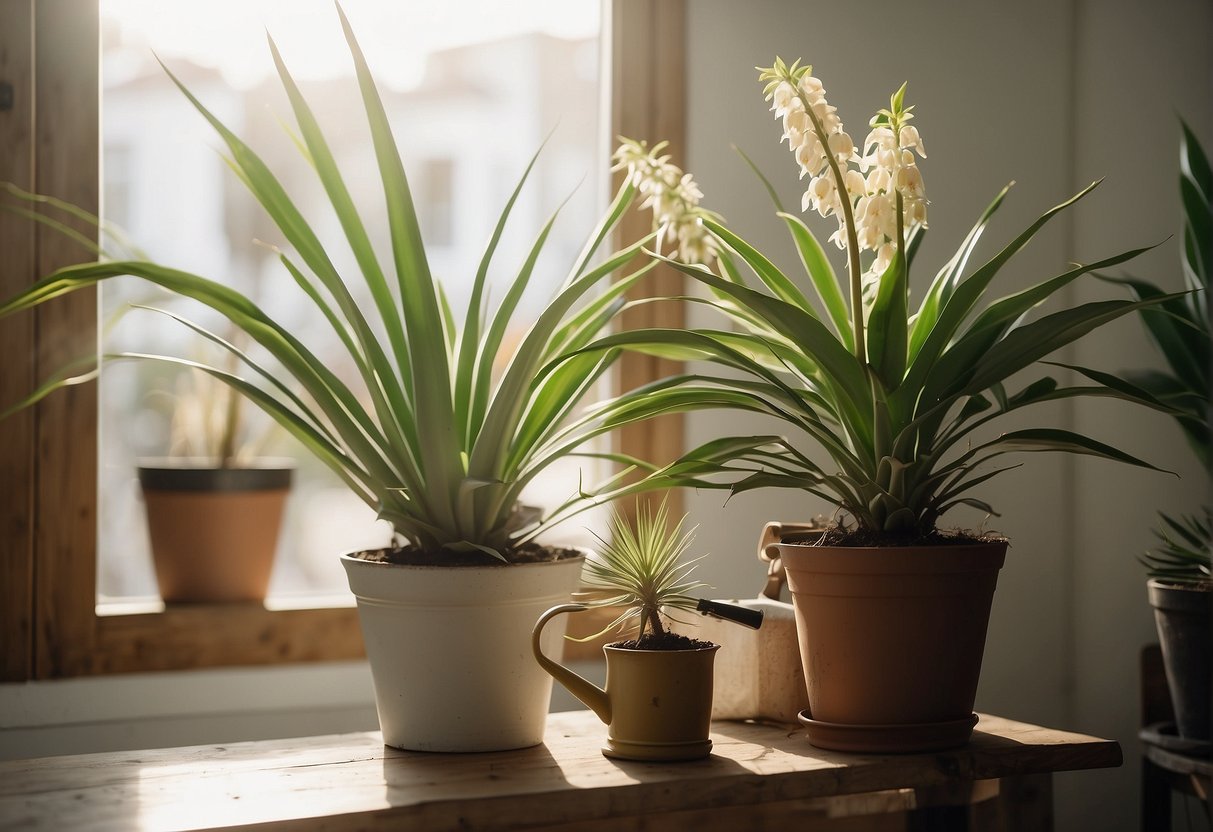
Taking care of your yucca cane plant is easy and low maintenance. With just a few simple steps, you can ensure that your plant stays healthy and vibrant for years to come.
When it comes to yucca cane plant care, the most important thing to remember is to avoid overwatering. These plants are native to arid regions and prefer dry soil. Make sure to let the soil dry out completely before watering again, and be sure to provide good drainage.
In addition to proper watering, yucca cane plants also benefit from regular fertilization. Use a balanced fertilizer every few months to provide essential nutrients and keep your plant healthy.
When it comes to indoor care, yucca cane plants are a great choice for those who want a low maintenance plant. They are easy to grow and can tolerate a wide range of conditions, including low light.
Overall, taking care of your yucca cane plant is a simple and rewarding experience. With just a little bit of effort, you can enjoy the beauty and benefits of these versatile plants in your home or office.
Frequently Asked Questions
What are the ideal lighting conditions for a yucca cane plant indoors?
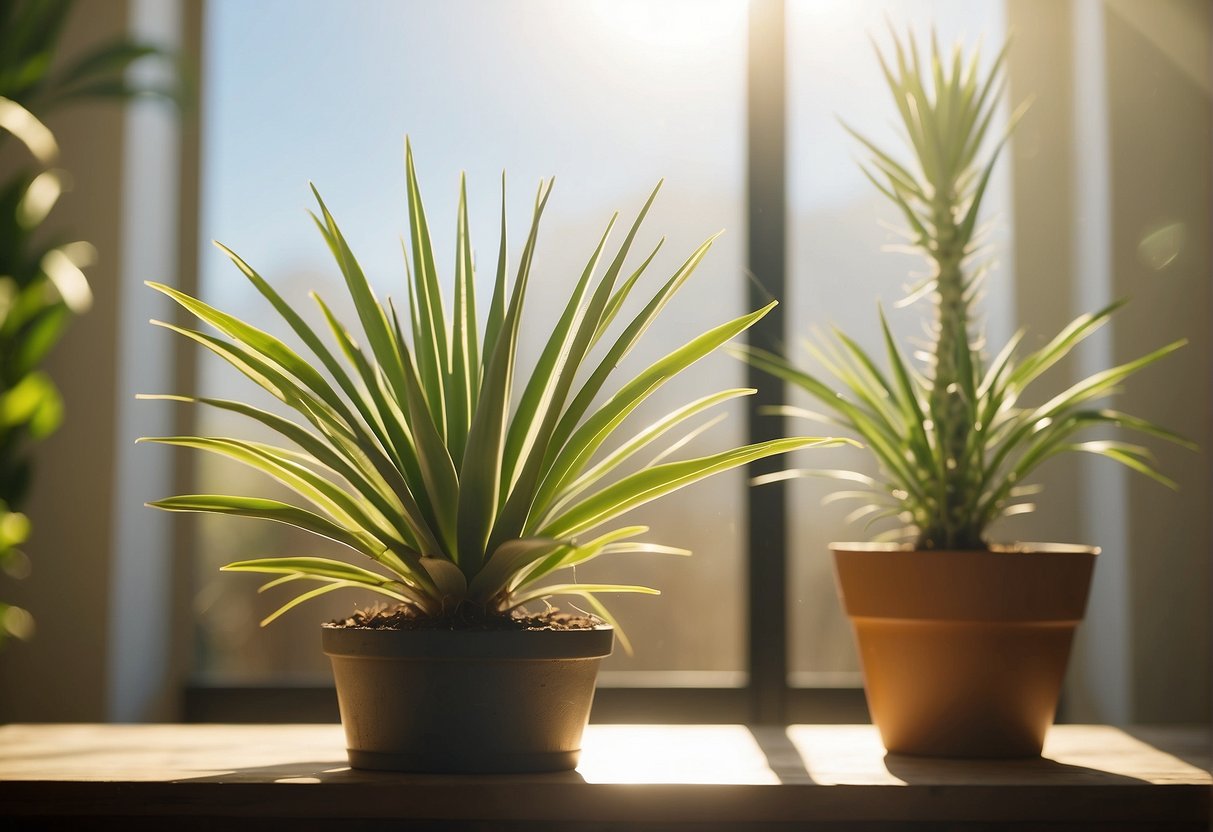
Yucca cane plants thrive in bright, indirect light. They can also tolerate low light conditions, but they may not grow as quickly or produce as many leaves. Avoid placing your yucca cane plant in direct sunlight, as this can scorch the leaves.
How often should a yucca cane plant be watered when potted?
Yucca cane plants prefer to have their soil dry out slightly between waterings. Water your plant thoroughly once every 2-3 weeks, allowing excess water to drain out of the bottom of the pot. Avoid overwatering, as this can cause root rot.
What type of soil is best suited for growing a yucca cane plant?
Yucca cane plants prefer well-draining soil that is rich in organic matter. A mix of potting soil, sand, and perlite can provide the ideal growing conditions for your plant.
How do you identify and treat common problems in indoor yucca plants?
Common problems in indoor yucca plants include yellowing leaves, brown tips, and pest infestations. Yellowing leaves may indicate overwatering or underwatering, while brown tips may indicate dry air or a buildup of salts in the soil. Pest infestations can be treated with insecticidal soap or neem oil.
What are the benefits of having a yucca cane plant indoors?
Yucca cane plants are not only visually appealing, but they also help purify the air in your home by removing toxins such as formaldehyde and benzene. They are also low maintenance and can tolerate a range of growing conditions.
How can you manage the height and growth of a yucca cane plant?
To manage the height and growth of your yucca cane plant, you can prune it back in the spring or summer. Simply cut back the stem to the desired height, and new growth will emerge from the cut area. You can also propagate your plant by taking stem cuttings and rooting them in water or soil.

