
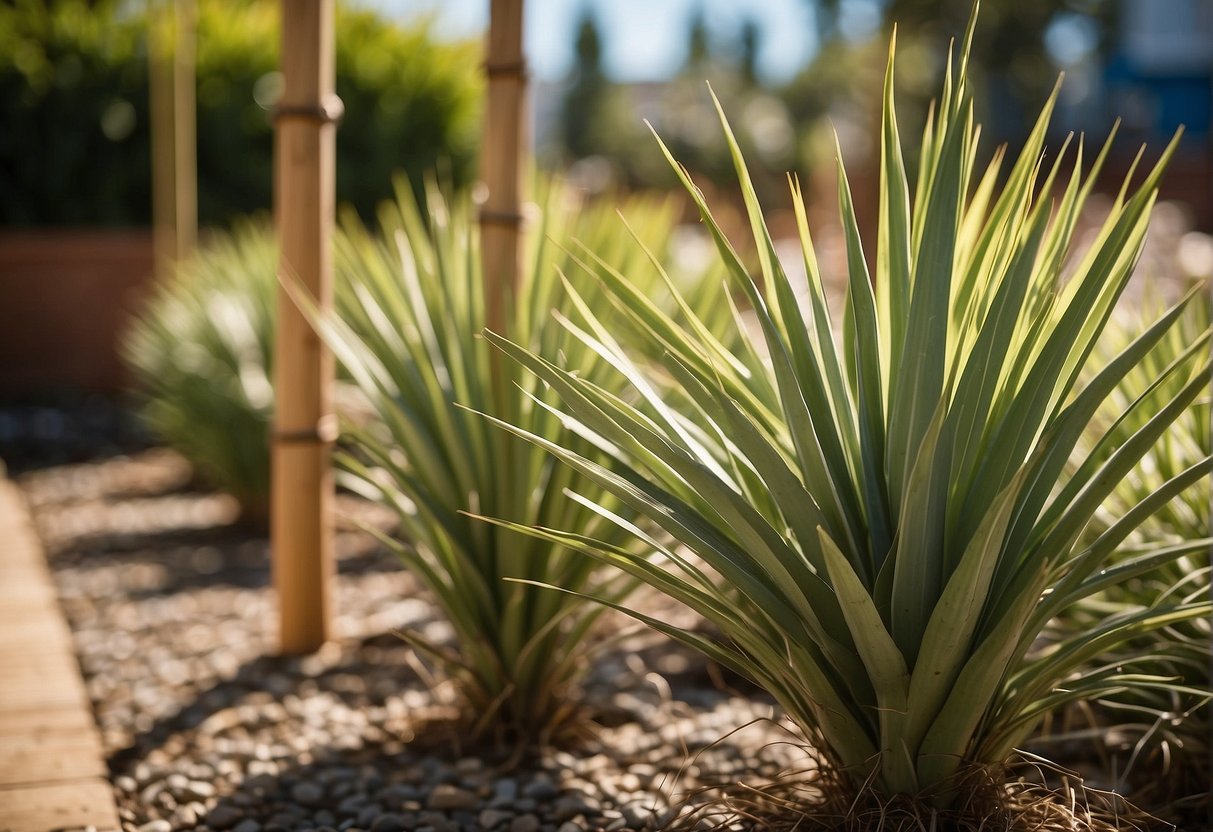
How to Stake Up Yucca Plants: A Clear Guide to Supporting Your Growing Yuccas
Supporting yucca plants may seem challenging, particularly for those who are novices in the gardening world. Yuccas are characterized by their lofty, slim stalks that are prone to bending or snapping due to the substantial weight of their leaves. Yet, employing proper methods and equipment can make the task of securing yucca plants both straightforward and beneficial in maintaining their health and vertical stature.
Before we dive into the staking process, it’s important to understand yucca plants and their unique needs. Yucca plants are drought-resistant and prefer well-draining soil. They can grow up to several feet tall and wide, making them a popular choice for landscaping and outdoor decoration. However, their tall and slender stems can easily bend or break under strong winds or heavy rain. Therefore, staking up yucca plants is essential to keep them healthy and upright.
Now that we have a basic understanding of yucca plants, let’s explore the different methods of staking them up. From bamboo stakes to wire cages, there are several options available to support your yucca plants. Whether you are dealing with a young or mature plant, staking up yucca plants can be done easily and effectively with the right tools and techniques.
Understanding Yucca Plants
Yucca plants are a popular addition to any garden due to their hardiness, unique appearance, and low maintenance needs. In this section, you will learn about the different species and characteristics of yucca plants, their growing conditions, plant care and maintenance, propagation and planting, seasonal care, common issues and solutions, environmental impact and landscaping, yucca plant uses, and wildlife and ecology.
Species and Characteristics
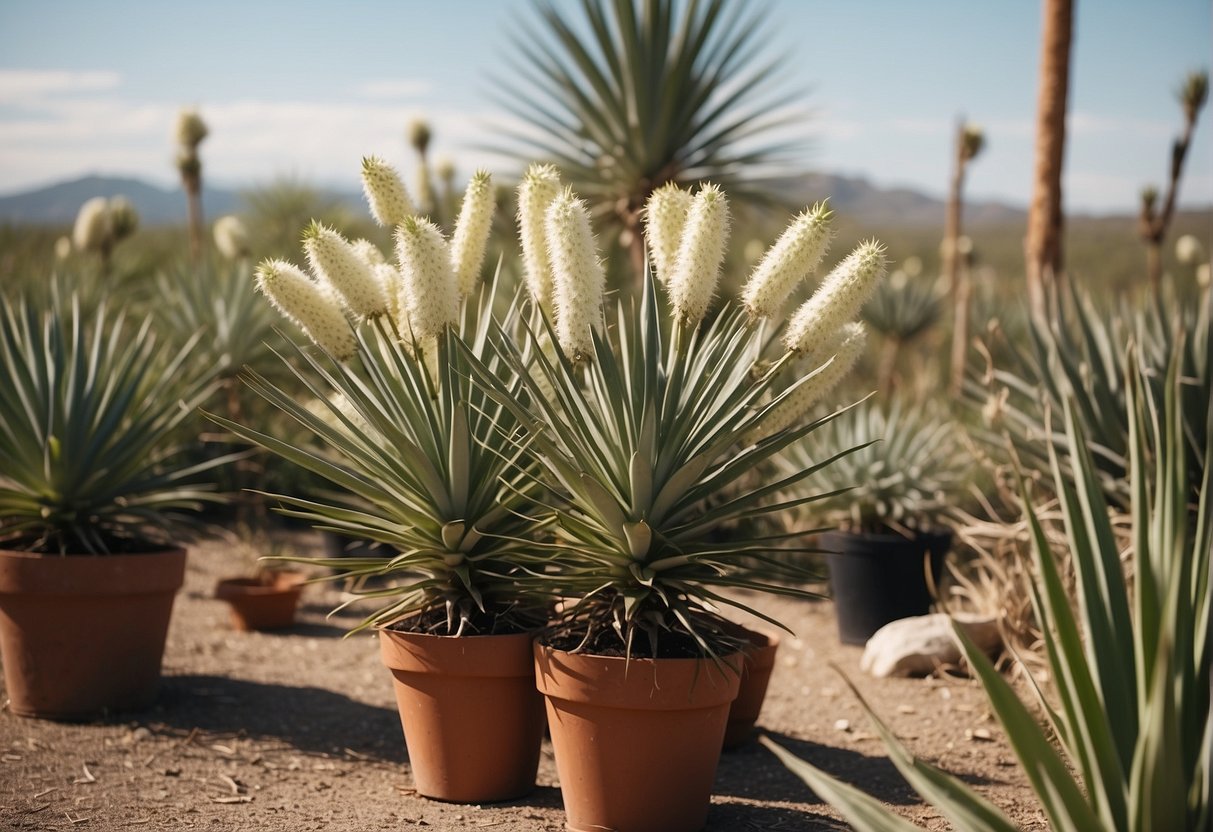
There are over 40 species of yucca plants, each with its unique characteristics. The most popular species include Yucca elephantipes, Yucca aloifolia, Yucca filamentosa, Yucca gigantea, and Yucca gloriosa. Yucca plants are known for their rosettes of green or blue-green foliage, often with variegated patterns. They have spiky, sword-shaped leaves that can grow up to several feet long, and some species produce fragrant flower spikes that bloom in the summer.
Growing Conditions
Yucca plants are hardy and can grow in a variety of soil types, as long as the soil is well-draining. They prefer full sun exposure and hot, dry climates, making them ideal for zones 5-11. Yucca plants are drought-tolerant and require minimal watering, making them perfect for xeriscaping and low-maintenance gardens.
Plant Care and Maintenance
Yucca plants are low maintenance and require little care. They need occasional pruning to remove dead or yellow leaves and occasional fertilization with a low-nitrogen fertilizer. Yucca plants are susceptible to mealybugs, scale insects, leaf spot, and root rot, but these issues can be prevented by proper watering and soil drainage.
Propagation and Planting
Yucca plants can be propagated through seeds, offsets, division, rhizome, stem cuttings, or root cuttings. They should be planted in well-draining soil and placed in full sun exposure. Yucca plants can be planted in the spring or fall and require minimal maintenance after planting.
Seasonal Care
Yucca plants are hardy and can withstand cold temperatures, making them perfect for cold climates. They require minimal care during the winter months, but it is essential to protect them from frost and excessive moisture.
Common Issues and Solutions
Yucca plants are susceptible to mealybugs, scale insects, leaf spot, and root rot. These issues can be prevented by proper watering and soil drainage. Dead or yellow leaves should be removed promptly to prevent the spread of disease.
Environmental Impact and Landscaping
Yucca plants are a popular addition to landscaping due to their unique appearance and hardiness. They can be used as a focal point in a garden or as a texture element in a landscape design. Yucca plants are also pollinators and attract bees, butterflies, and other pollinators to the garden.
Yucca Plant Uses
Yucca plants have been used for centuries for their medicinal and practical uses. The extract from yucca plants can be used in soaps, shampoos, and other personal care products. The roots of yucca plants can be used to make soap, and the fibers can be used to make clothing and rope.
Wildlife and Ecology
Yucca plants are an essential part of the ecosystem in North and Central America. They are a food source for deer and other wildlife and are pollinated by yucca moths. Yucca plants are an integral part of the desert ecosystem and play a vital role in maintaining the balance of the environment.
Staking Yucca Plants
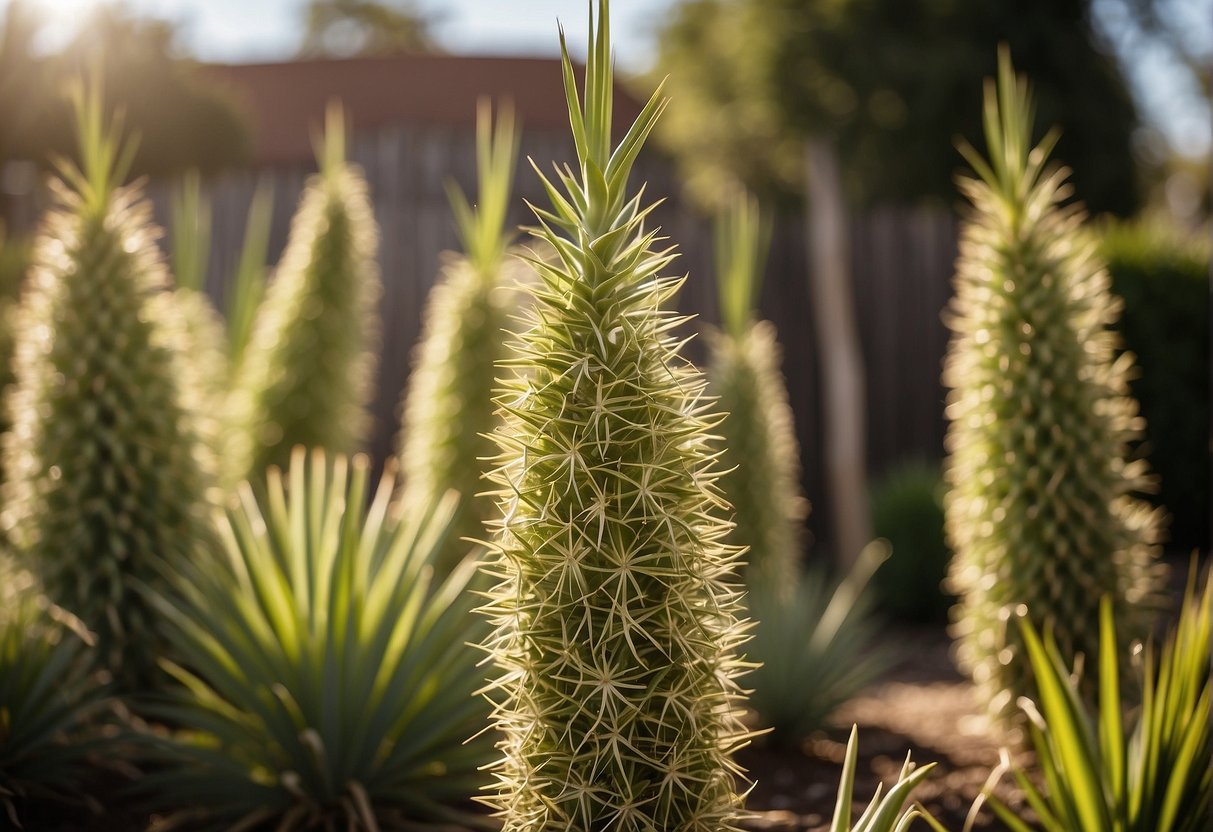
Yucca plants are known for their striking foliage and easy maintenance. However, some yucca species, especially multi-stemmed ones, may require staking to prevent them from toppling over. In this section, we will discuss when to stake yucca plants, choosing the right support, staking techniques, ongoing care after staking, and alternative solutions to staking.
When to Stake Yucca Plants
It is best to stake yucca plants during the growing season when they are actively producing new growth. This is usually in the spring or early summer. Staking newly planted yuccas may also be necessary until their roots establish themselves in the soil.
Choosing the Right Support
When choosing a support for your yucca plant, consider its size and weight. A sturdy stake or pole made of bamboo, wood, or metal is ideal. You can also use a wire cage or trellis. Make sure the support is at least as tall as the plant and secure it firmly in the ground.
Staking Techniques
To stake a yucca plant, gently tie the stem or stems to the support using soft garden twine or strips of fabric. Tie the stem loosely to allow room for growth and movement. Avoid tying the stem too tightly, as this can damage the plant and restrict its growth. For multi-stemmed yuccas, stake each stem separately.
Ongoing Care After Staking
Check the ties regularly and adjust them as needed to avoid damaging the plant. Remove the stakes and ties once the plant is strong enough to stand on its own. Water the plant regularly and fertilize it during the growing season to promote healthy growth.
Alternative Solutions to Staking
If staking is not an option or if you prefer a more natural look, you can try pruning the plant to reduce its weight. Cut the trunk or stems back to a healthy point, and mist the plant regularly to promote new growth. Repotting the plant into a larger container can also provide more support.
Staking yucca plants is a simple and effective way to keep them upright and healthy. With the right support and technique, your yucca will thrive and add beauty to your garden or home.
Frequently Asked Questions
What is the best method to support a yucca plant that is leaning?
If your yucca plant is leaning, the best method to support it is to stake it up. You can use bamboo stakes or wooden stakes to support the plant. Place the stake near the base of the plant and tie the plant to the stake with soft plant ties. Make sure the stake is firmly in place and the plant is tied securely to the stake.
Can you prop up a yucca plant after it starts to droop?
Yes, you can prop up a yucca plant after it starts to droop. The best way to do this is to use a stake and tie the plant to the stake. Make sure the stake is placed near the base of the plant and the ties are not too tight to avoid damaging the plant.
What type of stakes are recommended for securing a yucca plant outdoors?
Bamboo stakes or wooden stakes are recommended for securing a yucca plant outdoors. These stakes are sturdy enough to support the plant and are also weather-resistant.
How often should you check and adjust the stakes for a yucca plant?
You should check and adjust the stakes for a yucca plant every few months. This will ensure that the plant is still properly supported and the ties are not too tight or too loose.
Is it necessary to prune a yucca plant to keep it upright?
Pruning a yucca plant is not necessary to keep it upright. However, pruning can help to remove dead or damaged leaves and promote new growth, which can help to keep the plant healthy and strong.
What are the common reasons for a yucca plant to fall over?
The common reasons for a yucca plant to fall over include overwatering, poor soil drainage, inadequate support, pests, and diseases. Make sure to provide proper care and support for your yucca plant to prevent it from falling over.

