
How to Split Indoor Yucca Plants: A Step-by-Step Guide
If you want to enhance your collection of houseplants, adding a yucca plant is an excellent choice. These plants stand out for their impressive looks and low maintenance requirements. For those who already own a yucca plant and are curious about how to divide it to multiply your collection, dividing a yucca is an effective method to propagate it and generate more plants for your space. This guide will cover the essential steps for dividing indoor yucca plants and provide you with the necessary information to achieve great results.
Understanding Yucca Plant Basics
Before we dive into how to split indoor yucca plants, it’s important to understand the basics of these plants. Yucca plants are native to hot and dry regions of North, Central, and South America. They’re known for their sword-like leaves and tall, branching stems that produce beautiful white or yellow flowers. Yucca plants are easy to care for and can thrive in a variety of conditions, making them a popular choice for indoor gardeners.
Preparing for Division
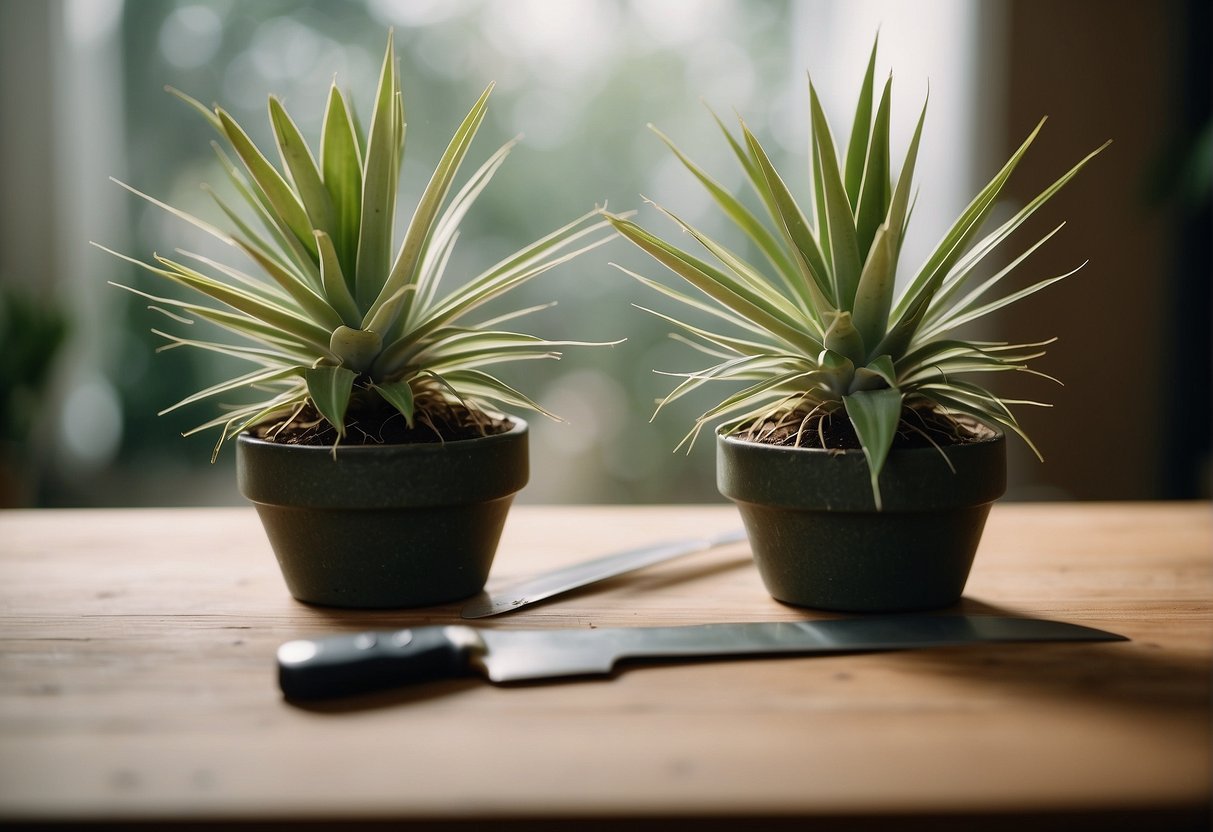
Before you start splitting your yucca plant, there are a few things you need to do to prepare. First, make sure your plant is healthy and well-watered. You’ll also need to gather the necessary tools, including a sharp knife, pruning shears, and a clean pot with fresh soil. Once you have everything you need, you’re ready to start dividing your yucca plant.
Understanding Yucca Plant Basics
Yucca plants are a popular choice for indoor gardening due to their unique appearance and low maintenance requirements. However, before you start splitting your yucca plants, it’s important to understand some basic information about these plants.
Identifying Your Yucca Species
There are over 40 species of yucca plants, each with its own unique characteristics. Some of the most common species used for indoor gardening include Yucca gigantea, Yucca aloifolia, and Yucca elephantipes.
Yucca gigantea, also known as the spineless yucca, is native to Central America and is known for its tall, slender trunk and sword-like leaves. Yucca aloifolia, or Spanish bayonet, is native to North America and has sharp, pointed leaves and a tall, branching trunk. Yucca elephantipes, or giant yucca, is native to Central America and has a thick, woody trunk and long, spiky leaves.
Optimal Growing Conditions
Yucca plants are known for their drought tolerance and can thrive in a variety of growing conditions. They prefer bright, indirect light but can also tolerate full sun. Yucca plants prefer well-draining soil and should be watered sparingly, allowing the soil to dry out between waterings.
Yucca plants are also tolerant of low humidity, making them a great choice for indoor gardening. However, if the air in your home is particularly dry, you may want to consider placing a small humidifier near your yucca plants to help maintain moderate humidity levels.
In summary, understanding the basic characteristics and growing conditions of yucca plants is essential before attempting to split them. By providing your yucca plants with the optimal growing conditions, you can ensure that they thrive and continue to add beauty to your indoor space.
Preparing for Division
Splitting indoor yucca plants is a simple process that can be done in a few easy steps. However, before you begin, it’s important to prepare your plants and gather the necessary tools and materials.
When to Split Yucca Plants
The best time to split your yucca plant is in the spring when it is actively growing. This will give your plant the best chance of recovering quickly from the division. If you wait until later in the year, your plant may not have enough time to recover before winter.
Tools and Materials Needed
To split your yucca plant, you will need the following tools and materials:
- Spade or garden knife
- Potting mix
- Compost
- Grit or sand
- Fungicide (optional)
Make sure your tools are clean and sharp to avoid damaging your plant. You may also want to wear gloves to protect your hands.
Splitting Your Yucca Plant
-
Water your plant thoroughly a few days before you plan to split it. This will help loosen the soil around the roots and make it easier to remove the plant from its pot.
-
Carefully remove the plant from its pot and gently shake off any excess soil. If the plant is difficult to remove, use a garden knife or spade to loosen the soil around the edges of the pot.
-
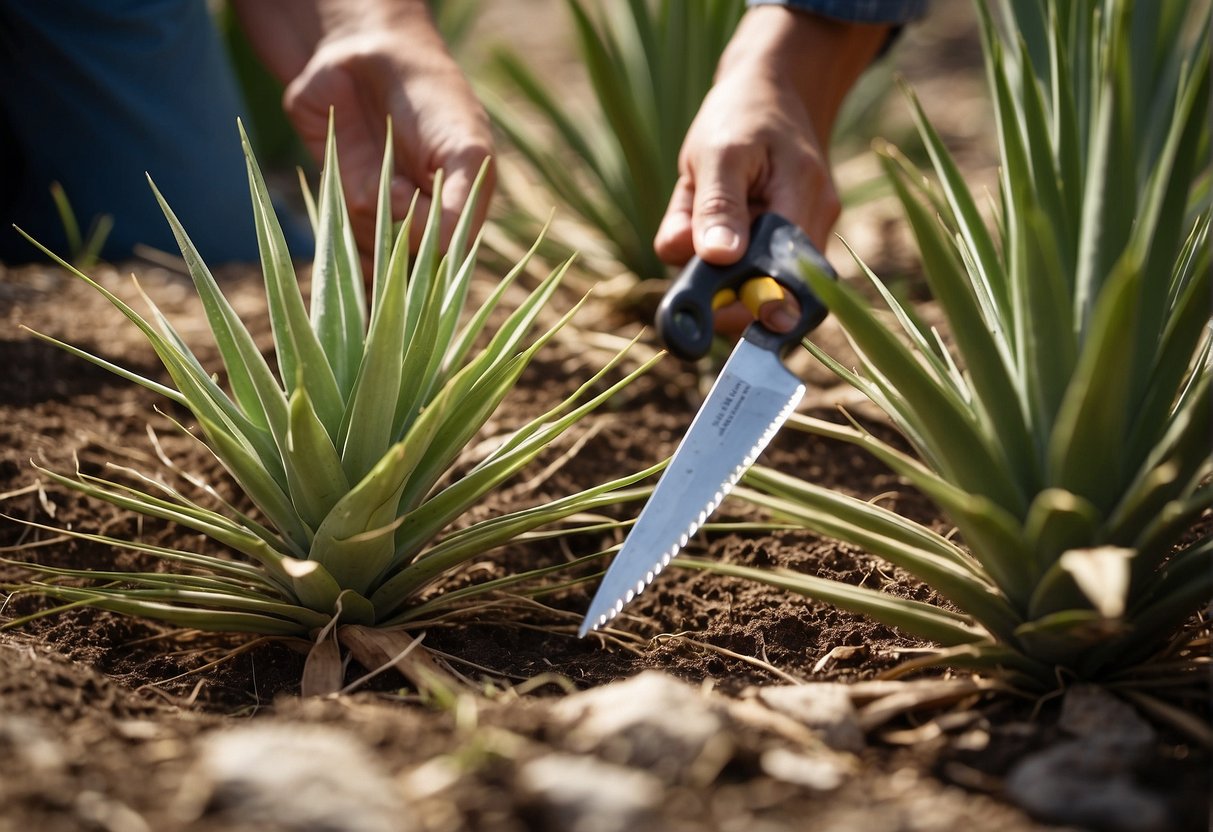
Examine the root ball and look for natural divisions or areas where the plant can be easily separated. Use your spade or garden knife to carefully divide the plant into sections, making sure each section has a healthy root system.
-
Fill new pots with a mixture of potting mix, compost, and grit or sand. Make sure the pots have good drainage holes.
-
Plant each section of the yucca plant in its own pot, making sure the root ball is covered with soil. Water the plant thoroughly and place it in a bright, sunny location with good air circulation.
-
If you are concerned about fungal disease, you can treat the cut edges of the plant with a fungicide before planting.
By following these simple steps, you can successfully split your indoor yucca plant and give each section a healthy start in its new pot.
Propagating Yucca Plants
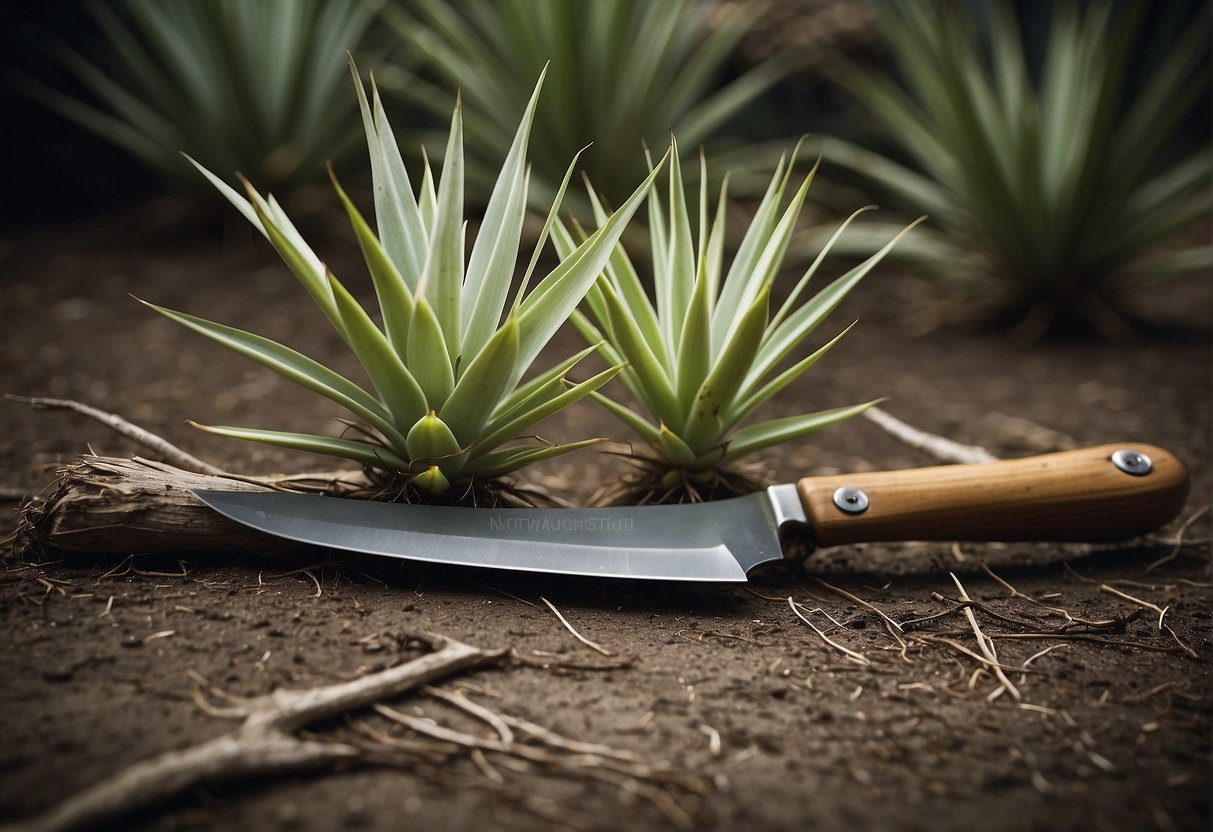
If you want to propagate your indoor yucca plant, you have a few options. The most common methods are division of the root system, stem cuttings, and offsets. Let’s take a closer look at each one.
Division of the Root System
If your yucca plant has grown too large for its pot, it may be time to divide the root system. This is best done in the spring or early summer when the plant is actively growing. Here’s how to do it:
- Carefully remove the plant from its pot and shake off any excess soil.
- Use a sharp, sterile knife or pruning shears to separate the root ball into smaller sections. Each section should have a healthy stem and root system.
- Repot each section in fresh soil and water thoroughly.
Stem Cuttings and Offsets
Another way to propagate yucca plants is through stem cuttings or offsets. This method works best with slow-growing plants that produce clumps of offsets or pups. Here’s how to do it:
- Locate a healthy stem with several leaves and cut it off at the base using a sharp, sterile knife or pruning shears.
- Remove the lower leaves from the stem, leaving only a few at the top.
- Dip the cut end of the stem in rooting hormone and plant it in a pot filled with fresh soil.
- Water thoroughly and keep the soil moist until the new plant develops a strong root system.
Offsets can be removed from the parent plant and planted in their own pots using the same method as stem cuttings.
Propagating yucca plants can be a fun and rewarding way to expand your collection. With a little care and patience, you can enjoy these beautiful plants for years to come.
Post-Splitting Care and Maintenance
After successfully splitting your indoor yucca plant, it’s important to take proper care of the newly separated plants to ensure their health and longevity. Here are some tips for post-splitting care and maintenance:
Replanting and Watering
Once you have separated the yucca plants, it’s important to replant them in fresh soil. Choose a pot that is slightly larger than the root ball of the plant and fill it with a well-draining potting mix. Make sure to water the soil thoroughly after planting to help settle it around the roots.
Watering is crucial for the health of your newly split yucca plants. During the spring and summer growing seasons, water your plants when the top inch of soil feels dry to the touch. In the winter, when the plant is dormant, reduce watering to once every two to three weeks. Be careful not to overwater, as yuccas are susceptible to root rot.
Ongoing Care and Troubleshooting
Yuccas are known for their low maintenance and long-lived nature, but they still require some ongoing care to thrive. Here are some tips for keeping your split yucca plants healthy:
- Fertilize your yucca plants once a month during the spring and summer growing seasons with a balanced fertilizer.
- Remove any yellow leaves or dead foliage to keep your plants looking their best.
- Keep an eye out for scale insects and mealybugs, which can infest yuccas. If you notice any pests, treat them with an insecticidal soap or neem oil.
- Yuccas make a great focal point in any room, but they prefer bright, indirect light. If your plant is not getting enough light, it may become leggy or develop yellow leaves.
- Yuccas are hardy plants that can tolerate mild winters, but they may suffer if exposed to freezing temperatures. If you live in a cold climate, consider bringing your yucca plants indoors during the winter.
By following these tips, you can ensure that your split yucca plants will continue to thrive and add beauty to your indoor space for years to come.
Frequently Asked Questions
What is the best time of year to divide yucca plants?
The best time to divide yucca plants is in the spring or early summer, when new growth is just beginning. This will give the plant plenty of time to establish itself before the cooler months arrive.
What is the proper technique for propagating yucca from side shoots?
To propagate yucca from side shoots, wait until the shoot is at least six inches long and has several leaves. Cut the shoot off as close to the main stem as possible, and plant it in a well-draining soil mix. Keep the soil moist but not waterlogged, and provide bright, indirect light.
How do you repot a yucca plant that has outgrown its current container?
To repot a yucca plant that has outgrown its container, choose a pot that is one or two sizes larger than the current pot. Fill the bottom of the new pot with fresh soil mix, and gently remove the plant from its old pot. Place the plant in the new pot, and fill in around it with soil mix. Water thoroughly and allow the plant to settle in for a few days before moving it back to its usual spot.
Can you replant a yucca branch that has been cut off?
Yes, you can replant a yucca branch that has been cut off. Simply remove any leaves from the bottom of the stem, and plant the stem in a well-draining soil mix. Keep the soil moist but not waterlogged, and provide bright, indirect light.
What are the steps for dividing a large yucca plant?
To divide a large yucca plant, start by removing it from its pot or digging it up from the ground. Use a sharp, clean knife to cut the plant into sections, making sure that each section has at least one healthy stem and root system. Plant each section in a well-draining soil mix, and water thoroughly.
Is it possible to plant yucca cuttings directly into soil, and how should it be done?
Yes, it is possible to plant yucca cuttings directly into soil. Simply remove any leaves from the bottom of the stem, and plant the stem in a well-draining soil mix. Keep the soil moist but not waterlogged, and provide bright, indirect light.

