
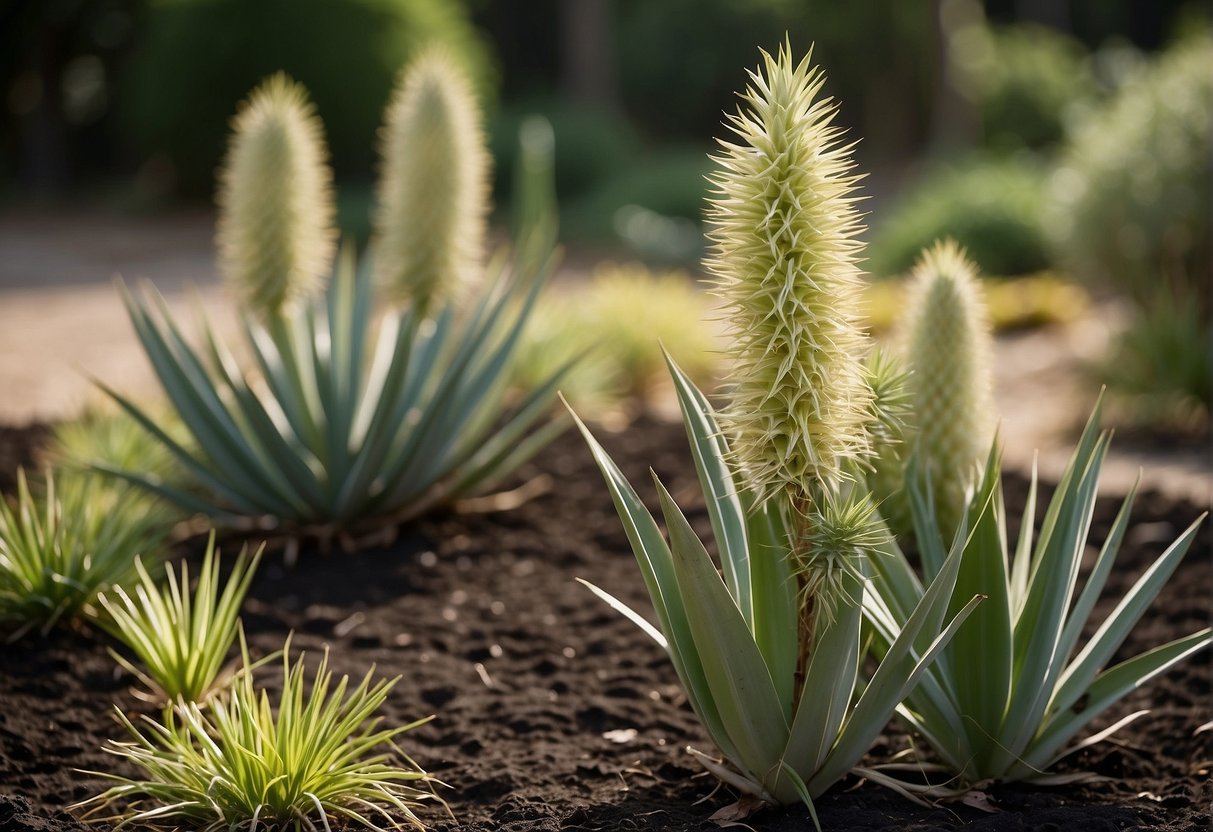
How Far Apart to Plant Yucca Plants: Expert Guidelines
Regarding the topic of yucca plant cultivation, a frequent inquiry involves the appropriate spacing between plants. Yuccas are favored in gardening and landscape designs for their distinctive look and minimal upkeep needs. Yet, situating them too near one another may cause congestion and impede their development. This article aims to explore the ideal distance for planting yucca plants, alongside offering advice for effective cultivation.
Understanding Yucca Plants
Before we dive into planting yucca plants, it’s important to understand their growth habits. Yucca plants are native to arid regions and are well adapted to dry, hot climates. They are slow-growing and can take several years to reach their full size. Yuccas are also known for their sword-like leaves and tall, spiky flower stalks that can reach up to 20 feet in height.
Planting Yucca Plants
When it comes to planting yucca plants, the spacing will depend on the specific variety and its mature size. As a general rule of thumb, yucca plants should be spaced at least 2-3 feet apart to allow for proper growth and airflow. This will also prevent the plants from competing for resources and becoming overcrowded. It’s also important to choose a location with well-draining soil and plenty of sunlight for optimal growth.
Key Takeaways
- Yucca plants should be spaced at least 2-3 feet apart to allow for proper growth and airflow.
- Choose a location with well-draining soil and plenty of sunlight for optimal growth.
- Yucca plants are slow-growing and can take several years to reach their full size.
Understanding Yucca Plants
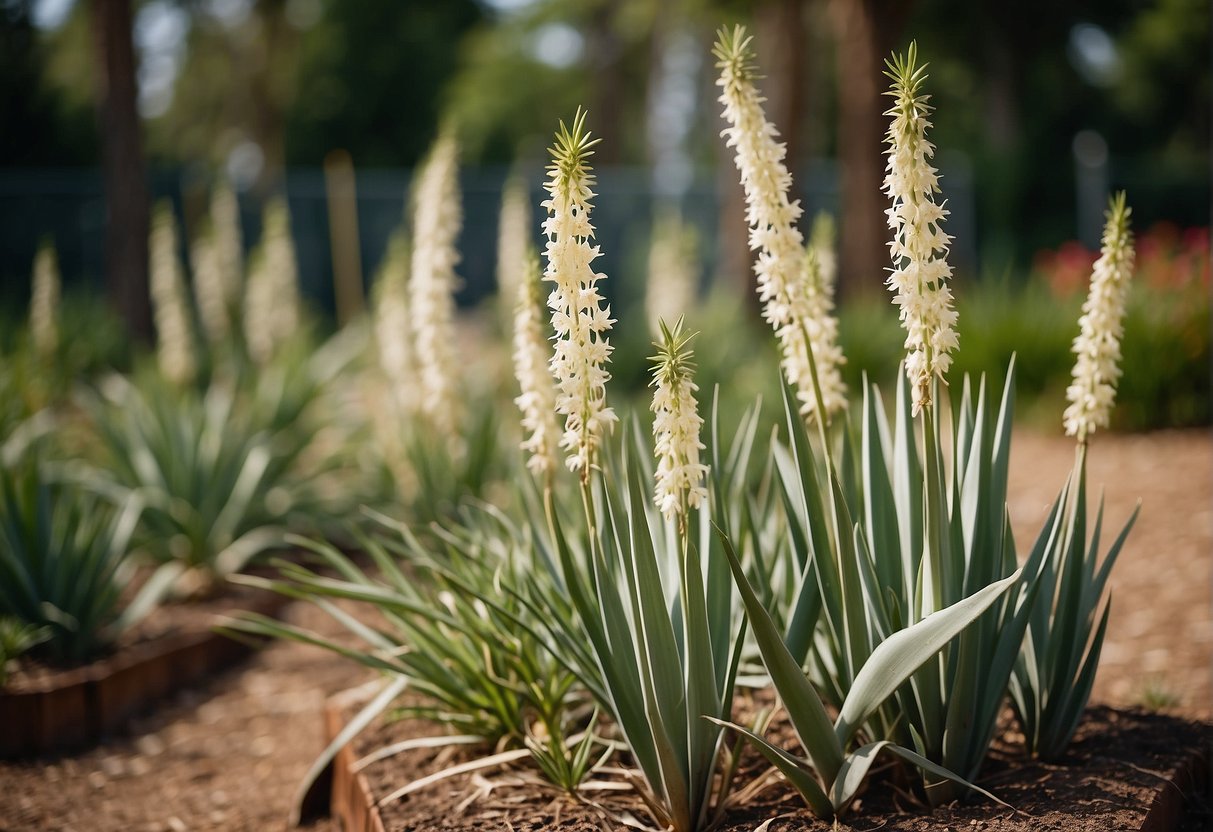
Yucca plants are a popular choice for gardeners due to their striking appearance and low maintenance requirements. They are a species of perennial evergreen shrubs and trees that belong to the Agave family. Yuccas are native to arid regions of North and Central America and are well-suited to hot and dry climates.
Species and Varieties
There are many different species and varieties of yucca plants, each with their own unique characteristics. Some of the most common species include Yucca filamentosa, Yucca aloifolia, and Yucca elephantipes. Yucca filamentosa, also known as Spanish bayonet, is a popular choice for gardeners due to its hardiness and attractive foliage. Yucca aloifolia, also known as Spanish dagger, is another popular choice, known for its sharp leaves and striking flowers. Yucca elephantipes, also known as the spineless yucca, is a popular indoor plant due to its tolerance for low light and dry air.
Plant Characteristics
Yucca plants are known for their long, sword-like leaves and striking flowers. They are typically slow-growing and can range in size from small container plants to large trees. Yuccas are well-suited to hot and dry climates and require little water or maintenance once established. They are also tolerant of a wide range of soil types and can thrive in both full sun and partial shade.
When planting yucca plants, it is important to space them appropriately to allow for proper growth and development. Depending on the variety, yuccas can grow to be quite large, so it is important to consider their mature size when planting. As a general rule, yucca plants should be spaced at least 3 to 5 feet apart to allow for adequate room to grow.
In conclusion, yucca plants are a versatile and low-maintenance choice for gardeners looking to add some striking foliage to their landscape. With their unique appearance and adaptability to a wide range of growing conditions, yuccas are sure to make a statement in any garden.
Planting Yucca Plants
Yucca plants are a great addition to any garden or landscape. They are drought-tolerant, low-maintenance, and come in a variety of colors and textures. Here are some tips on how to plant yucca plants:
Location and Spacing
Yucca plants thrive in full sun and well-drained soil. When choosing a location to plant your yucca, make sure it receives at least 6 hours of direct sunlight per day. Yucca plants also need plenty of space to grow, so be sure to plant them at least 2 to 3 feet apart.
Soil Requirements
Yucca plants prefer well-draining soil. If your soil is heavy or clay-like, consider adding sand or perlite to improve drainage. Yucca plants can also grow in poor soil conditions, but they will perform best in well-drained soil.
Planting Procedure
To plant your yucca, dig a hole that is twice as wide and deep as the root ball. Mix in some compost or other organic matter to help improve soil quality. Gently remove the yucca from its container and loosen any tangled roots. Place the yucca in the hole and backfill with soil, making sure the top of the root ball is level with the surrounding soil. Water the yucca thoroughly after planting.
In conclusion, planting yucca plants is a simple process that can add beauty and interest to your garden or landscape. By following these tips, you can ensure your yucca plants thrive in their new location.
Caring for Yucca Plants
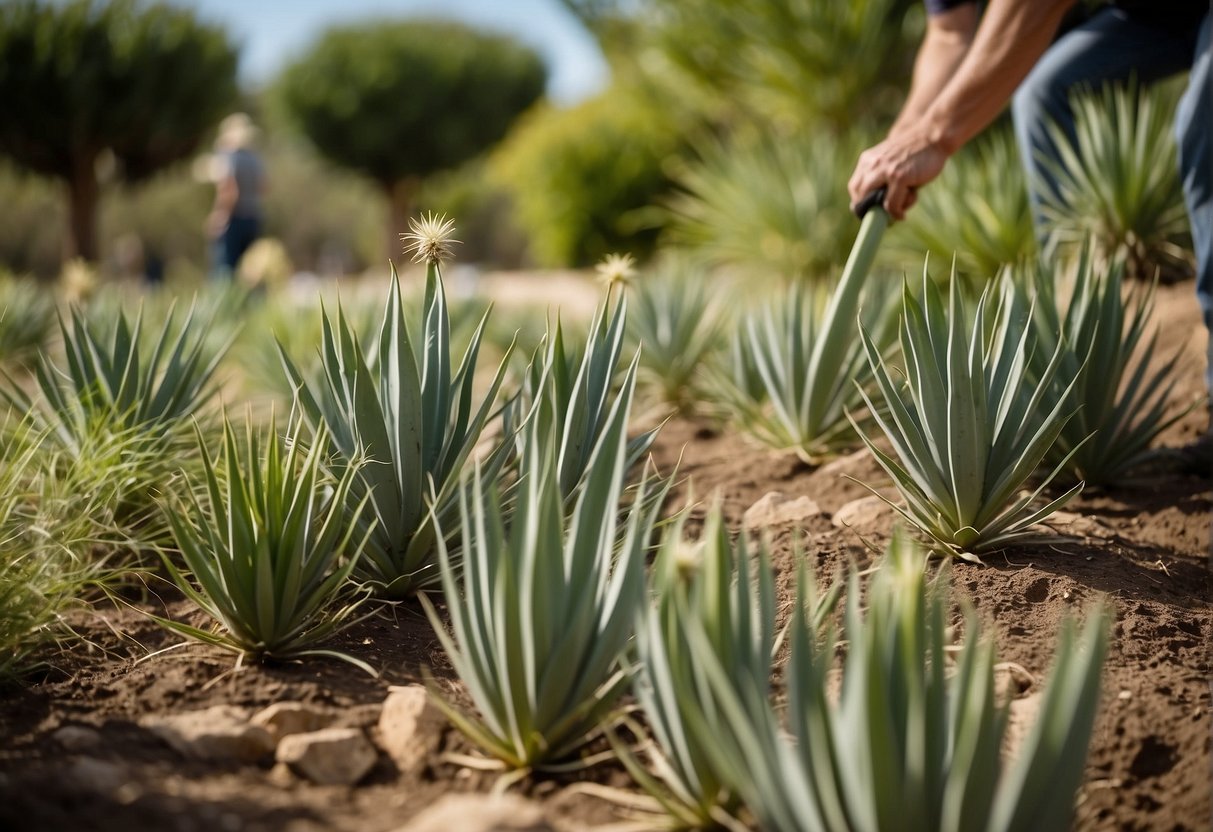
Yucca plants are great additions to any garden or landscape. They are drought-tolerant and require minimal care. However, to ensure that your yucca plants thrive, you need to provide them with the right care. Here are some tips on how to care for yucca plants.
Watering and Fertilization
Yucca plants are drought-tolerant and do not require frequent watering. However, during the hot summer months, you may need to water your yucca plants once a week. When watering, ensure that the soil is dry to the touch before watering again. Overwatering can cause root rot, which can be fatal to yucca plants.
Fertilization is not necessary for yucca plants, but if you want to promote blooming, you can apply a nitrogen fertilizer once a year in the spring.
Pruning and Maintenance
Yucca plants do not require pruning, but you can remove any dead leaves or flower spikes to keep them looking neat and tidy. When removing dead leaves, use a sharp, clean pair of pruning shears to avoid damaging the plant.
Pests and Problems
Yucca plants are generally pest-free, but they can be susceptible to mealybugs, scale insects, and leaf spot. To prevent these problems, ensure that your yucca plants are not overwatered and are planted in well-draining soil. If you notice any signs of pests or disease, treat them immediately with an appropriate pesticide or fungicide.
Yucca plants produce beautiful flower spikes that attract pollinators such as moths. With the right care, your yucca plants can thrive and add beauty to your garden or landscape.
Propagation of Yucca Plants
Yucca plants can be propagated through both seed and vegetative methods. Each method has its own benefits and drawbacks, so it is important to understand both before deciding which to use.
Seed Propagation
Yucca plants produce seed pods that can be harvested once they have dried and turned brown. The seeds can then be planted in a well-draining soil mix and kept moist until they germinate. It is important to note that yucca seeds can take several weeks to germinate, and not all seeds will be viable.
Vegetative Propagation
Vegetative propagation involves taking cuttings or offsets from an existing yucca plant and rooting them to create a new plant. This method is often preferred because it allows for the creation of clones of the parent plant, ensuring that desirable traits are passed on.
Stem Cuttings
Stem cuttings can be taken from the top of the plant and rooted in a well-draining soil mix. It is important to remove any leaves from the bottom of the cutting and allow it to callus over before planting.
Division
Yucca plants can also be divided by carefully separating the rhizomes and replanting them in a new location. This method is best done in the spring during the growing season.
Regardless of the method chosen, it is important to ensure that the new plant is planted in a well-draining soil mix and given proper care and attention. Yucca plants should be repotted every few years to ensure that they have enough room to grow, and any dead or damaged leaves should be removed to promote healthy growth.
While many yucca plants are grown for their ornamental value, some cultivars are also edible. If you are interested in growing yucca for food, it is important to do your research and ensure that you are growing a variety that is safe to eat.
Frequently Asked Questions
What is the ideal spacing for planting yucca plants outdoors?
When planting yucca plants outdoors, it’s important to give them enough space to grow and thrive. The ideal spacing for planting yucca plants outdoors is typically around 3-5 feet apart, depending on the specific species and their mature size. This will provide enough room for the plants to spread out and reach their full potential.
How do you properly plant yucca cuttings?
Planting yucca cuttings is a simple process that can be done in just a few steps. First, prepare a well-draining soil mix and fill a pot with it. Then, take your yucca cutting and remove any lower leaves or branches. Dip the cut end of the cutting in rooting hormone and plant it in the soil, making sure it’s firmly in place. Water the cutting well and place it in a bright, warm spot with indirect sunlight. Keep the soil moist but not waterlogged, and your yucca cutting should begin to root and grow.
What care do outdoor yucca plants require during winter?
Outdoor yucca plants are generally hardy and can tolerate cold temperatures, but they still require some care during the winter months. Make sure to water them sparingly during this time, as overwatering can lead to root rot. You may also want to cover them with a layer of mulch or burlap to protect them from frost and freezing temperatures. If your yucca plant is in a container, you may want to move it indoors to a cool, bright room for the winter.
What are common problems with outdoor yucca plants and how can they be addressed?
Common problems with outdoor yucca plants include pests like spider mites and scale insects, as well as fungal diseases like root rot. To address these issues, make sure to inspect your plants regularly and treat any problems as soon as they arise. You can use insecticidal soap or neem oil to control pests, and improve drainage and reduce watering to prevent root rot.
What is the maximum height yucca plants can reach indoors?
The maximum height that yucca plants can reach indoors will depend on the specific species and growing conditions. In general, most indoor yucca plants will reach a height of around 6-8 feet, although some species can grow taller. Make sure to provide plenty of bright, indirect sunlight and well-draining soil to help your indoor yucca plant reach its maximum potential.
What are the light requirements for yucca plants to thrive?
Yucca plants require bright, indirect sunlight to thrive. They can tolerate some direct sunlight, but too much can scorch their leaves. If you’re growing yucca plants indoors, make sure to place them in a bright room with plenty of natural light. If you’re growing them outdoors, make sure to choose a spot with partial shade, especially during the hottest part of the day.

