

How to Thin Out Your Outdoor Yucca Plants: A Clear Guide
Should you notice that your outdoor yucca plants are beginning to appear somewhat congested, you might be contemplating the best method to declutter them. Pruning your yucca plants is a crucial aspect of their upkeep, aiding in the promotion of vigorous growth and averting excessive proliferation. In this piece, we will explore the fundamentals of caring for yucca plants, inclusive of strategies to prune your plants effectively, ensuring they remain in prime condition.
To start, it’s important to understand the basics of yucca plant care. Yucca plants are hardy outdoor plants that require minimal maintenance, but they do need some attention to thrive. Proper watering, fertilization, and pruning are all essential to keeping your yucca plants healthy and looking great. Thinning your plants is also an important part of their care, as it helps to promote airflow and prevent overcrowding. In the following sections, we’ll cover everything you need to know about thinning your yucca plants and keeping them in top condition.
Key Takeaways
- Thinning your outdoor yucca plants is an important part of their care and maintenance.
- Proper watering, fertilization, and pruning are also essential for healthy yucca plants.
- Thinning your plants helps to promote airflow and prevent overcrowding, which can lead to overgrowth and other problems.
Understanding Yucca Plant Basics
Species and Native Habitats
Yucca plants belong to the family of Asparagaceae and are native to hot and arid regions of North and Central America. The genus Yucca consists of around 40-50 species of plants, each with its unique characteristics. Some of the most commonly found species include Yucca filamentosa, Yucca gloriosa, and Yucca elephantipes.
Depending on the species, yucca plants can grow in a variety of habitats, including deserts, grasslands, and even coastal areas. Understanding the native habitat of your yucca plant can help you provide the best growing conditions for it.
Optimal Growing Conditions
Yucca plants thrive in full sun and well-draining soil. They are adapted to hot and dry environments and can tolerate drought-like conditions. However, they do require occasional watering, especially during the growing season.
When it comes to temperature, yucca plants can tolerate a wide range of temperatures, but they prefer warm temperatures and are sensitive to frost. It is recommended to grow yucca plants in USDA hardiness zones 5-11.
In summary, to ensure the optimal growth of your yucca plant, you should provide it with full sun, well-draining soil, occasional watering, and warm temperatures. Understanding the species and native habitats of your yucca plant can help you provide the best growing conditions for it.
Essential Care and Maintenance
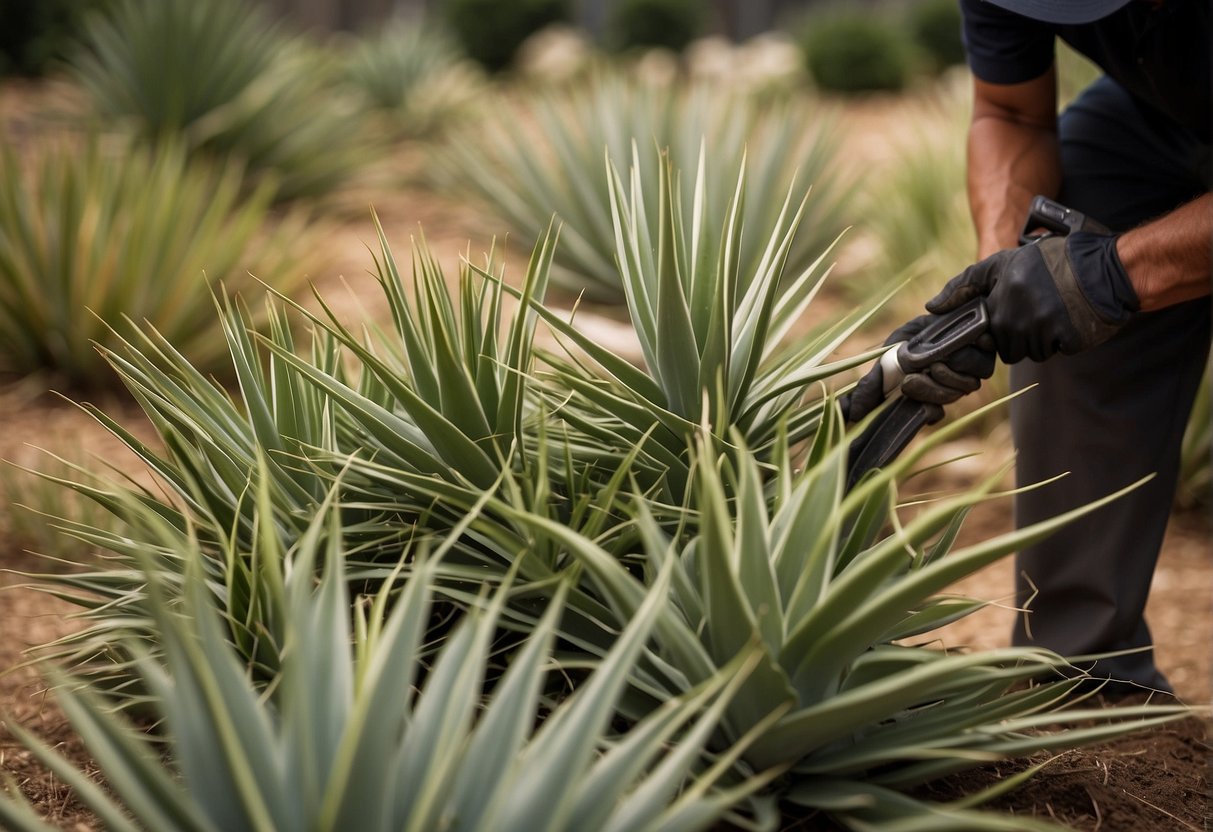
Taking care of your outdoor yucca plants is essential to ensure their health and longevity. Here are some tips to help you maintain your yucca plants.
Watering and Feeding Requirements
Yucca plants are drought-tolerant, but they still need watering to thrive. During the growing season, water your yucca plants once a week. In the winter, reduce watering to once every two to three weeks. Make sure the soil is well-draining to prevent root rot.
Fertilize your yucca plants once a month during the growing season. Use a balanced fertilizer, such as a 10-10-10 or 20-20-20 formula. Avoid over-fertilizing, as this can lead to burnt leaves and root damage.
Seasonal Care Tips
In the summer, yucca plants can tolerate high temperatures and direct sunlight. However, they may need some shade during the hottest part of the day. Make sure to water your plants more frequently during the summer months.
In the spring and fall, yucca plants may need protection from frost. Cover them with a blanket or tarp if temperatures drop below freezing. In the winter, yucca plants can survive in temperatures as low as 30 degrees Fahrenheit.
Regular care and maintenance of your outdoor yucca plants will ensure they stay healthy and beautiful for years to come.
Pruning and Thinning Yucca Plants
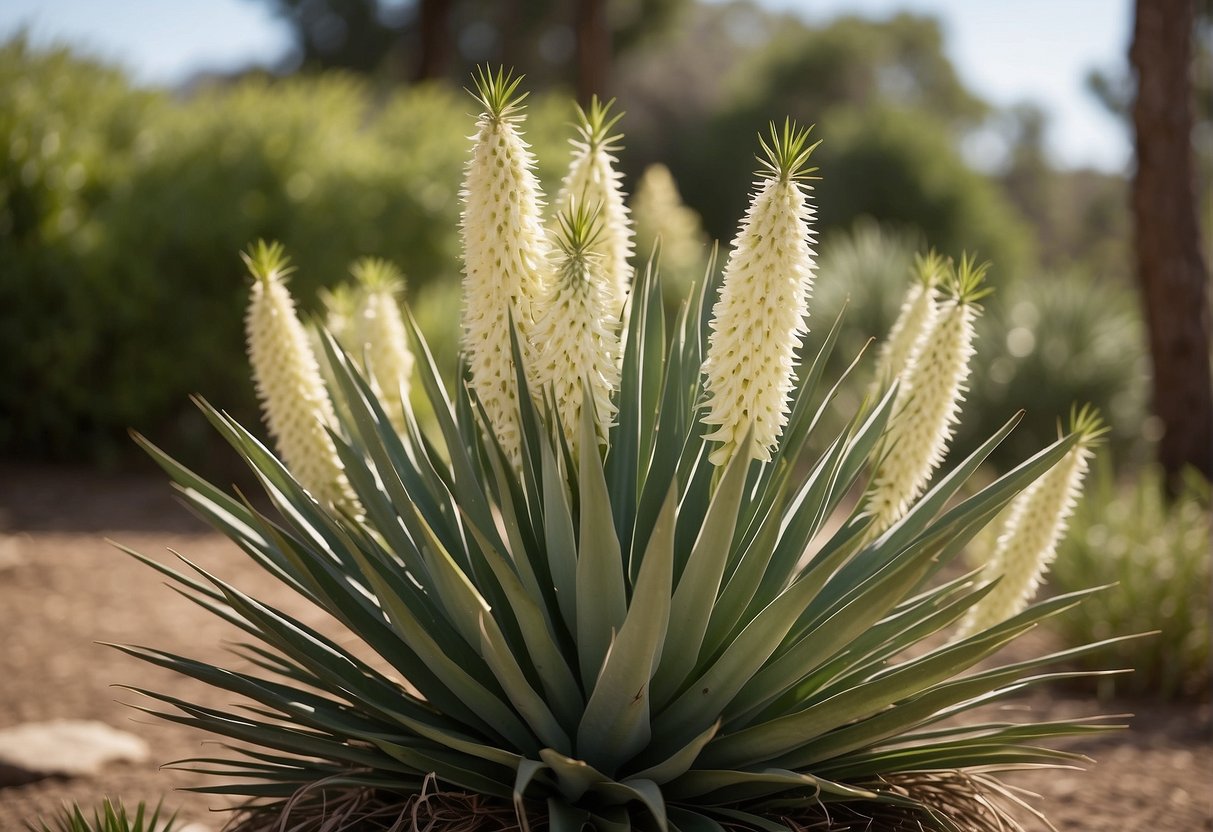
Yuccas are tough, resilient plants that can thrive in a variety of conditions. However, over time, they can become overgrown and require pruning and thinning to maintain their health and appearance. Here are some tips on how to prune and thin your outdoor yucca plants.
When to Prune Yuccas
The best time to prune yuccas is in late winter or early spring, before new growth begins. This allows you to remove any dead or damaged leaves and thin out the plant without harming the new growth. You can also prune yuccas in the fall, after the growing season has ended, but be careful not to cut into the new growth that will appear in the following spring.
How to Safely Prune
Before pruning your yucca plants, make sure you have the right tools. You will need a pair of sharp pruning shears, a pair of gloves, and safety goggles to protect your eyes from flying debris. Begin by removing any damaged leaves or flower stalks, cutting them off at the base of the plant. Then, use your pruning shears to thin out the plant, cutting back any lower leaves or stems that are crowding the plant or blocking sunlight.
When pruning yuccas, be sure to make clean cuts at a 45-degree angle. This will help prevent damage to the plant and promote healthy growth. After pruning, dispose of any debris and sanitize your tools to prevent the spread of disease.
By following these tips, you can keep your outdoor yucca plants looking healthy and beautiful for years to come.
Propagation and Managing Overgrowth
Propagating Yucca From Offsets
One way to thin out your outdoor yucca plants is to propagate them from offsets. Yucca plants often produce offsets, or small plantlets, from their root system. These offsets can be detached from the parent plant and grown into new plants. To propagate yucca from offsets, follow these steps:
- Locate the offsets. They are usually found at the base of the parent plant.
- Gently remove the offsets from the parent plant using a sharp, clean knife or scissors. Be careful not to damage the roots.
- Allow the offsets to dry for a few days in a cool, dry place.
- Plant the offsets in a potting mix that is well-draining and contains sand or perlite. Water the soil lightly and place the pot in a bright, indirect light.
- Keep the soil moist but not waterlogged. The offsets should root and start growing within a few weeks.
Transplanting and Dividing Yucca
Another way to thin out your outdoor yucca plants is to transplant and divide them. This method is best done in the spring or fall. Follow these steps:
- Dig up the entire yucca plant, being careful not to damage the roots.
- Shake off any excess soil and inspect the root system for any damage or disease. Trim away any damaged or diseased roots.
- Divide the plant into smaller sections using a sharp, clean knife or shovel. Each section should have a healthy root system and at least one stem.
- Plant each section in a well-draining potting mix that contains sand or perlite. Water the soil lightly and place the pots in a bright, indirect light.
- Keep the soil moist but not waterlogged. The plants should root and start growing within a few weeks.
By propagating yucca from offsets or transplanting and dividing the plants, you can thin out your outdoor yucca plants and manage their overgrowth. These methods also allow you to propagate new plants and regrow your outdoor yucca collection.
Frequently Asked Questions
What is the best method to prune an overgrown yucca plant?
To prune an overgrown yucca plant, start by removing the oldest and tallest stems first. Use a sharp pair of pruning shears to make clean cuts at the base of the stem. Avoid cutting the stem too close to the trunk, as this can damage the plant. Cut back no more than one-third of the plant at a time to prevent shock.
Can you cut back a yucca to reduce its size?
Yes, you can cut back a yucca to reduce its size. Use sharp pruning shears to cut off the top of the plant, leaving a few inches of stem above the leaves. This will encourage new growth and help to keep the plant at a manageable size.
How do you remove dead leaves from a yucca plant safely?
To remove dead leaves from a yucca plant, use a pair of sharp pruning shears to cut the leaf off at the base. Be careful not to damage the healthy leaves or the trunk of the plant. Wear gloves to protect your hands from the sharp leaves.
When is the ideal time of year for thinning out yucca plants?
The ideal time to thin out yucca plants is in the spring or early summer when the plant is actively growing. Avoid pruning in the fall or winter, as this can damage the plant and make it more susceptible to disease.
What care should be taken when cutting a yucca trunk?
When cutting a yucca trunk, use a sharp saw to make a clean cut. Be careful not to damage the surrounding leaves or the trunk of the plant. Wear gloves to protect your hands from the sharp leaves.
How can you prevent a yucca from growing too tall?
To prevent a yucca from growing too tall, prune the plant regularly to keep it at a manageable size. Avoid overwatering the plant, as this can cause it to grow too quickly. Plant the yucca in a location that receives plenty of sunlight and good drainage.

